

Report
Shin-pei Tsay, Victoria Herrmann
{
  "authors": [
    "Shin-pei Tsay"
  ],
  "type": "legacyinthemedia",
  "centerAffiliationAll": "dc",
  "centers": [
    "Carnegie Endowment for International Peace"
  ],
  "collections": [],
  "englishNewsletterAll": "ctw",
  "nonEnglishNewsletterAll": "",
  "primaryCenter": "Carnegie Endowment for International Peace",
  "programAffiliation": "SCP",
  "programs": [
    "Sustainability, Climate, and Geopolitics"
  ],
  "projects": [],
  "regions": [
    "North America",
    "United States"
  ],
  "topics": [
    "Climate Change",
    "Economy"
  ]
}
Source: Getty
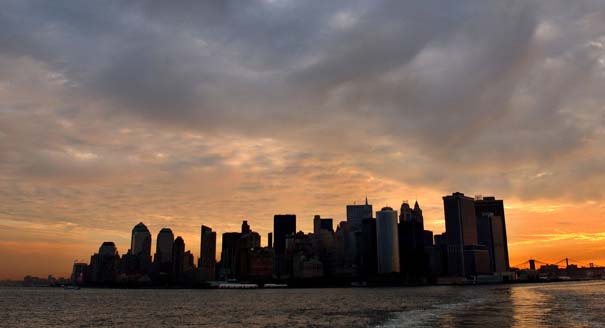
With its combination of citizen engagement, leadership, and innovative policy, New York City demonstrates that technology is only one factor in a smart city formula.
Source: Cities.brief

In 2002, when Mayor Michael Bloomberg first took office, many doubted the city’s ability to recover from the September 11 attacks. Over the course of developing an economic development plan, the city discovered that economy recovery and sustained growth would be unfeasible if such a plan lacked a connection to environmental sustainability.
Major constraints for New York City’s smart long-term plan are largely due to population growth and geographic limitations. The City predicts that another one million people will be added to its 2000 population of eight million by 2030. As a densely-populated land mass surrounded by water with limited space for outward growth, the city needed to consider strategies that would minimize strain on the city’s fiscal and environmental resources while providing a high quality of life. Given the flight of manufacturing to regions with lower labor costs, new industries needed to be developed with a revised approach to skilled labor retention. The City believed that only way of doing so would be to employ environmentally sound strategies in concert with economic growth initiatives.PlaNYC, a city-wide sustainability plan, resulted from this process. PlaNYC was one of the first long-term plans that set sustainability benchmarks, assessed activities within the mayor’s power, and provided a work plan.
Even the best ideas lack meaning if they fail to pass some of the rigors of messy, real-world dynamics. Initially, New York City’s entrenched bureaucratic processes obstructed even the smallest changes. But residents showed that small actions effectively challenge existing practices. Because the environmental benchmarks met some longstanding goals of non-governmental organizations in New York City, the third sector and the public assumed some responsibility for meeting targets tallied in PlaNYC. As a result, citizens emerged as a major ally.
PlaNYC seemed to provide the platform through which New York’s perennial culture of small-scale intervention interplayed with top-level policy for positive results. The redesign of New York City streets was a tangible expression of this partnership. Advocates supported “experiments” to phase in the large-scale changes required by an ambitious sustainability plan. This method allowed the city to test ideas and the public to adjust to change.
A project that followed this longitude was the conversion of under-utilized street space into public plazas. Two streets that cross at a diagonal create acute-angle intersections that are generally under-utilized by both vehicles and pedestrians because of the difficult turning and crossing angles. Repurposing these intersections into public spaces would alleviate congestion and increase public access to open space, two PlaNYC benchmarks. The city started small, with a new plaza in less populated neighborhoods that were more amenable to the idea of taking street space for people. With each successful plaza, demand in other neighborhoods grew. The city continuously updated its program to integrate public feedback and improve delivery. Success built momentum and political capacity for permanent improvements; testing and piloting eased the way.
As benefits accrued from the execution of its plan, leaders from the Mayor’s Office and city agencies grew bolder. A few years later, what had been only a pipe dream, the pedestrianization of congested Times Square in the heart of Manhattan, became a reality. This ambitious project is now a permanent fixture in the city landscape and a centerpiece of the kind of street redesign striding across the city.
Public sector improvements under PlaNYC are bolstered by the open data and open government movements. Civic-minded computer programmers created innovative technology-based solutions that filled public service gaps, for example providing real-time bus service via smart phone apps. Applications like this rely on readily-available free data, known as open data. Open data negates private ownership and widens the market to a broader field of developers. In terms of providing public service, the local government recognized that it could not be everywhere, especially in a city as large as New York. As a result, municipal leaders not only created space for these programmers, it sponsored the “BigApp” competitions that solicited smart solutions for common city management problems, such as parking inventory management to limit cruising for parking. New York City recently announced “Reinvent Green,” a competition to develop sustainability-oriented smart phone applications, after three successful BigApps competitions. Scheduled for launch in the summer of 2012, Reinvent Green would use environmental data sets collected by the measurement benchmark set forth in PlaNYC.
The success of PlaNYC relied on citizen participation both on the ground and over the web. The iterative policy formation and implementation process suggests the dawn of a new frontier in urban governance. This might be especially needed in an age of climate change challenges when every advantage counts. New York City’s relative immunity to the last recession attests to nascent success. The powerful alliance between the public and its government just might be one of the smartest things the city recently achieved.

Former Nonresident Associate, Energy and Climate Program
Shin-pei Tsay was a nonresident associate in the Energy and Climate Program at the Carnegie Endowment for International Peace.
Recent Work
Shin-pei Tsay, Victoria Herrmann
Shin-pei Tsay, Victoria Herrmann
Carnegie does not take institutional positions on public policy issues; the views represented herein are those of the author(s) and do not necessarily reflect the views of Carnegie, its staff, or its trustees.
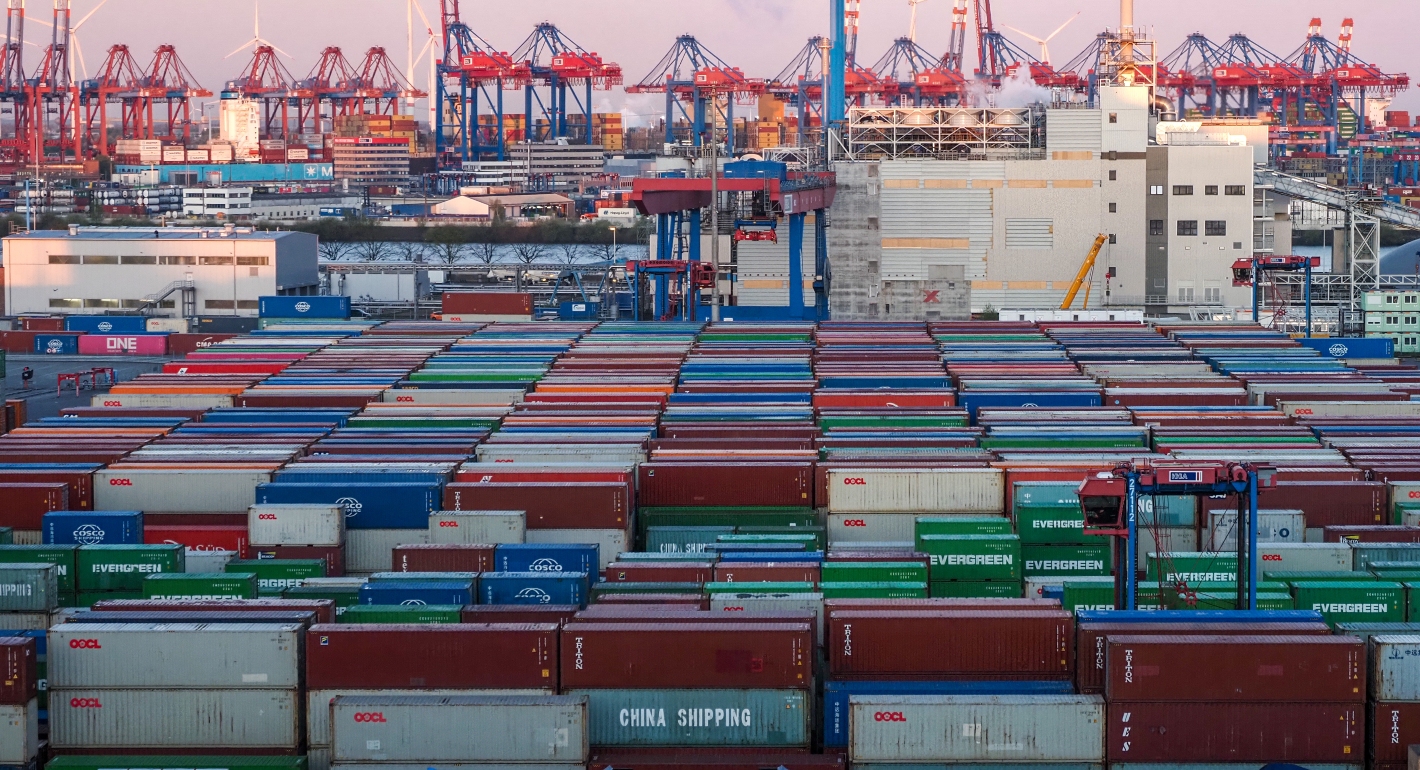
As geopolitical rivalry weaponizes global supply chains, the EU’s true vulnerability lies in emerging-risk imports. For these goods, suppliers are growing more concentrated, substitution more difficult, and political risk is looming.

Sinan Ülgen

The EU is putting together a new security strategy to meet today’s myriad challenges. But for any proposal to be effective, the union needs to grapple with its identity and ambitions.

Pierre Vimont

The EU’s new migration policy is not suited to today’s realities. With climate change increasingly becoming a driver of displacement, Europe needs to rethink its deterrence-focused approach.

Shana Tabak
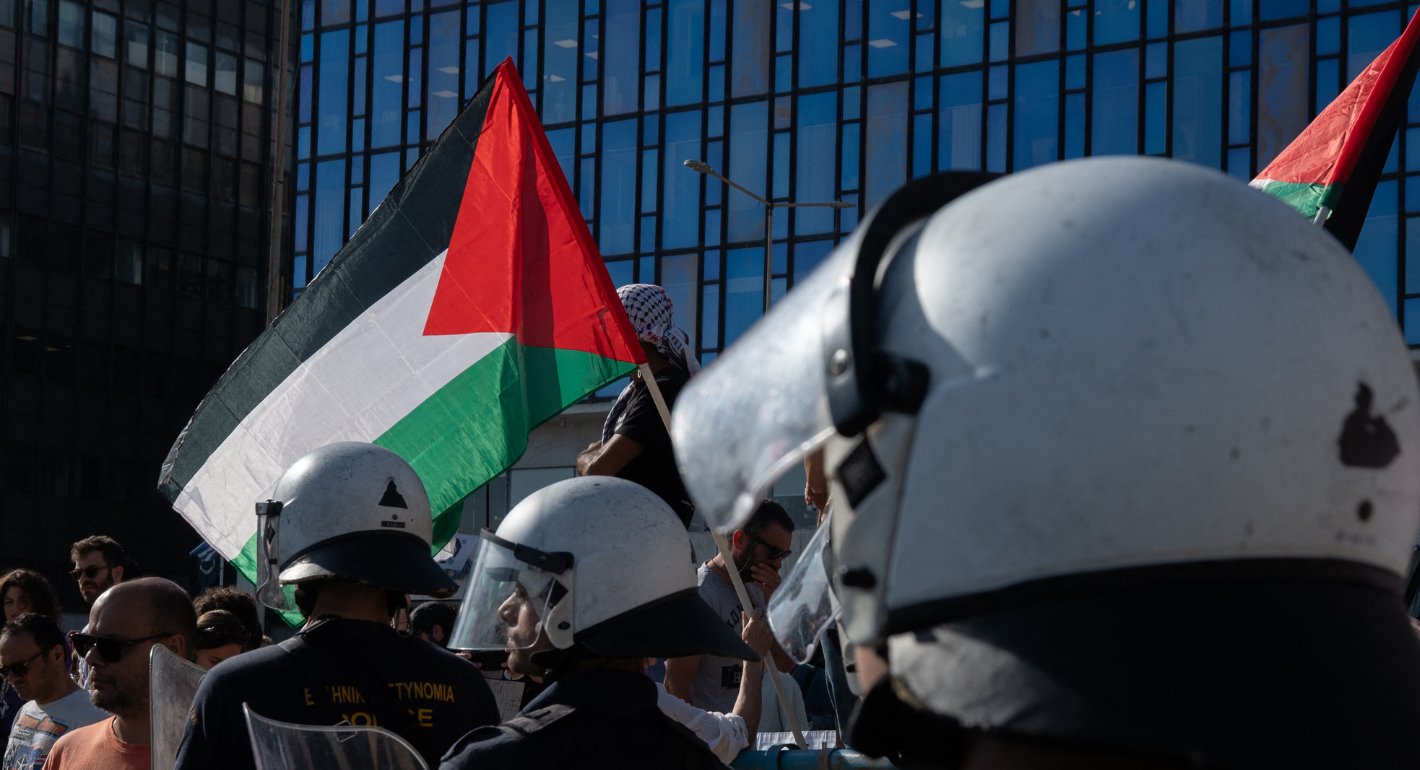
The battle over free speech has taken center stage since U.S. Vice President JD Vance accused Europe of censorship. From travel bans to social media regulation, especially around the Israel-Palestine conflict, are liberal democratic governments weaponizing free speech?

Rym Momtaz, ed.

Amid uncertainty caused by the Iran war, the global drive for nonproliferation has stalled. With Europe diplomatically marginalized and countries reassessing their nuclear options, efforts to curb the spread of nuclear weapons risk becoming irrelevant.
Jane Darby Menton