

Commentary
Dmitri Trenin
{
  "authors": [
    "Dmitri Trenin"
  ],
  "type": "legacyinthemedia",
  "centerAffiliationAll": "",
  "centers": [
    "Carnegie Endowment for International Peace",
    "Carnegie Russia Eurasia Center"
  ],
  "collections": [],
  "englishNewsletterAll": "",
  "nonEnglishNewsletterAll": "",
  "primaryCenter": "Carnegie Russia Eurasia Center",
  "programAffiliation": "",
  "programs": [],
  "projects": [],
  "regions": [
    "North America",
    "United States",
    "Caucasus",
    "Russia",
    "Georgia"
  ],
  "topics": [
    "Foreign Policy"
  ]
}
Source: Getty
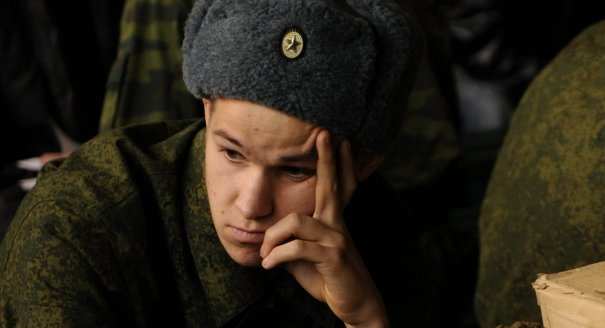
While Russian military reform, aimed at creating a modern military institution, has proven relatively successful, the Putin leadership’s strategic thinking remains outdated.
Source: Foreign Policy

The Russian army will not attack Georgia or depose its president. Saakashvili is profoundly despised in the Kremlin, but one thing President Vladimir Putin and others, to their surprise, have learned since the 2008 war is that, as long as Saakashvili remains in power, Georgia has zero chance of joining NATO. In the eyes of Berlin, Paris, and even Washington, the current Georgian president is not a dependable partner. Rather, the Russians are concerned about the rising tensions between Armenia, which they have pledged to defend, and Azerbaijan, which, 20 years after the breakup of the Soviet Union, refuses to recognize the secession of Armenian-populated Nagorno-Karabakh and the Armenian occupation of part of Azerbaijani territory. An even more serious security concern in Moscow is the widening crisis in the Middle East involving Syria and Iran -- but it is not a concern that the Kremlin would consider acting on militarily.
This distinction between neighborhood conflicts and more global concerns is a new one -- and it is very much in keeping with the military doctrine adopted two years ago as part of Moscow's effort to reform Russia's armed forces. That doctrine, for the first time in 100 years, eschews the notion of fighting a large-scale war. In the current official thinking, Russia's relations with other great powers, such as the United States and China, are securely managed through nuclear deterrence; the main mission of its armed forces is now to prepare for local conflicts, along the country's borders or even within them.The reform, sanctioned by Putin, formally overseen by Dmitry Medvedev, and ruthlessly executed by Serdyukov, is aimed at replacing the scaled-down and dysfunctional version of the Red Army with a more modern military institution. The plan's centerpiece is to replace the concept of a mobilization army -- the bedrock of the Soviet system whose main function was to draft millions of men into the armed forces at a moment's notice -- with a permanent, mobile, and more professional fighting force. The command-and-control structure would be streamlined, the weapons arsenal upgraded, combat readiness enhanced, and conscripts increasingly replaced with volunteer soldiers.
Under its "new look," the Russian military is to have just four military districts, to be called commands in wartime (Western, Southern, Central, and Eastern) reporting to the General Staff in Moscow; within the districts, brigades will be the main large units. Divisions will be allowed to continue to exist only within the airborne forces. In total, the Russian armed forces will number 150,000 commissioned officers, a similar number of volunteers, and 700,000 conscripts. The proportion of modern weaponry and materiel -- that is, materiel more recent than the 1970s and 1980s vintage equipment that dominates the arsenal today -- is to increase from around 20 percent now to 70 percent by 2020.
So far, these goals have only partially been met. Streamlining, painful as it was, has occurred; the pay of the commissioned officers has doubled or tripled; soldiers have begun to exercise more often; pilots have started to log more hours; and sailors are once again navigating the seas. Still, the government's defense procurement plans have failed miserably; a stable corps of noncommissioned officers has yet to be built; and the reform of military education and training, beyond drastic cuts, has been put on hold for the time being.
Yet, for the first time in two decades, something is moving in the Russian armed forces. For a country that vociferously insists on its strategic independence -- in Russia they call it being a "great power" -- possessing a usable military instrument is a clear must. Spending roughly $700 billion over 10 years to upgrade weapons and military equipment, as Putin has repeatedly vowed to do, is not unwarranted. There is a question, asked by former Finance Minister Alexei Kudrin, among others, as to how much military spending the country can afford under present economic circumstances, but the most important question is not budgetary -- it is strategic in the grandest sense.
The progress of Russian military reform resembles building a body from the feet up, with the head to come last. The proudly pragmatic Putin leadership sees Russia alone and essentially friendless in the world. It still counts the United States as a potential military adversary and NATO as its tool; it hopes for continued neighborliness with China, but it will take no chances; and it faces a diverse set of real enemies along its southern border. It is time to take a new look at Russia's strategic environment and try to improve it.
If there is one thing that would do that, it is the demilitarization of relations with the United States, and cooperating on missile defenses in Europe is the most important step toward that goal. This would be a huge load off Moscow's back, freeing it of the fear that the United States is out to deploy a first-strike capability. Ridding themselves of the residual adversity of the United States, Russians would be able to address real security challenges. For the United States, a Russia engaged in strategic and institutionalized military collaboration with America would be a virtual guarantee that, whatever else may happen on the world's strategic landscape, Russia will not land on the wrong side -- and perhaps Gov. Romney can sleep better at night.
Former Director, Carnegie Moscow Center
Trenin was director of the Carnegie Moscow Center from 2008 to early 2022.
Recent Work
Dmitri Trenin
Dmitri Trenin
Carnegie does not take institutional positions on public policy issues; the views represented herein are those of the author(s) and do not necessarily reflect the views of Carnegie, its staff, or its trustees.

Canadian Prime Minister Mark Carney has twice inspired praise for standing up to U.S. President Donald Trump: at the 2026 World Economic Forum in Davos and on Canada-U.S. trade negotiations. Is Carney showing a third way better than the EU has in dealing with the Trump administration?

Rym Momtaz, ed.

The EU’s responses to two recent incidents expose the gulf between European perceptions and capabilities. Unless the union can bridge that gap, it will never become a real geostrategic power.
Rym Momtaz

European states control several Overseas Countries and Territories around the world that carry strategic, economic, and environmental weight. As great powers challenge the rules-based order, defending them is a geopolitical imperative for Europe.

Marc Pierini

In supporting Europe’s far-right, MAGA and Russia both want the same thing: a weaker EU. Europe must defend itself without abandoning the openness these forces exploit.

Armida van Rij

As we close out another season of Strategic Europe, it is worth taking stock of the deep shifts underway.
Rym Momtaz