

Commentary
Dmitri Trenin
{
  "authors": [
    "Dmitri Trenin"
  ],
  "type": "legacyinthemedia",
  "centerAffiliationAll": "",
  "centers": [
    "Carnegie Endowment for International Peace",
    "Carnegie China",
    "Carnegie Russia Eurasia Center"
  ],
  "collections": [
    "China’s Foreign Relations"
  ],
  "englishNewsletterAll": "",
  "nonEnglishNewsletterAll": "",
  "primaryCenter": "Carnegie Russia Eurasia Center",
  "programAffiliation": "",
  "programs": [],
  "projects": [],
  "regions": [],
  "topics": [
    "Security",
    "Economy"
  ]
}
Source: Getty
The APEC agenda focuses on trade and investment liberalization, business facilitation, and economic and technical cooperation—all things that are top priorities for Russia, if it seeks to develop its Asia-Pacific territory and increase its presence in the region.
Source: China Daily

The name of the game has changed: Ideological confrontation and military stand-offs have been succeeded by economic competition under globalization. Russia, a champion of the former, is yet to prove itself a modern economic power. Merely playing host to a score of APEC leaders will not do the job, really, because Russia needs to upgrade its economy to make its presence genuinely felt in Asia and the Pacific.
Can an opening to Asia-Pacific help? It surely can. Some of the Russian regions most hit by de-industrialization and falling population are East Siberia and the Far East. These territories physically abut some of Asia-Pacific's most dynamic or most advanced economies: China, Japan and the Republic of Korea. Once an industrial power itself, Russia has now turned into a raw materials' base for its neighbors. Can Russia do better? It must, if it wants to stay in one piece.To modernize, it needs capital investments and technology transfers from the neighboring countries, which it should treat as its own modernization resources. To be able to attract and then absorb those transfers, it needs to improve its business environment. Again, Asian countries' experience would be useful.
Russian President Vladimir Putin evidently understands that. Long accustomed to viewing Siberia as its backyard and the Far East as its bulwark, Moscow is now visibly rebalancing toward Asia and the Pacific. Holding this year's APEC summit in Vladivostok - and not, as some suggested, in St. Petersburg or Moscow - is one way of building elements of modern infrastructure in the far-flung outpost; the establishment of a special ministry for the Far East in Khabarovsk is another.
Putin, Russian Prime Minister Dmitry Medvedev and their ministers log long hours visiting the region. These are too traditional and probably not the most effective ways of spurring regional development, but they suggest that the problem is certainly understood, even if the solution still looks rather distant.
An additional factor pushing Moscow eastward is the eurozone debt crisis. The European Union, Russia's most important economic partner by far (it accounts for just more than 50 percent of Moscow's overall foreign trade), is likely to spend a decade without economic growth. In contrast, China, even if its economy is slowing down, is still growing at a rate that most other countries can only envy.
The Sino-Russian economic interaction does have its share of problems. Energy cooperation, in particular, has fallen short of either country's expectations, primarily in the natural gas area. The plans developed three years ago for close cross-border ties between the Russian Far East and China's Northeast, have so far failed to materialize. There are concerns in Russia, including in the government, over labor immigration from China, and the government itself is occasionally accused by its domestic opponents of turning the country, beginning from the Far East, into an economic appendage of the Chinese colossus.
However, China has remained important for Russia since 2000 and overtook Germany as Russia's largest trading partner in 2011. And Russians are thinking hard about ways to both expand bilateral trade and improve the structure of its exports, dominated by natural resources.
There are problems with others as well. For a long time, Russians have been stymied in their outreach to Japan by the continuing territorial dispute over four relatively small islands, which they call the Southern Kurils, and the Japanese refer to as their Northern Territories. The dispute does not prevent Russo-Japanese trade, of course, but it does not allow Tokyo to use public funds to stimulate economic relations.
Russia's plans of laying a gas pipeline to the Republic of Korea via the Democratic People's Republic of Korea and similar plans of building a Trans-Korean railroad, and connecting it to the Trans-Siberian, have been stalled by the continuing tensions on the Korean Peninsula. Gazprom's drilling for gas and oil off Vietnam's coast in the South China Sea is too close for Beijing's comfort.
Yet the Russians are clearly rediscovering Asia - including the Association of Southeast Asian Nations, India and Australia - as an economic rather than a strategic field. Even if Asians still do not see much of them, the Russians are there to do business. Unnoticed by virtually everyone in the region, they are working on a free trade area agreement with New Zealand: a test case, one should hope, for more and larger deals.
Putin and other leaders in Russia recognize that economic power is the new hard currency in the international arena. After nearly two decades of negotiations, Russia has just joined the World Trade Organization. The APEC agenda focuses on trade and investment liberalization, business facilitation, and economic and technical cooperation - all top priorities for Russia.
The test of Moscow's policies, however, will not come during the Vladivostok summit. It will come after all the guests will have returned home. After the city returns to normal, will Moscow keep focusing on the region that not only presents the greatest geopolitical challenge, but also offers a set of tantalizing opportunities?
Former Director, Carnegie Moscow Center
Trenin was director of the Carnegie Moscow Center from 2008 to early 2022.
Recent Work
Dmitri Trenin
Dmitri Trenin

Are Germany’s economic, industrial, and political struggles becoming a liability for the EU’s ability to rise to the geopolitical moment?

Rym Momtaz, ed.

European states control several Overseas Countries and Territories around the world that carry strategic, economic, and environmental weight. As great powers challenge the rules-based order, defending them is a geopolitical imperative for Europe.

Marc Pierini

Mounting economic strain and battlefield losses will not necessarily make the Kremlin less dangerous. They could instead push Moscow toward a more aggressive hybrid campaign designed to test NATO’s Eastern flank, exploit allied hesitation, and fracture European resolve.

Maksym Beznosiuk
Over the past ten years, NATO has held almost as many summits as it did during the entirety of the Cold War. Are they still useful, or is it time to stop holding annual meetings?
Rym Momtaz, ed.
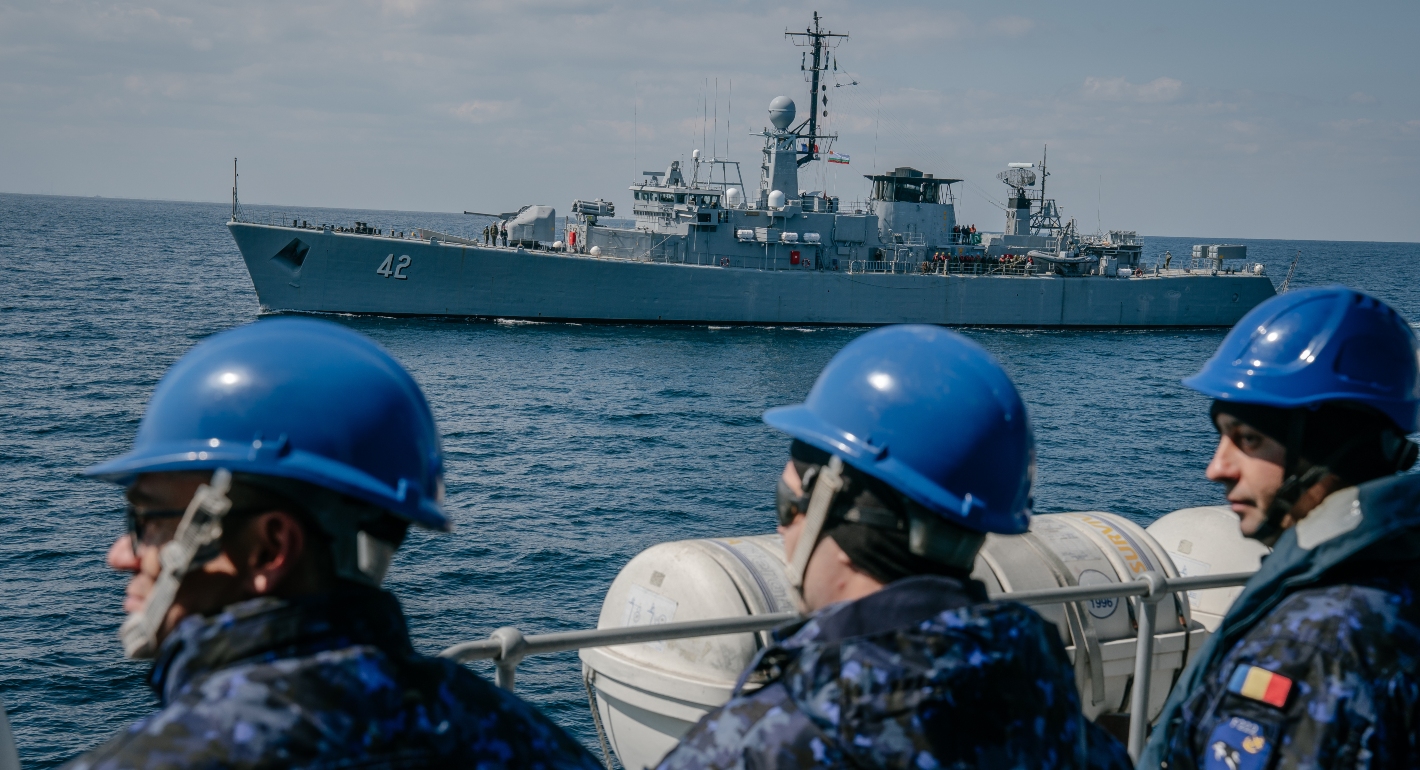
As Russia's war on Ukraine drags on, NATO is expanding its footprint in the Black Sea. Turkey, Romania, and Bulgaria are upgrading their fleets and deepening trilateral cooperation.

Dimitar Bechev