

Paper
Matthew Rojansky
{
  "authors": [
    "Matthew Rojansky"
  ],
  "type": "legacyinthemedia",
  "centerAffiliationAll": "dc",
  "centers": [
    "Carnegie Endowment for International Peace"
  ],
  "collections": [],
  "englishNewsletterAll": "ctw",
  "nonEnglishNewsletterAll": "",
  "primaryCenter": "Carnegie Endowment for International Peace",
  "programAffiliation": "russia",
  "programs": [
    "Russia and Eurasia"
  ],
  "projects": [],
  "regions": [
    "North America",
    "United States"
  ],
  "topics": [
    "Political Reform",
    "Economy",
    "Foreign Policy"
  ]
}
Source: Getty
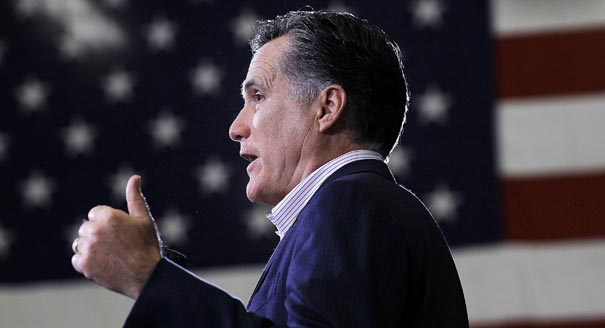
Mitt Romney's speech at the Clinton Global Initiative called for U.S. foreign assistance policy to embrace the potential of free enterprise over often ill-received freedom agendas.
Source: National Interest

The “freedom agenda,” which was the hallmark of the George W. Bush administration, is not so much about freedom as it is about picking winners and losers. The invasion of Iraq may have been justified had Saddam’s regime posed a credible threat to U.S. national security, but it surely did not warrant elevating a new a group of corrupt, squabbling elites to power in Baghdad. Yet leaders from both parties in Washington have perpetuated precisely this type of interventionism, usually by means of direct support for political parties or NGOs, from Latin America to Eastern Europe. The Obama administration appears irresolute in the face of the Arab Spring precisely because the options—dictator or Islamist?—are so unappealing. Picking winners abroad based on their professed commitment to American values or interests is unlikely to serve either but is quite certain to exhaust U.S. power and influence.
At the Clinton Global Initiative, Romney offered a truly new path, one that begins in the very crisis that has so stymied Obama. In his speech, Romney recounted the now-famous story of Mohamed Bouazizi, the twenty-six-year-old Tunisian man whose protest by self-immolation sparked what became the Arab Spring. Bouazizi did not burn himself to death in order to supplant the dictatorships of Tunisia’s Zine El-Abidine Ben Ali, Libya’s Muammar el-Qaddafi or Egypt’s Hosni Mubarak; he did so because he wanted freedom to exercise the simple and God-given right to work for his own prosperity and that of his family.
Yet Bouazizi’s tragic act of protest and the fall of the Arab world’s most seasoned tyrants are inextricably linked. People everywhere, regardless of race, faith or political views, share the basic need to control their own destiny, which begins with the right to earn a living through work. Those who work, in Romney’s words, “will not long tolerate corruption nor quietly endure the brazen theft by government of the product of hard-working men and women.” Simply put, participation in free enterprise is the most powerful tool yet invented for bringing freedom to whole societies.
This idea—that free enterprise breeds broader freedom—should be the basis of a new American freedom agenda. To be sure, free enterprise is not the only freedom that matters, yet it is the one principle Americans can promote through our foreign policy that does not risk draining the treasury or dragging U.S. soldiers and diplomats into endless cycles of intervention and nation building. What is more, free enterprise is one of the few strategies that offers the promise of stability; people who work have something to live for, and they are far less likely to tolerate extremism or aspire to martyrdom.
Governor Romney has proposed creating “prosperity pacts” that condition U.S. assistance on commitments by other countries to lower barriers to trade, investment and entrepreneurialism; partnering with the private sector to finance small- and medium-sized businesses abroad that slip between the cracks of microlending and traditional banking; and establishing a “Reagan Economic Zone” that promises free and fair trade to all its participants. These are all good ideas, but a new American freedom agenda must be both more basic and more ambitious.
In the aftermath of the Second World War, the United States used all the tools of national power to shape a rules-based international system that favored freedom to innovate, trade and compete, and for decades Americans led the world in all three. Now, the “Washington consensus” of free markets, free trade and fiscal responsibility faces competition from growth engines that mix state-sponsored and government-controlled enterprise with ceaseless technological modernization and merciless competition.
We will not prevail against competitors such as these through an arms race, whether measured in missiles, contracts or grants to favored groups. We can prevail by setting an example for others of what it means to achieve prosperity through freedom; by opening our doors to all those who aspire to such prosperity; and by husbanding our national power so that when competitors seek to transform temporary advantage into permanent dominance, we retain the strength and the will to resist them. We also can win by ensuring that we do not compete with one hand tied behind our back, by leveraging the resources of the private sector in transparent and mutually beneficial partnerships with government, such as the lending program Governor Romney envisions, or an enhanced commitment to public-private partnership in research and development.
Above all, the new American freedom agenda must promote and protect the freedom to work, so that millions of others like Mohamed Bouazizi will bring about lasting change, not through dramatic and destructive acts of protest but by the simple and enduring resolve to defend what they have earned. In a world of free-flowing information and capital, tools such as investment, immigration and education can expand the reach of free enterprise to every corner of the globe, so that while dictators and oligarchs may cling to political power, they increasingly will find themselves dominating domains that have become isolated and hollow.
Governor Romney’s speech could have been a watershed moment for his candidacy, yet it was little noticed by the press or touted by his own campaign. Perhaps this is because the venue bore the name of Bill Clinton. Still, it is telling that when a Democrat and a Republican put aside their differences to deal with pressing global challenges, the result is potentially world changing—and fundamentally American.
This article was originally published in the National Interest.
Former Deputy Director, Russia and Eurasia Program
Rojansky, formerly executive director of the Partnership for a Secure America, is an expert on U.S. and Russian national security and nuclear-weapon policies.
Recent Work
Matthew Rojansky
Matthew Rojansky
Carnegie does not take institutional positions on public policy issues; the views represented herein are those of the author(s) and do not necessarily reflect the views of Carnegie, its staff, or its trustees.

The domestic impacts of how long it is taking to end the war in Ukraine have pushed the French electorate to the political extremes and compromised the country’s diplomatic capacity.

Rym Momtaz

Before the next wave of EU enlargement takes place, the union needs to grapple with thorny questions of how power is distributed among its members.


Emil Sondaj Hansen, Ditte Brasso Sørensen

The new U.S.–Denmark–Greenland agreement will help Washington exert political, economic, and financial dominance under the guise of security. Yet, it acknowledged Copenhagen’s and Nuuk’s sovereignty on the island.

Marc Pierini

A summer of escalation in the Black Sea has hurt Ukraine economically and is exacerbating world food security. A truce is needed—as is a broader reframing of Europe’s Ukraine strategy.

Thomas de Waal

Are Germany’s economic, industrial, and political struggles becoming a liability for the EU’s ability to rise to the geopolitical moment?
Rym Momtaz, ed.