• Research
  • Strategic Europe
  • About
  • Experts
Carnegie Europe logoCarnegie lettermark logo
EUNATO
  • Donate
{
  "authors": [
    "Alexey Malashenko"
  ],
  "type": "other",
  "centerAffiliationAll": "",
  "centers": [
    "Carnegie Endowment for International Peace",
    "Carnegie Russia Eurasia Center"
  ],
  "collections": [],
  "englishNewsletterAll": "",
  "nonEnglishNewsletterAll": "",
  "primaryCenter": "Carnegie Russia Eurasia Center",
  "programAffiliation": "",
  "programs": [],
  "projects": [
    "Eurasia in Transition"
  ],
  "regions": [],
  "topics": []
}
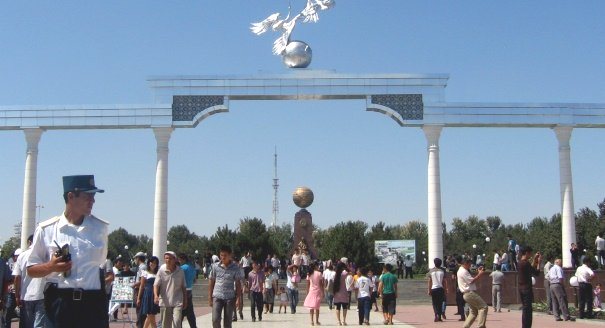
Source: Getty

Other
Carnegie Russia Eurasia Center

Uzbekistan: What Changes Can Be Expected?

Uzbekistan sees itself as a regional Central Asian leader, and in fact the situation in Central Asia is largely determined by the developments inside this country.

Link Copied
By Alexey Malashenko
Published on Dec 20, 2012
Project hero Image

Project

Eurasia in Transition

Learn More

This new Briefing by Alexey Malashenko is dedicated to Uzbekistan—a country which sees itself as a regional Central Asian power.
Key Conclusions

  • Tashkent is trying to conduct relations with both its neighbors and outside powers (China, Europe, Russia, and the United States) from the position of regional leader. The situation in Central Asia is largely determined by the developments inside Uzbekistan.
     
  • The existing institutions in Uzbekistan—the presidency, parliament, and political parties—are mainly formal. The 1992 Constitution is ostensibly democratic, but the country is really governed by one person: President Karimov. However, it would be wrong to describe Uzbekistan’s actual political life as “dying,” given the traditional presence of inter-clan rivalry and power struggles in the president’s inner circle, as well as the existence of the illegal Islamist opposition.
     
  • A stable Islamist opposition that includes a multitude of factions appeared in Uzbekistan right after the country gained its independence. The Islamists’ main goal is to create a supranational califate in Central Asia with the Ferghana Valley serving as its territorial nucleus. The regime views the religious opposition as the main threat to its existence.
     
  • Closer ties with Washington against a backdrop of cautious distancing from Moscow is emerging as the leading trend in Uzbekistan’s multi-vector foreign policy. The constant search for partnership alternatives to Russia and the desire to escape Russia’s guardianship, while not turning down its economic and political support, are evident. Tashkent is not planning to participate in Moscow-led international organizations, considering them a threat to its sovereignty.
     
  • Uzbekistan’s key political issue is power succession. The new leader’s risky task of establishing himself will be accompanied by the elite’s internal struggle, which will be especially intense, since Uzbekistan lacks a single clan or interest group that is able to impose its will on the entire elite. External actors will not play a particularly significant role in the transition of power.

About the Author

Alexey Malashenko

Former Scholar in Residence, Religion, Society, and Security Program

Malashenko is a former chair of the Carnegie Moscow Center’s Religion, Society, and Security Program.

    Recent Work

  • Commentary
    What Will Uzbekistan’s New President Do?

      Alexey Malashenko

  • Commentary
    Preserving the Calm in Russia’s Muslim Community

      Alexey Malashenko

Alexey Malashenko
Former Scholar in Residence, Religion, Society, and Security Program
Alexey Malashenko

Carnegie does not take institutional positions on public policy issues; the views represented herein are those of the author(s) and do not necessarily reflect the views of Carnegie, its staff, or its trustees.

More Work from Carnegie Europe

Get more news and analysis from
Carnegie Europe
Carnegie Europe logo, white
Rue du Congrès, 151000 Brussels, Belgium
  • Research
  • Strategic Europe
  • About
  • Experts
  • Projects
  • Events
  • Contact
  • Careers
  • Privacy
  • For Media
  • Gender Equality Plan
Get more news and analysis from
Carnegie Europe
© 2026 Carnegie Endowment for International Peace. All rights reserved.