

Research
- +10
Rosa Balfour, Frances Z. Brown, Yasmine Farouk, …
{
  "authors": [
    "Moisés Naím"
  ],
  "type": "legacyinthemedia",
  "centerAffiliationAll": "",
  "centers": [
    "Carnegie Endowment for International Peace"
  ],
  "collections": [],
  "englishNewsletterAll": "",
  "nonEnglishNewsletterAll": "",
  "primaryCenter": "Carnegie Endowment for International Peace",
  "programAffiliation": "",
  "programs": [],
  "projects": [],
  "regions": [
    "North America",
    "United States",
    "South America"
  ],
  "topics": [
    "Political Reform",
    "Economy"
  ]
}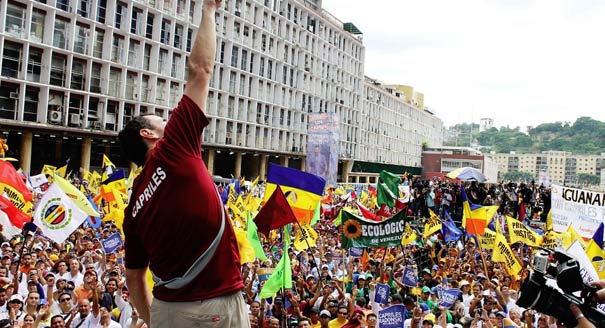
Source: Getty
Venezuelan presidential candidate Henrique Capriles has run a flawless campaign and on Sunday will confront Chavez with the strongest challenge he has ever faced at the polls.
Source: Financial Times

Yet confounding expectations, Mr Capriles has run a flawless campaign and on Sunday will confront Chavez with the strongest challenge he has ever faced at the polls. In contrast, Romney’s campaign, lavishly funded and full of the best political consultants money can buy, has suffered from endless gaffes, mistakes and miscalculations. Peggy Noonan, a Republican columnist, has famously called it “a rolling calamity”.
So is there anything that Mitt Romney, the 65-year-old veteran of politics and business, can learn from a 40 year-old from a backward country with a deeply flawed democracy? Yes, quite a bit, as it turns out.First, he could learn the virtue of being enthusiastically inclusive. He should ignore his advisers and reach out to the voters everyone says will never support him. Mr Capriles has engaged even the most stalwart Chavez backers and constantly reiterates that if elected, he will be inclusive, tolerant and will allow no score-settling against Chavez followers. Mr Romney instead sounded sincere in his now-notorious dismissal of the 47 per cent of voters whose lifestyle and income put them securely in Barack Obama’s camp.
Second, he should beware of ideology – which will never pay the rent or cure your sick child. “What I learned as mayor and governor is that people want concrete solutions to their concrete problems,” Mr Capriles often says. In contrast, Mr Romney’ rhetoric is long on ideology and short on details, a pattern that is making him vulnerable. People want to hear specific proposals that will improve their daily lives. This is as obvious as it seems to be easy to forget.
Mr Romney should also be careful to avoid bickering. While Mr Chavez regularly spews a torrent of insults at his rival, Mr Capriles has always been respectful and careful in the way he addresses the president. This is surprising, given the deep political rifts that divide the country. Yet Mr Capriles has understood that despite the polarisation, there is a growing popular hunger for reconciliation and a strong desire for politicians to stop bickering and get on with solving the country’s problems. While the polarisation is less pronounced in the US than in Venezuela, polls show that US voters think politicians’ squabbling is preventing them dealing with problems such as the fiscal cliff, high indebtedness or welfare reform and that this gridlock is bad for the nation.
While it is true that negative advertising often works, there may be significant gains to be made by tapping Americans’ hunger for more civility and collaboration among politicians.
Empathy is the next quality Mr Romney should cultivate. The only thing worse than a politician displaying a forced empathy is one who shows no empathy at all. Bill Clinton is, of course, the master at making people feel he genuinely understands their predicament. While empathy towards the poor and the needy also comes naturally to Mr Capriles, he has been very deliberate in making it one of the central features of his political persona. Mr Romney is trying hard to convey that he feels people’s pain. But too often he lets slip comments that make it patently clear that the privileged life he has led makes it hard for him to really get into poor people’s shoes. He should try harder.
Despite Mr Capriles’ flawless campaign he may still lose Sunday’s election and despite Mr Romney’s flawed one he may win in November. Mr Obama may turn out to be vulnerable and, thanks to his charisma, oil money and dirty tricks, Mr Chavez may prove invincible. If Mr Capriles wins on Sunday, however, his final lesson to the world will be to show that abusive autocrats can be beaten by a great candidate who runs an impeccable campaign.
This article was originally published in the Financial Times.

Distinguished Fellow
Moisés Naím is a distinguished fellow at the Carnegie Endowment for International Peace, a best-selling author, and an internationally syndicated columnist.
Recent Work



Rosa Balfour, Frances Z. Brown, Yasmine Farouk, …
Moisés Naím
Carnegie does not take institutional positions on public policy issues; the views represented herein are those of the author(s) and do not necessarily reflect the views of Carnegie, its staff, or its trustees.

French President Emmanuel Macron has unveiled his country’s new nuclear doctrine. Are the changes he has made enough to reassure France’s European partners in the current geopolitical context?

Rym Momtaz, ed.
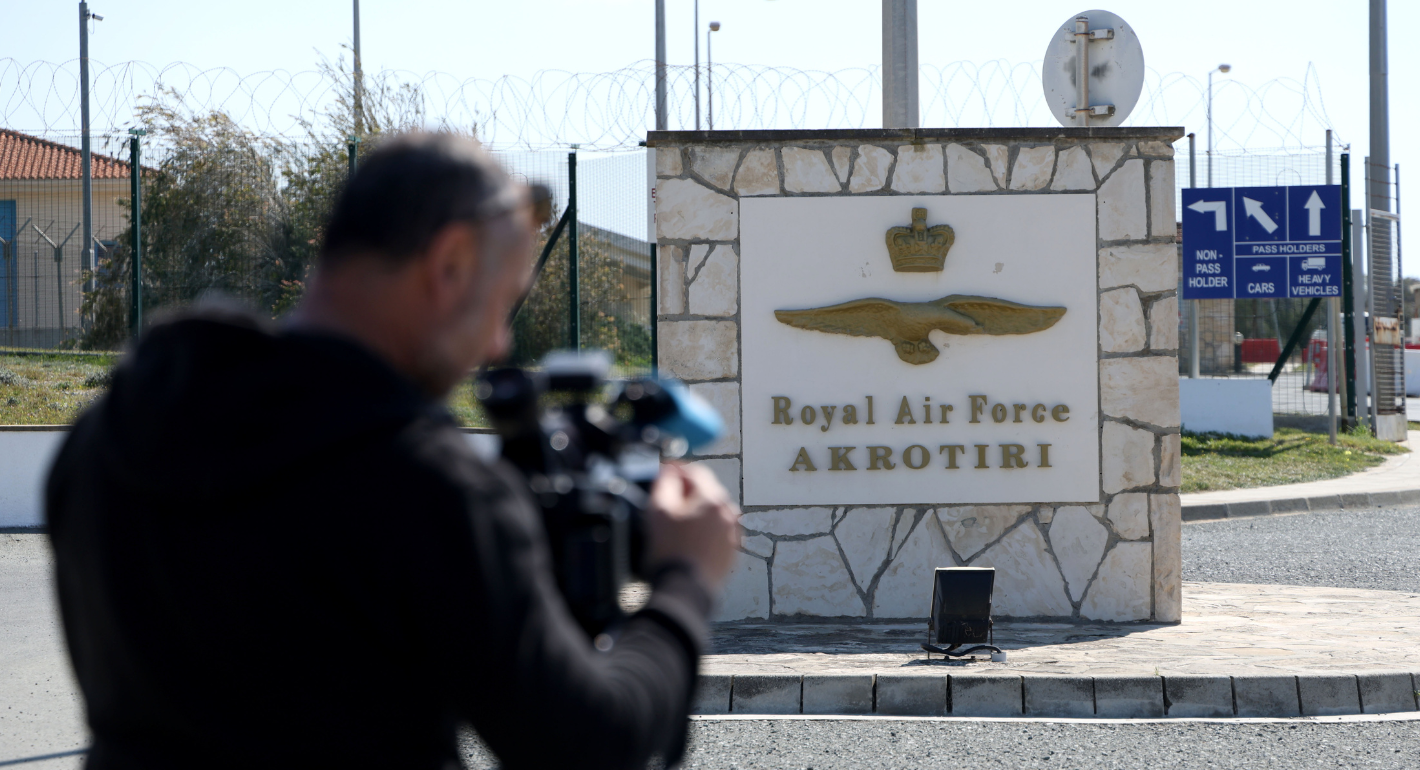
The drone strike on the British air base in Akrotiri brings Europe’s proximity to the conflict in Iran into sharp relief. In the fog of war, old tensions in the Eastern Mediterranean risk being reignited, and regional stakeholders must avoid escalation.

Marc Pierini
European reactions to the war in Iran have lost sight of wider political dynamics. The EU must position itself for the next phase of the crisis without giving up on its principles.

Richard Youngs
For years, the United States anchored global cyber diplomacy. As Washington rethinks its leadership role, the launch of the UN’s Cyber Global Mechanism may test how allies adjust their engagement.
Patryk Pawlak, Chris Painter
Europe’s reaction to the war in Iran has been disunited and meek, a far cry from its previously leading role in diplomacy with Tehran. To avoid being condemned to the sidelines while escalation continues, Brussels needs to stand up for international law.

Pierre Vimont