• Research
  • Strategic Europe
  • About
  • Experts
Carnegie Europe logoCarnegie lettermark logo
EUUkraine
  • Donate
{
  "authors": [
    "Shahram Chubin"
  ],
  "type": "other",
  "centerAffiliationAll": "",
  "centers": [
    "Carnegie Endowment for International Peace",
    "Carnegie Europe"
  ],
  "collections": [
    "Iranian Proliferation",
    "Transatlantic Cooperation",
    "Europe’s Southern Neighborhood"
  ],
  "englishNewsletterAll": "",
  "nonEnglishNewsletterAll": "",
  "primaryCenter": "Carnegie Endowment for International Peace",
  "programAffiliation": "",
  "programs": [],
  "projects": [],
  "regions": [
    "North America",
    "United States",
    "Middle East",
    "Iran",
    "Western Europe",
    "Europe"
  ],
  "topics": [
    "Security",
    "Nuclear Policy"
  ]
}
Source: Getty

Other

Command and Control in a Nuclear-Armed Iran

With the international spotlight focused on Iran and its nuclear agenda, Tehran has been loath to reliably assure the international community of its ultimate intentions.

Link Copied
By Shahram Chubin
Published on Feb 11, 2013

Source: Proliferation Papers No. 45

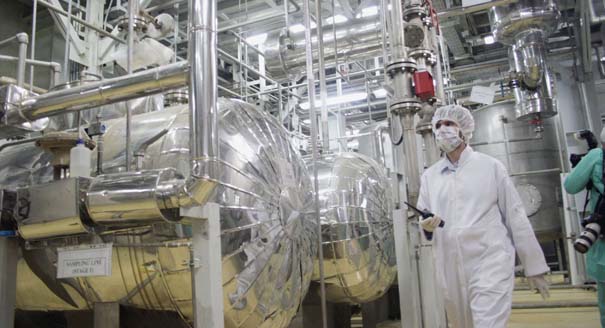
In the long standoff regarding its nuclear ambition, Iran has cultivated ambiguity and been loath to reliably assure the international community of its ultimate intentions, complicating Western efforts to understand, let alone constrain, Tehran’s endeavors. While many analyses have focused on how to prevent or contain a potential nuclear-armed Iran, the posture Iran would adopt once it has developed its nuclear weapons remains elusive. This paper highlights that while opting for command-and-control (C2) arrangements, Iran would have to reconcile two contrasting imperatives: first, to disperse assets and decentralize C2 to minimize the risks and potential damages of a disabling strike, which has been seen as a real – even imminent – threat in recent years. A contrasting concern emerged as the Iranian Revolutionay Guards’ Corps became a key formulator and executor of Tehran’s security policy: how to guard against the risk of unauthorized use of major weapons systems? Among the factors that could influence Iran’s choices in terms of C2 arrangements, this paper focuses on Tehran’s national security experience, the lessons it may have derived from it, as well as from the experience of other countries.

This piece originally appeared in IFRI's Proliferation Papers.

About the Author

Shahram Chubin

Former Nonresident Senior Fellow, Nuclear Policy Program

Chubin, who is based in Geneva, focuses his research on nonproliferation, terrorism, and Middle East security issues. He was director of studies at the Geneva Centre for Security Policy, Switzerland, from 1996 to 2009.

    Recent Work

  • In The Media
    Iran and the P5+1 in Moscow: Time is Running Out (Again)

      Shahram Chubin

  • In The Media
    The Revolution in Cairo is a Serious Warning for the Mullahs

      Shahram Chubin

Shahram Chubin
Former Nonresident Senior Fellow, Nuclear Policy Program
SecurityNuclear PolicyNorth AmericaUnited StatesMiddle EastIranWestern EuropeEurope

Carnegie does not take institutional positions on public policy issues; the views represented herein are those of the author(s) and do not necessarily reflect the views of Carnegie, its staff, or its trustees.

More Work from Carnegie Europe

  • Commentary
    Strategic Europe
    Europe and the Arab Gulf Must Come Together

    The war in Iran proves the United States is now a destabilizing actor for Europe and the Arab Gulf. From protect their economies and energy supplies to safeguarding their territorial integrity, both regions have much to gain from forming a new kind of partnership together.

      • Rym Momtaz

      Rym Momtaz

  • Commentary
    Strategic Europe
    Taking the Pulse: Is France’s New Nuclear Doctrine Ambitious Enough?

    French President Emmanuel Macron has unveiled his country’s new nuclear doctrine. Are the changes he has made enough to reassure France’s European partners in the current geopolitical context?

      • Rym Momtaz

      Rym Momtaz, ed.

  • Commentary
    The Iran War’s Dangerous Fallout for Europe

    The drone strike on the British air base in Akrotiri brings Europe’s proximity to the conflict in Iran into sharp relief. In the fog of war, old tensions in the Eastern Mediterranean risk being reignited, and regional stakeholders must avoid escalation.

      Marc Pierini

  • Commentary
    Strategic Europe
    The EU Needs a Third Way in Iran

    European reactions to the war in Iran have lost sight of wider political dynamics. The EU must position itself for the next phase of the crisis without giving up on its principles.

      Richard Youngs

  • Trump United Nations multilateralism institutions 2236462680
    Article
    Resetting Cyber Relations with the United States

    For years, the United States anchored global cyber diplomacy. As Washington rethinks its leadership role, the launch of the UN’s Cyber Global Mechanism may test how allies adjust their engagement.

      • Christopher Painter

      Patryk Pawlak, Chris Painter

Get more news and analysis from
Carnegie Europe
Carnegie Europe logo, white
Rue du Congrès, 151000 Brussels, Belgium
  • Research
  • Strategic Europe
  • About
  • Experts
  • Projects
  • Events
  • Contact
  • Careers
  • Privacy
  • For Media
  • Gender Equality Plan
Get more news and analysis from
Carnegie Europe
© 2026 Carnegie Endowment for International Peace. All rights reserved.








