

In The Media
Lilia Shevtsova
{
  "authors": [
    "Lilia Shevtsova"
  ],
  "type": "commentary",
  "centerAffiliationAll": "",
  "centers": [
    "Carnegie Endowment for International Peace",
    "Carnegie Russia Eurasia Center"
  ],
  "collections": [],
  "englishNewsletterAll": "",
  "nonEnglishNewsletterAll": "",
  "primaryCenter": "Carnegie Russia Eurasia Center",
  "programAffiliation": "",
  "programs": [],
  "projects": [],
  "regions": [],
  "topics": []
}
Source: Getty
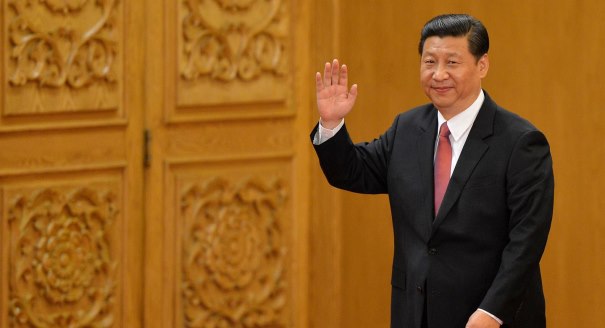
Everyone seems ready to believe in the Chinese success story and China’s transformation into a new global power. Plenty of evidence indicates that the current enthusiasm for China’s rise and its economic growth are just another delusion that will inevitably end up in a new abrupt awakening.
One of the curious features of political psychology is the way it tries to see what is not really there, but does not see the obvious. This comes through in the political establishment’s inability (even in the most developed democracies) to forecast developments, as well as in their inadequate policies. The West was not ready for the “velvet revolutions” of 1989, for example, and the Soviet Union’s collapse caught it by surprise. The Arab Spring, too, took the West by surprise. Plenty of evidence indicates that the current enthusiasm for China’s rise and its economic growth are just another delusion that will inevitably end up in a new abrupt awakening.
We can debate why politicians and experts misinterpret or fail to see the trends and developments leading to turning points in world history. Is it because of weak and unsystematic analysis, or because their interpretations are based on the balance of power evaluations but overlook internal processes, or because analysis falls prey to short-term considerations and deliberate self-delusion? These are all questions that in themselves require honest analysis. I am simply pointing out the fact.
Recalling past failures in analysis would be wise if only to avoid falling into another self-delusion – this time over China. Everyone seems ready to believe in the Chinese success story and China’s transformation into a new global power. Acknowledged political gurus in the West are busy offering new foreign policy visions based on the recognition of China as a central pillar in global affairs. Henry Kissinger, in his latest book, On China, puts forward the concept of “co-evolution” as the basis of the Sino-American relationship, and the creation of the Pacific Community as an analogue of the Atlantic Community that will “respond to China’s aspiration to a global role.”
Yet if you read the discussions on China in the Journal of Democracy, and analyze what experts such as Francis Fukuyama, Andrew Nathan, Bobo Lo, Minxin Pei, Cheng Li, Yu Liu, Dingding Chen, and Andrew Scobell are saying, you cannot help but ask if Kissinger and others entranced by China’s growth really understand what is actually happening in China? Take for example the latest article by Minxin Pei “Asia’s Real Challenge: China’s ‘Potemkin’ Rise” where the author concludes that “most outside observers are poorly informed” about China and “they are poorly prepared if things in China start to unravel” (The Diplomat, May 7, 2013). (Incidentally, we are saying the same thing today about Putin’s Russia.)
Maybe it is time to start thinking not about China’s rise, but about the future situation to which all the problems that have built up in China could lead?

Former Senior Associate, Russian Domestic Politics and Political Institutions Program, Moscow Center
Shevtsova chaired the Russian Domestic Politics and Political Institutions Program at the Carnegie Moscow Center, dividing her time between Carnegie’s offices in Washington, DC, and Moscow. She had been with Carnegie since 1995.
Recent Work
Lilia Shevtsova
Lilia Shevtsova
Carnegie does not take institutional positions on public policy issues; the views represented herein are those of the author(s) and do not necessarily reflect the views of Carnegie, its staff, or its trustees.