

Commentary
Nathan J. Brown
{
  "authors": [
    "Nathan J. Brown"
  ],
  "type": "questionAnswer",
  "centerAffiliationAll": "dc",
  "centers": [
    "Carnegie Endowment for International Peace",
    "Malcolm H. Kerr Carnegie Middle East Center",
    "Carnegie Russia Eurasia Center"
  ],
  "collections": [
    "Arab Awakening"
  ],
  "englishNewsletterAll": "menaTransitions",
  "nonEnglishNewsletterAll": "",
  "primaryCenter": "Carnegie Endowment for International Peace",
  "programAffiliation": "MEP",
  "programs": [
    "Middle East"
  ],
  "projects": [
    "Eurasia in Transition"
  ],
  "regions": [
    "North Africa",
    "Egypt"
  ],
  "topics": [
    "Political Reform",
    "Democracy",
    "Civil Society",
    "Religion"
  ]
}
Source: Getty
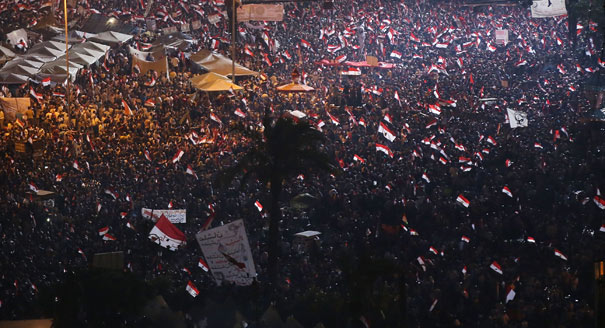
The demonstrations may be larger this time, but Egyptian society is far more divided than it was during the revolution two years ago. It is essential for the transition to be inclusive.
Only days after millions poured into the streets of Cairo to protest Mohamed Morsi’s presidency, the military stepped in to remove Egypt’s first democratically elected leader. Backed by widespread popular support, the military suspended the constitution and named Adli Mansour, chief justice of the Supreme Constitutional Court, interim president until fresh elections can be held.
In a Q&A, Nathan J. Brown analyzes Morsi’s fall and the prospects for democracy in Egypt. Brown says that society is far more divided than after the revolution two years ago, making it even harder for leaders to avoid the same mistakes. The transition to democracy must be inclusive and the process of building a new system must be taken seriously.
There were more demonstrators this time around, but they are a bit less diverse—the Muslim Brotherhood was a victim of this revolution rather than a participant. Society is far more polarized than it was back in the spring of 2011. And this time, the police claim to be on the side of the people.
Morsi had three stand-out failings.
First, he made a strategic miscalculation—though perhaps an understandable one—when he decided that the opposition would moan and groan but could not really obstruct him. Instead of addressing the people’s concerns, he focused on various parts of the state apparatus by reaching a modus vivendi with the military, placating the security services, outmaneuvering the judges, and attempting to gradually subdue the bureaucracy. He clearly overestimated his ability to play this game and underestimated the opposition.
Second, he was unable—almost constitutionally unable, it seems—to reach Egyptians outside of his base. Even when he tried, his language alienated those he tried to attract.
And third, he handled his final crisis poorly. Morsi had an almost impeccable sense of offering the wrong speech at the wrong time.
In addition to his tactical and strategic flaws, Morsi did not have many policy achievements. For most Egyptians, conditions got worse during his presidency.
Some of this was his fault (he never acted decisively), some was not (he had only imperfect control over the levers of state), and some would have afflicted any president. But after a year in office, most Egyptians blamed Morsi in a startlingly personal way.
The military is in the driver’s seat. It has produced a road map for the coming transition that appears to be more of a loophole than an actual text. But behind it seems to be a desire among most civilian actors that the military will manage the process in a way that restores civilian rule. However, there is not any talk right now of reopening the terms set down for the military in the now-suspended 2012 constitution (which gave the military the autonomy it wanted).
The Brotherhood was accused by its critics of cutting a deal with the military. Now those same critics are cutting the same deal. The military will likely remain in control over the short term and lurk in the wings after the constitution is amended and restored.
This is not to say that civilian actors are irrelevant. Those appointed to the cabinet and to the panel to draft constitutional amendments will be critical, but the military has not hinted at any names or indicated how they will be selected.
As elections take place—and the military has promised them quickly—the established non-Islamist groups who lost out to the Brotherhood in past votes may make a comeback. The youth leaders of the Tamarrud (Rebel) campaign that sought Morsi’s ouster will be major players over the longer term as well if they can maintain some level of popular mobilization and devise a political strategy.
And of course there are all kinds of state institutions—the judiciary and the security apparatus—that will likely play a role as well in what happens next.
But the popular coup does not mean that the Muslim Brotherhood is out of the game. Brotherhood leaders can still have an effect on events by deciding whether and in what ways they will resist the coup. Ultimately, however, the Salafis may come out as a long-term winner, using the blow to the Brotherhood to move to the fore in among the Islamist segment of the population.
Egypt can learn from its recent mistakes, though it may not. Leaders need to be inclusive, with a “no victor, no vanquished” approach, take procedural questions more seriously in deciding how to reconstruct the political system, and learn how to manage their differences.
This is primarily a domestic struggle, and outside actors are limited in what they can do. If external actors can find a way to deliver a strong message in support of consensual politics and against attempts to suppress the Brotherhood, those would be positive steps.
Over the short term, this will cheer up some and depress others. But Morsi’s fall won’t have much of a direct impact (except on Hamas, which was counting on having a friendly leader in next-door Egypt).
The real impact may be over the longer term. The coup might convince some Islamists that they will never win power through the political process. That would be a dangerous conclusion but not an unexpected one for some groups.

Nonresident Senior Fellow, Middle East Program
Nathan J. Brown, a professor of political science and international affairs at George Washington University, is a distinguished scholar and author of nine books on Arab politics and governance, as well as editor of five books.
Recent Work
Nathan J. Brown
Nathan J. Brown
Carnegie does not take institutional positions on public policy issues; the views represented herein are those of the author(s) and do not necessarily reflect the views of Carnegie, its staff, or its trustees.

As the EU confronts profound challenges, several leaders have called for fundamental reform to the union’s model—but only modest, superficial changes have resulted. What if Europe really could be reimagined from zero today: What should such a redesigned European order look like?

Richard Youngs, ed.
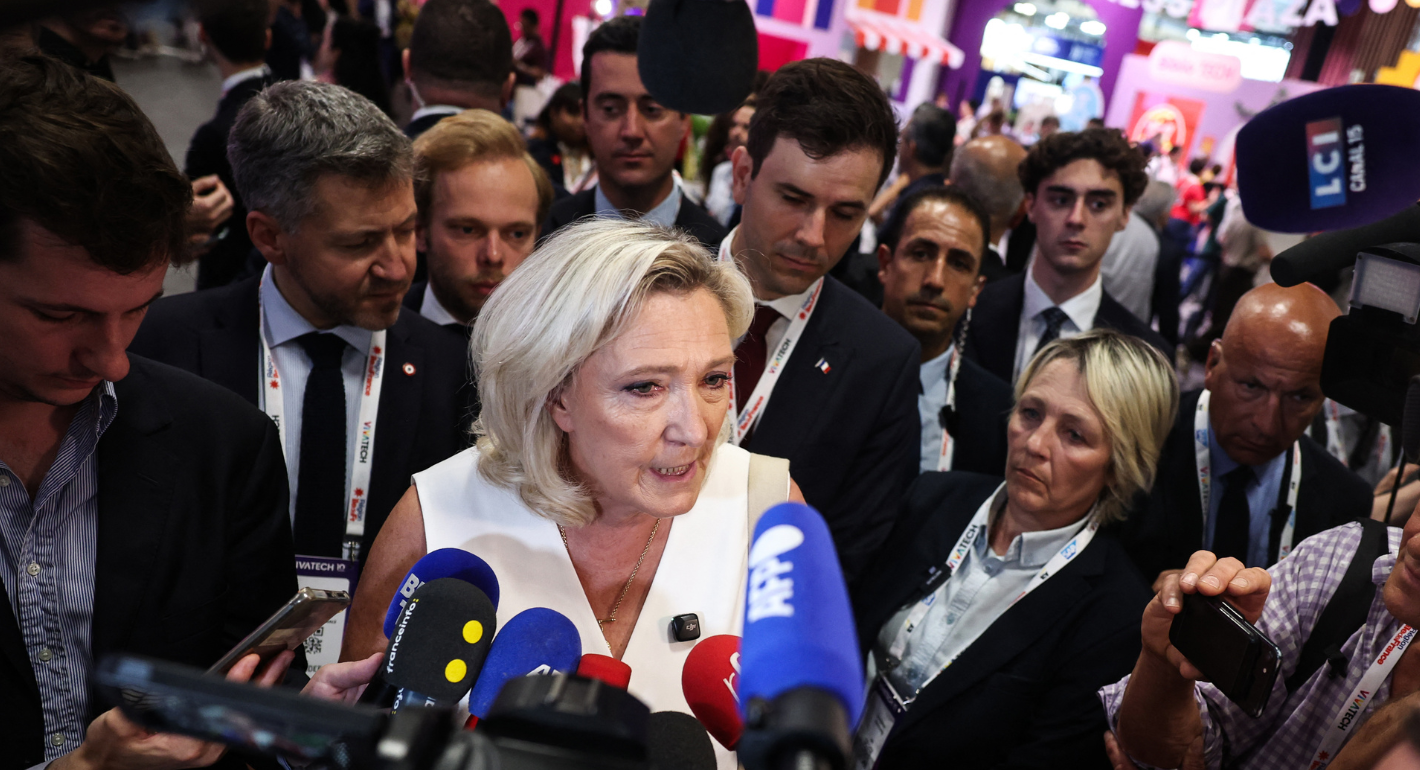
Far-right leader Marine Le Pen can—and will—run in France’s next presidential election. What does the outcome of her appeal against a 2025 embezzlement conviction mean for the country’s political future?
Catherine Fieschi
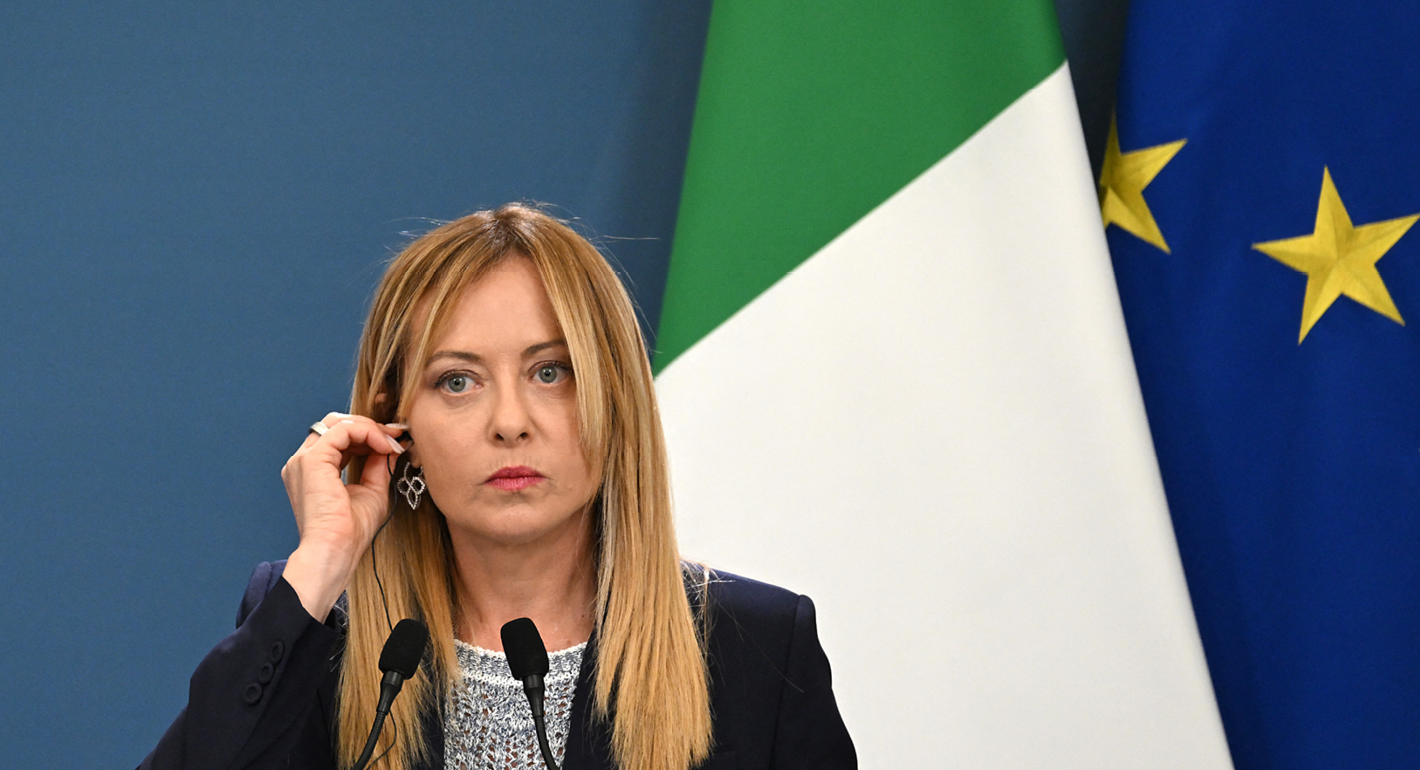
When Giorgia Meloni very publicly rebuked Donald Trump’s disparaging remarks about her, it surprised many who saw her as a European extension of Trumpism. Is the spat a sign of trouble in the radical right’s transatlantic axis?

Rym Momtaz, ed.

The EU’s new migration policy is not suited to today’s realities. With climate change increasingly becoming a driver of displacement, Europe needs to rethink its deterrence-focused approach.

Shana Tabak
The battle over free speech has taken center stage since U.S. Vice President JD Vance accused Europe of censorship. From travel bans to social media regulation, especially around the Israel-Palestine conflict, are liberal democratic governments weaponizing free speech?
Rym Momtaz, ed.