

Other
Michael D. Swaine
{
  "authors": [
    "Michael D. Swaine"
  ],
  "type": "legacyinthemedia",
  "centerAffiliationAll": "dc",
  "centers": [
    "Carnegie Endowment for International Peace",
    "Carnegie China"
  ],
  "collections": [
    "China’s Foreign Relations",
    "U.S.-China Relations"
  ],
  "englishNewsletterAll": "asia",
  "nonEnglishNewsletterAll": "",
  "primaryCenter": "Carnegie Endowment for International Peace",
  "programAffiliation": "AP",
  "programs": [
    "Asia"
  ],
  "projects": [],
  "regions": [
    "China",
    "Japan"
  ],
  "topics": [
    "Military",
    "Security",
    "Technology"
  ]
}
Source: Getty
The apparent unanimity of viewpoints within China on cybersecurity suggests that this issue will remain a major source of tension and differences in the Sino-U.S. relationship.
Source: China Leadership Monitor
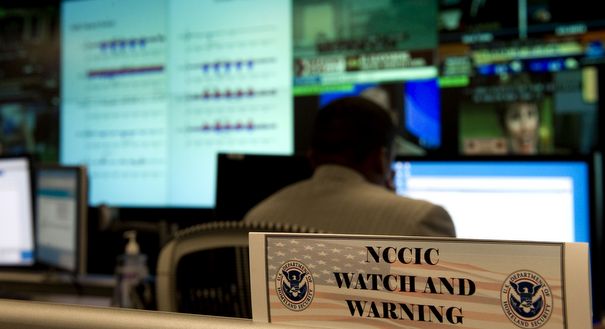
During the past few years, cybersecurity has become a major concern among many countries, as a result of the continued rapid expansion and deepening technological sophistication of the Internet, alongside the growing reliance of governments and societies on cyberbased systems for everything from communications and information storage to military operations and commercial activities.
In recent months, this issue has become a major source of both tension and potential cooperation for the U.S.-China relationship in particular. Stemming from a Western (and especially U.S.) assessment that a growing number of destructive cyberattacks on commercial enterprises and government institutions originate not only from Chinese individuals, but also most likely from Chinese government (and especially military) sources, Washington has greatly intensified its expression of concern to Beijing.
Beijing has repeatedly denied carrying out cyberattacks against any other country, while calling for both bilateral and multilateral cooperation, free from accusations, to formulate agreed-upon norms for the operation of the global Internet as well as place its oversight in the hands of a broadly representative international structure. The United States has resisted the latter proposal.
These developments have elevated the issue of cybersecurity to a top priority within the overall bilateral relationship. In response to the importance and urgency of the issue, Washington and Beijing recently agreed to form a Cyber Working Group (CWG) as part of the bilateral Strategic and Economic Dialogue (S&ED), with the first Bilateral Cybersecurity Working Group Dialogue held in Washington D.C. on 8 July.Thus far, however, little progress has occurred in reducing suspicion and developing cooperation in this area. To the contrary, the United States and presumably China are strengthening their capacity to engage in both defensive and offensive cyber actions against each other, presenting the prospect of a cyber arms race while potentially intensifying the already high level of distrust between the two countries.
To understand the challenges and opportunities presented to the Sino-U.S. relationship by the cybersecurity issue, it is important to examine in some detail the views, beliefs, and apparent assumptions of Chinese observers toward the subject. This article addresses Chinese thinking on four basic aspects of the issue:
The Definition of Cybersecurity and the Challenge It Presents
The Cybersecurity Threat Posed by the United States and Other Countries
The Origins and Motives Behind Foreign Cybersecurity Threats
Chinese Preferences for Mitigating Cybersecurity Threats
As they have in several previous editions of CLM, our examination of Chinese views on these topics will distinguish between three basic types of Chinese sources: authoritative; quasi-authoritative; and non-authoritative.
For each area, particular attention is given to: a) the authoritative PRC government viewpoint (if publicly available); b) views toward the United States in particular; and c) any variations that might exist among Chinese commentators, in both substance and tone. The article addresses several specific questions: to what extent and in what manner do Chinese definitions of cybersecurity and Chinese views on the cybersecurity threat differ from those of the United States and other countries? How do Chinese sources respond to U.S. and Western accusations against China? In all these areas, can one discern any significant differences: among authoritative Chinese sources, between military and civilian sources (of all types), and among authoritative, quasi-authoritative, and non-authoritative sources in general?
The article concludes with a summary and some implications for the future.
This article was originally published in the China Leadership Monitor.

Former Senior Fellow, Asia Program
Swaine was a senior fellow at the Carnegie Endowment for International Peace and one of the most prominent American analysts in Chinese security studies.
Recent Work
Michael D. Swaine
Michael D. Swaine
Carnegie does not take institutional positions on public policy issues; the views represented herein are those of the author(s) and do not necessarily reflect the views of Carnegie, its staff, or its trustees.

Are Germany’s economic, industrial, and political struggles becoming a liability for the EU’s ability to rise to the geopolitical moment?

Rym Momtaz, ed.

European states control several Overseas Countries and Territories around the world that carry strategic, economic, and environmental weight. As great powers challenge the rules-based order, defending them is a geopolitical imperative for Europe.

Marc Pierini

The hybrid warfare landscape is evolving rapidly, leaving policymakers without clear strategies. To better inform their work in addressing emerging challenges, governments must dig deeper into the underlying dynamics at play.


Raluca Csernatoni, Alicia Wanless

Mounting economic strain and battlefield losses will not necessarily make the Kremlin less dangerous. They could instead push Moscow toward a more aggressive hybrid campaign designed to test NATO’s Eastern flank, exploit allied hesitation, and fracture European resolve.

Maksym Beznosiuk

Over the past ten years, NATO has held almost as many summits as it did during the entirety of the Cold War. Are they still useful, or is it time to stop holding annual meetings?
Rym Momtaz, ed.