

Paper
George Perkovich
{
  "authors": [
    "George Perkovich"
  ],
  "type": "legacyinthemedia",
  "centerAffiliationAll": "dc",
  "centers": [
    "Carnegie Endowment for International Peace",
    "Malcolm H. Kerr Carnegie Middle East Center",
    "Carnegie Russia Eurasia Center"
  ],
  "collections": [
    "U.S. Nuclear Policy"
  ],
  "englishNewsletterAll": "ctw",
  "nonEnglishNewsletterAll": "",
  "primaryCenter": "Carnegie Endowment for International Peace",
  "programAffiliation": "NPP",
  "programs": [
    "Nuclear Policy"
  ],
  "projects": [
    "Eurasia in Transition"
  ],
  "regions": [
    "North America",
    "United States",
    "Middle East",
    "Syria",
    "Russia",
    "Levant"
  ],
  "topics": [
    "Political Reform",
    "Security",
    "Foreign Policy",
    "Nuclear Policy",
    "Global Governance"
  ]
}
Source: Getty
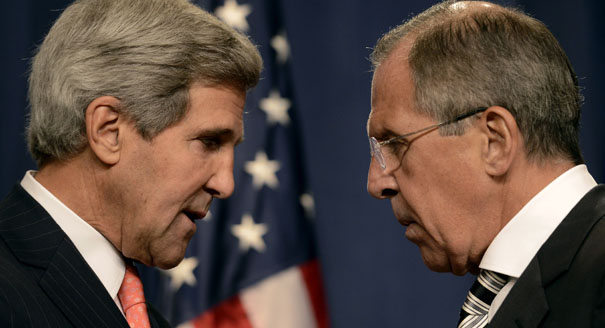
The world watches and waits to hear if the Assad government will give up Syria’s chemical weapons stock.
Source: NPR
The world watches and waits to hear if the Assad government will give up Syria's chemical weapons stock. Carnegie's George Perkovich talks with NPR's Tell Me More host Michel Martin about Israel's view on the Syrian conflict.
MICHEL MARTIN, HOST: I'm Michel Martin and this is TELL ME MORE from NPR News. Later this hour, we'll talk about another pivotal moment in the civil rights movement in this country, the bombing of the 16th Street Baptist Church. Historian Taylor Branch will be with us in just a few minutes. That's ahead.
First, though, we are going to talk about Syria. United Nations inspectors today say there is clear and convincing evidence that chemical weapons were used in the country late last month. That's something most observers have assumed for a while now. That was at the center of a deal reached by Secretary of State John Kerry and Russian Foreign Minister Sergey Lavrov this weekend. They've agreed to remove Syria's chemical weapons stocks. There are a lot of questions that still need to be answered, so for perspective, we're joined now by two members of the Carnegie Endowment for International Peace. George Perkovich is vice president for studies and director of the Nuclear Policy Program there. He's with us in our Washington, D.C. studios. Welcome.
GEORGE PERKOVICH: Thank you.
MARTIN: We hope to be joined later in the program by Ariel Levite. He's a former senior official with the Israeli Ministry of Defense, now senior associate with the Nuclear Policy Program at the Carnegie Endowment. Let's start with you, Mr. Perkovich. You co-authored a piece for Politico where you said that taking Syria's chemical weapons was the best or least bad solution here. Does the agreement reached over the weekend represent that?
PERKOVICH: Yes, I think the agreement as negotiated, you know, and has still to be implemented - but the terms of that, I think, are in a sense more specific and demanding than many people would've expected last week. So I think it has been a success thus far.
MARTIN: Many people, as you would imagine, are skeptical that these weapons will now be found. They feel that the delay and all the debate and the international community, however important from a diplomatic perspective, has just given the regime time to hide their stocks or to minimize the problem. What do you say to that?
PERKOVICH: Well, you can't ignore that concern, but on the other hand, it somewhat misses the point. The idea of the military strikes that President Obama was seeking congressional approval for, was to deter the future use of chemical weapons by the Assad regime. Now, with this agreement and with Assad's major patron, Russia, demanding compliance, it seems impossible that Assad would then use these weapons again. Even if some are hidden, even if it takes longer than has been agreed, the goal of deterring future use, I would argue, has pretty much been achieved.
MARTIN: Were you surprised even though this is something that you called for? Many people thought - to me it still isn't clear whether this proposal actually began as a serious proposal - was it an off-the-cuff observation by Secretary of State, you know, John Kerry, that gained momentum. And I'm curious about your perspective on this, but are you surprised?
PERKOVICH: Yeah, I am a bit surprised. And I'm surprised at how quickly the U.S. and Russia came together on, you know, the details of it. And, like many people, was surprised when this emerged early last week. But when you then think back upon it, as happens in many cases when one thinks back on something and how it happened, it starts to make sense. Because there is obviously something in it for Russia. Russia doesn't want anybody using chemical weapons. No one does. And clearly, the Assad government overreached when they did the attack on August 21. It was too much. They screwed up. And in a sense they realized that too. And so this may offer them a way out that surprised us that they wanted that way out, but clearly they were getting anxious that they had gone too far.
MARTIN: Can you - let us take a step back for a moment if you would and talk about why did they use these weapons in this way at this time? I mean, there had been reports that chemical weapons had, in fact, been used previously. What was the logic of this? Was it...
PERKOVICH: I don't know. I mean, one is speculating and so some of the seemingly most informed speculation that I'd seen or heard is that - the first place they were using chemical weapons because they're spread thinly and the insurgency or the rebellion had been effective and so chemical weapons were a way to kill more people than you could kill kind of a bullet at a time. But also to send a message and intimidate the opposition. So that would seem to be the general purpose for using these weapons.
And then what happened on August 21, when they killed so many more, I have heard, I don't know this, but I've heard that in many ways it was a mistake. In other words, there was a mixture of the chemicals that wasn't as it was supposed to be, or for some other reason, actually, it was a much more intense attack then had been intended. And, in part, the mistake was they realized then that they would never be able to cover it up. That the scale was so great that they were caught in a sense. Whereas the early attacks they could say, oh, that wasn't us, it was the rebels. It wasn't that big a deal. Here they'd really overdone it. And one interpretation is that that was a mistake.
MARTIN: As you'd imagine, I also want to talk about something you alluded to earlier, which is the scope of the violence using conventional weaponry there in the level of savagery, if I may use that word, that we are seeing using conventional weaponry there. But before I do, there obviously is the concern about the regional threat as well. I mean, Syria shares a border with Israel. The fact that this plan doesn't do much to address the underlined violence there, reports that more than a hundred thousand people there have died during the civil war. Do you - so, the first question is - do you feel - what's the practical means of getting rid of these weapons so that they do not pose a threat, you know, to the region as well as, of course, to the civilians in the country there?
PERKOVICH: Well, I think one of the hopes, actually, is that a practical requirement of monitoring and controlling and eventually getting rid of these weapons is going to be some, at least, partial cease-fire or lessening of the conflict, at least in places where the chemical weapons would be, so international inspectors or monitors could get to them. Because otherwise it's kind of impossible to imagine Russian or American or whoever monitors shooting their way in to a place to get chemical weapons. We're not going to authorize it. The Russians aren't going to authorize it. So there's going to have to be some lessening of the conflict, even if locally.
And so you can imagine or hope that in that process you start a larger process of negotiation and figuring out a political way to resolve the civil war. That it seems, to me, desirable and obviously people - but also kind of impossible because some of the rebels - the ones that are said to be al-Qaeda or at least the most extreme and many of whom are from outside of Syria - it's hard to imagine them agreeing to a cease-fire or why they would. So you can imagine the government agreeing. You can imagine, perhaps, some of the opposition. But getting all of the myriad actors who are fighting to transition into kind of a cease-fire and diplomacy seems very hard at this point.
MARTIN: So to that end, I mean, this doesn't address the level of violence in the broader conflict. What are your thoughts about that?
PERKOVICH: Well, this is, obviously, it's worse than a tragedy. This is the horror for the people in Syria, and then it's the pain that those of us outside of Syria feel for either not being able to do anything about it or not being willing to do anything about it. And I think the distinction between able and willing is very important here.
Clearly, the U.S. Congress and the American public aren't willing to try to do something about this broader conflict, but in fairness, you'd have to say, would we even be able to? And this is one of the lessons that people feel we've learned from Afghanistan and even more Iraq where, you know, we spent $3, $4 trillion dollars in Iraq. We lost 5,000 lives, another 30,000 wounded, and have we really kind of succeeded in creating a peaceful environment there? Well, probably not. So then you look at Syria and say, are we even able to do that alone? Is the U.S. able to do that alone? I think the president has answered no. That any outside intervention to try to stop the Syrian civil war would have to involve a lot of other actors, both for legitimacy but also physically that you would need the help of others.
And guess what? No one else is willing either to authorize it, but especially not to participate in it. So then you look in and say, well, we're not able to stop the killing because we can't do it alone and others aren't prepared to join with us. And that makes it easier than to say, OK, so we're not willing to try because we couldn't succeed in any case.
MARTIN: Is there any further U.S. responsibility here, assuming that the chemical weapons are disposed of - are located and disposed of as is envisioned under the agreement, which is optimistic on its face. I think everyone recognizes this. But let's assume that does occur. Is there any ongoing U.S. responsibility there if that does occur? The case that the president has made is that the use of those weapons represents a red line that has to be enforced if that happens. Is there any additional responsibility?
I mean, the rebels are arguing that this has in fact just emboldened the Assad regime because they will not, really - all they'll do is lose one weapon in their arsenal and that they remain in place and that it's essentially in stasis.
PERKOVICH: Well, it's interesting that you use the word responsibility because, in a sense, there's a debate about that. From kind of a classic, national interest standpoint - and you hear a number of people in Congress and elsewhere saying that, you know, what should guide us is the narrow national interest. In other words, the safety and well-being of the American people, you know, on American territory and so on. And they say, we don't have anything at stake in Syria. Then responsibility is also an expression, a responsibility to protect, which is an evolving norm in the international system, which says, basically, that all states have a responsibility to protect innocent civilians from slaughter when their government or somebody else is committing, if not genocide, at least wanton slaughter. So we have a responsibility. So there's two conflicts.
MARTIN: So what's the least bad scenario there?
PERKOVICH: Right. Well, so...
MARTIN: Very briefly if you would.
PERKOVICH: Yeah.
MARTIN: What's the least bad scenario as a next step?
PERKOVICH: Well, I mean, it seems - the U.S. can't do it alone. And so the next best thing, it seems, if you made progress on the chemical weapons, that you then rally others around Syria to press them harder on some kind of limited cease-fire and get into a negotiating process - and here Russia and Iran will be key.
MARTIN: George Perkovich is the vice president for studies at the Carnegie Endowment for International Peace. He was kind enough to join us in our Washington, D.C. studios. Thank you so much for speaking with us.
PERKOVICH: Thank you.

Japan Chair for a World Without Nuclear Weapons, Senior Fellow
George Perkovich is the Japan Chair for a World Without Nuclear Weapons and a senior fellow in the Carnegie Endowment for International Peace’s Nuclear Policy Program. He works primarily on nuclear deterrence, nonproliferation, and disarmament issues.
Recent Work
George Perkovich
George Perkovich
Carnegie does not take institutional positions on public policy issues; the views represented herein are those of the author(s) and do not necessarily reflect the views of Carnegie, its staff, or its trustees.

Are Germany’s economic, industrial, and political struggles becoming a liability for the EU’s ability to rise to the geopolitical moment?

Rym Momtaz, ed.

European Commission President Ursula von der Leyen is about to give her annual address on the state of the EU. Here’s what she won’t—but should—say.
Rym Momtaz

Radical-right parties are expected to do well in upcoming elections in four of the EU's biggest member states. If successful, they could prevent the union from addressing key challenges ahead.

Stefan Lehne

The aftermath of the Ceuta crisis shows Europe has drawn the wrong lessons. Rather than doubling down on failed migration policies, the EU needs to address the underlying roots of such episodes.

Richard Youngs

Canadian Prime Minister Mark Carney has twice inspired praise for standing up to U.S. President Donald Trump: at the 2026 World Economic Forum in Davos and on Canada-U.S. trade negotiations. Is Carney showing a third way better than the EU has in dealing with the Trump administration?
Rym Momtaz, ed.