

Commentary
Thomas de Waal
{
  "authors": [
    "Thomas de Waal"
  ],
  "type": "commentary",
  "centerAffiliationAll": "",
  "centers": [
    "Carnegie Endowment for International Peace",
    "Carnegie Europe",
    "Carnegie Russia Eurasia Center"
  ],
  "collections": [],
  "englishNewsletterAll": "",
  "nonEnglishNewsletterAll": "",
  "primaryCenter": "Carnegie Europe",
  "programAffiliation": "",
  "programs": [],
  "projects": [],
  "regions": [
    "Caucasus",
    "Georgia"
  ],
  "topics": [
    "Political Reform"
  ]
}
Source: Getty
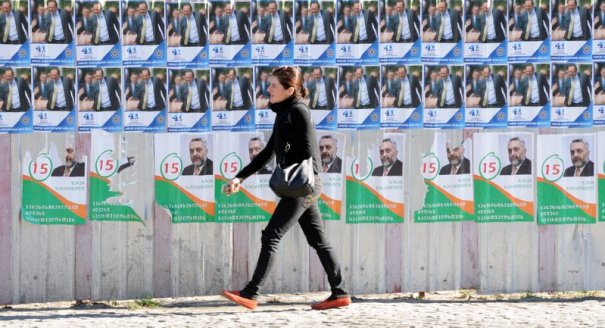
The coming presidential election in Georgia on October 27 will be straightforward and uninteresting. The post of president is being trimmed down and will lose most of its executive functions. And yet, the candidates are as if conspiring to give the poll a lot more drama than might have been expected a few weeks ago.
Even when it tries to, Georgian politics fails to be dull.
On the face of it, everyone expected that the coming presidential election in Georgia on October 27 will be straightforward and uninteresting. It marks the final exit of the flamboyant Mikheil Saakashvili almost ten years after he came to power. The post of president is being trimmed down under the new constitution and will lose most of its executive functions. By contrast, the favorite to get the job, the candidate of the governing Georgian Dream coalition, Giorgi Margvelashvili was not even well known in Georgia earlier this year.
And yet, the candidates are as if conspiring to give the poll a lot more drama than might have been expected a few weeks ago. The first surprise is the strong performance of the woman aptly described by Michael Cecire as “Nino ‘Nine Lives’ Burjanadze.”
Burjanadze was one of the three leaders of the 2003 Rose Revolution, later speaker of parliament and in that capacity twice served as interim president of Georgia. In the last few years, she has made a sharp pivot away from her former positions. She now stands on a platform that calls for a much more aggressive campaign against her former colleagues from Mikheil Saakashvili’s government and a much closer rapprochement with Russia.
Burjanadze has too much baggage to win her the election—most Georgians will not forgive her their public meeting with Vladimir Putin in 2010. But her favorability ranking leapt between June and September 2013 from 21 to 33 percent in polls commissioned by the National Democratic Institute. So Burjanadze is now competing for second place with the candidate of the former ruling party, the United National Movement, David Bakradze.
And that could be interesting because if both poll large numbers of votes they could force a second round. That is something that Margvelashvili has said is unthinkable. So unthinkable that he has tied himself up in a knot of his own making by insisting that if there is a second round of voting he would not participate in it. In other words, if Margvelashvili polls 49 percent of the vote on Sunday, Georgia will wake up to a big political mess on Monday.

Senior Fellow, Carnegie Europe
De Waal is a senior fellow at Carnegie Europe, specializing in Eastern Europe and the Caucasus.
Recent Work
Thomas de Waal
Thomas de Waal, ed.
Carnegie does not take institutional positions on public policy issues; the views represented herein are those of the author(s) and do not necessarily reflect the views of Carnegie, its staff, or its trustees.
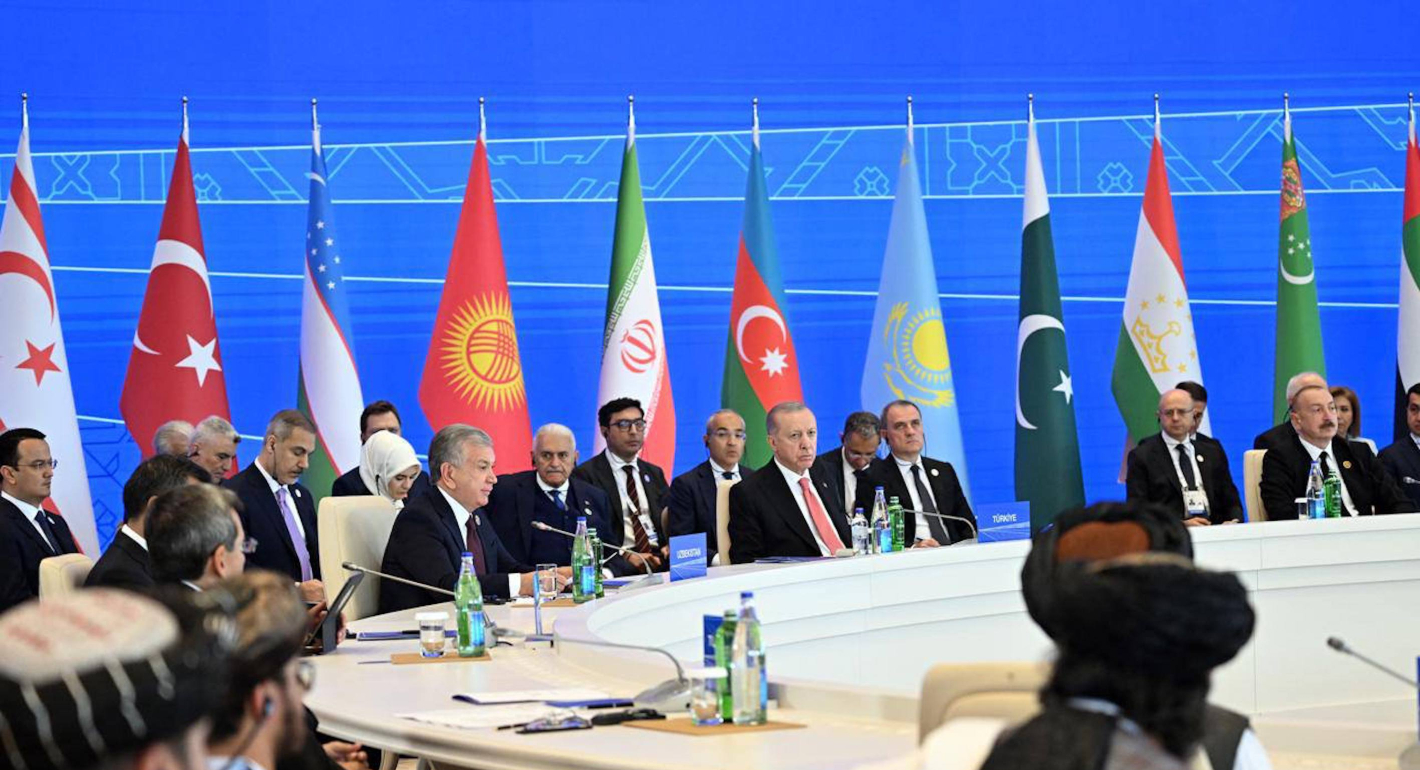
Over the past two decades, regional collaboration in the South Caucasus has intensified. Turkey and the EU should establish a cooperation framework to accelerate economic development and diversification.
Feride İnan, Güven Sak, Berat Yücel
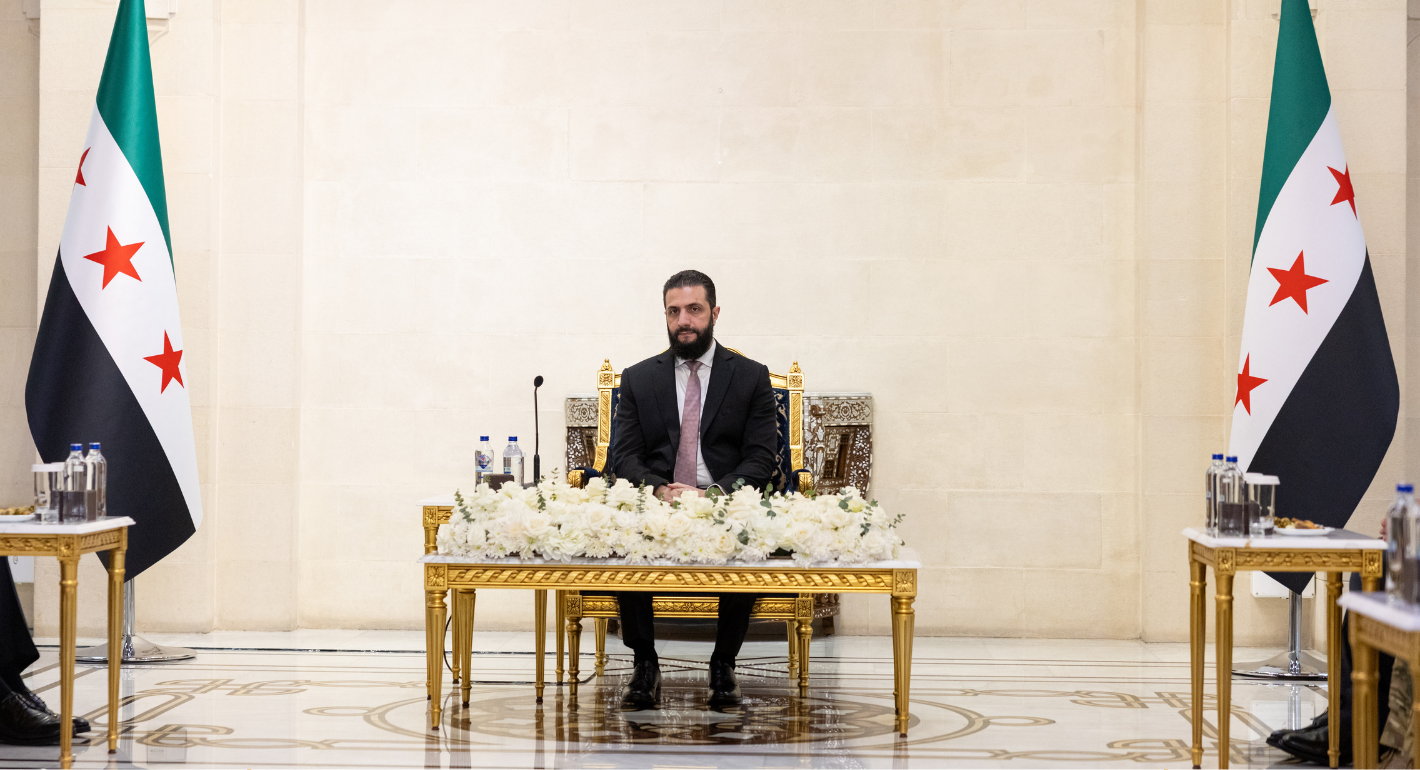
Europe’s interests in Syria extend beyond migration management, yet the EU trails behind other players in the country’s post-Assad reconstruction. To boost its influence in Damascus, the union must upgrade its commitment to ensuring regional stability.
Bianka Speidl, Hanga Horváth-Sántha
A prophetic Romanian novel about a town at the mouth of the Danube carries a warning: Europe decays when it stops looking outward. In a world of increasing insularity, the EU should heed its warning.
Thomas de Waal
The EU lacks leadership and strategic planning in the South Caucasus, while the United States is leading the charge. To secure its geopolitical interests, Brussels must invest in new connectivity for the region.

Zaur Shiriyev
2026 has started in crisis, as the actions of unpredictable leaders shape an increasingly volatile global environment. To shift from crisis response to strategic foresight, what under-the-radar issues should the EU prepare for in the coming year?
Thomas de Waal