

Q&A
Dara Massicot, Aaron David Miller, Andrew S. Weiss
{
  "authors": [
    "Andrew S. Weiss"
  ],
  "type": "legacyinthemedia",
  "centerAffiliationAll": "dc",
  "centers": [
    "Carnegie Endowment for International Peace",
    "Carnegie Russia Eurasia Center"
  ],
  "collections": [],
  "englishNewsletterAll": "ctw",
  "nonEnglishNewsletterAll": "",
  "primaryCenter": "Carnegie Endowment for International Peace",
  "programAffiliation": "russia",
  "programs": [
    "Russia and Eurasia"
  ],
  "projects": [],
  "regions": [
    "Russia"
  ],
  "topics": [
    "Political Reform"
  ]
}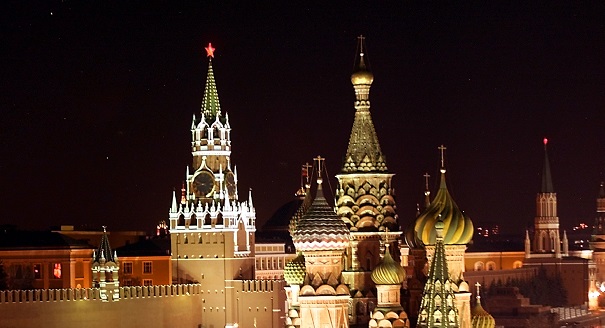
Source: Getty
The West must brace itself for the possibility that the oligarchic system itself, with its deep roots in Russian political culture, will outlive the regime of President Vladimir V. Putin.
Source: International New York Times
The czarist trappings of President Vladimir V. Putin’s surprise move to free Mikhail B. Khodorkovsky, announced at a marathon news conference on Dec. 19, were hard to miss. Mr. Putin’s offhand, backstage comment that 10 years of imprisonment had been punishment enough for Mr. Khodorkovsky, his onetime nemesis (and once Russia’s richest man), conveyed just the right mix of omnipotence, benevolence and piety.
Inside the hall, the atmosphere had been far less dignified than what Mr. Putin’s role model, Czar Alexander II, might have tolerated. Fawning reporters had waved stuffed animals to get Mr. Putin’s attention, and one reporter read a poem beseeching him to renationalize the energy industry so that the Russian people would repay the favor by asking him “to rule for the rest of your life.”
At first glance, this turn of events seems to illustrate just how much Russia has changed since October 2003, when Mr. Khodorkovsky’s jet was stormed on the tarmac of a Siberian airport by masked agents of Russia’s Federal Security Service. The familiar narrative holds that Mr. Putin enjoys nearly limitless power, having brought the oligarchs to heel, recentralized political authority, dismantled fledgling democratic institutions and put most of the economy back under state control. By confounding expectations that Mr. Khodorkovsky would rot in prison forever, Mr. Putin left little doubt about his near-total domination of the Russian political scene.Yet Russia’s oligarchy (that is, the control of the state and economy by a small group of well-placed, extremely wealthy insiders) is alive and well. The supposedly all-powerful Mr. Putin actually devotes much of his time to refereeing bitter disputes between oligarchs like Igor I. Sechin, the head of the state oil company Rosneft, and Gennady N. Timchenko, a co-owner of Russia’s largest oil trading company and an independent natural gas producer. These latter-day oligarchs, many of whom have built vast business empires on the back of longstanding connections to Mr. Putin, are part of a political tradition that dates back to the rapid expansion of the Grand Duchy of Muscovy in the 1400s.
The most authoritative description of Russia’s peculiar style of rule can be found in an unusual place: a little-known academic essay by the Harvard medieval historian Edward L. Keenan, originally prepared for the State Department in the mid-1970s. Professor Keenan’s vivid account of the conspiracies, secrecy and power politics of the Muscovite czarist court will be readily recognizable to viewers of “Game of Thrones.” Most important, Professor Keenan punctures the myth of an all-powerful czar. He explains how a system dominated by elite groups of boyars (the top rung of the aristocracy and the forebears of today’s oligarchs) and bureaucrats, who imposed constraints on the country’s ruler, became so entrenched in the political culture.
After a devastating civil war in the 1400s, these groups decided that it was in their interest to carve out a role for a leader capable of mediating disputes and distributing power and property among them. They deliberately shrouded the system in secrecy and exaggerated the role of the czar to maintain their freedom to maneuver and keep outsiders at bay.
This approach was combined with an inefficient yet extremely centralized system that has clear parallels to contemporary Russia, specifically the need to maintain control over an unpredictable population and a vast, underpopulated territory. (To cite one of Professor Keenan’s most vivid examples, “In the later 16th century, when the round trip to the capital could occupy the better part of a year, even simple real estate transactions conducted in tiny villages on the Arctic Circle were registered and approved in Moscow.”)
Unfortunately, our understanding of Mr. Putin’s regime and its most important players remains heavily distorted by our disappointment that Russia has failed to develop along Western lines. By fixating on Mr. Putin’s authoritarian streak, hostility to outside influences and resistance to Western-style reforms, we generally overlook that his value to the system, like that of the czars who preceded him, is based on maintaining the balance among competing vested interests. Just as it was five centuries ago, the main battles inside the Kremlin among these groups are about power, money and access to special privileges, not ideology.
Eventually, the day will come when Mr. Putin is no longer in power. Yet it seems highly unlikely that his informal style of rule will be replaced by a rule of law system based on strong institutions and checks and balances. Rather, the West must brace itself for the possibility that the oligarchic system itself, with its deep roots in Russian political culture, will outlive its current master.
This article was originally published by the International New York Times.
James Family Chair, Vice President for Studies
Andrew S. Weiss is the James Family Chair and vice president for studies at the Carnegie Endowment for International Peace, where he oversees research on Russia, Ukraine, and Eurasia. His graphic novel biography of Vladimir Putin, Accidental Czar: the Life and Lies of Vladimir Putin, was published by First Second/Macmillan in 2022.
Recent Work

Dara Massicot, Aaron David Miller, Andrew S. Weiss

Frances Z. Brown, Nate Reynolds, Priyal Singh, …
Carnegie does not take institutional positions on public policy issues; the views represented herein are those of the author(s) and do not necessarily reflect the views of Carnegie, its staff, or its trustees.

Europe is facing rising populism internally as well as external pressures from Russia, China, Turkey, and the United States.

Dimitar Bechev

A notable degree of participative democracy has firmly arrived in Europe. But to have more far-reaching impact, democratic deliberation needs to move into a radically new phase.

Richard Youngs

Before the next wave of EU enlargement takes place, the union needs to grapple with thorny questions of how power is distributed among its members.


Emil Sondaj Hansen, Ditte Brasso Sørensen

A summer of escalation in the Black Sea has hurt Ukraine economically and is exacerbating world food security. A truce is needed—as is a broader reframing of Europe’s Ukraine strategy.

Thomas de Waal

European Commission President Ursula von der Leyen is about to give her annual address on the state of the EU. Here’s what she won’t—but should—say.

Rym Momtaz