

• Research
  • Strategic Europe
  • About
  • Experts
Carnegie Europe logoCarnegie lettermark logo
EUUkraine
  • Donate
{
  "authors": [
    "Deborah Gordon",
    "Andreas Löschel",
    "Jim Skea",
    "Wang Tao"
  ],
  "type": "other",
  "centerAffiliationAll": "dc",
  "centers": [
    "Carnegie Endowment for International Peace"
  ],
  "collections": [],
  "englishNewsletterAll": "",
  "nonEnglishNewsletterAll": "",
  "primaryCenter": "Carnegie Endowment for International Peace",
  "programAffiliation": "SCP",
  "programs": [
    "Sustainability, Climate, and Geopolitics"
  ],
  "projects": [],
  "regions": [
    "North America",
    "United States",
    "East Asia",
    "China",
    "Western Europe",
    "United Kingdom",
    "France"
  ],
  "topics": [
    "Climate Change"
  ]
}

Source: Getty

Other

Which Energies for Which Transition? China, United States, Germany, and U.K.

A new energy transition faces the United States as it shifts from oil scarcity to potential abundance.

Link Copied
By Deborah Gordon, Andreas Löschel, Jim Skea, Wang Tao
Published on Dec 6, 2013

Source: Université Total - Energy Days

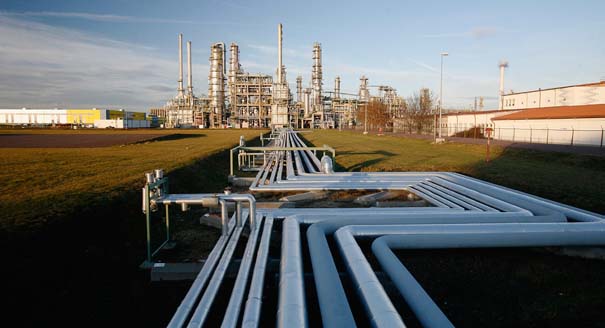
Carnegie’s Deborah Gordon joined Andreas Löschel, Jim Skea, and Wang Tao of the Carnegie-Tsinghua Center for Global Policy on a panel at Université Total - Energy Days to discuss the future of energy. Gordon discussed the new energy transition facing the United States as it shifts from oil scarcity to potential abundance. She identified the number of unknowns still affecting this transition and the future of these new resources, including fossil fuel price variability, changes in energy efficiency, and possible climate policy. Andreas Löschel, Jim Skea, and Wang Tao offered insights on the energy transitions that Germany, the U.K., and China are facing.

About the Authors

Deborah Gordon

Former Director and Senior Fellow, Energy and Climate Program

Gordon was director of Carnegie’s Energy and Climate Program, where her research focuses on oil and climate change issues in North America and globally.

Andreas Löschel

Jim Skea

Wang Tao

Former Nonresident Scholar, Carnegie-Tsinghua Center for Global Policy

Wang Tao was a nonresident scholar in the Energy and Climate Program based at the Carnegie–Tsinghua Center for Global Policy.

Authors

Deborah Gordon
Former Director and Senior Fellow, Energy and Climate Program
Deborah Gordon
Andreas Löschel
Jim Skea
Wang Tao
Former Nonresident Scholar, Carnegie-Tsinghua Center for Global Policy
Wang Tao
Climate ChangeNorth AmericaUnited StatesEast AsiaChinaWestern EuropeUnited KingdomFrance

Carnegie does not take institutional positions on public policy issues; the views represented herein are those of the author(s) and do not necessarily reflect the views of Carnegie, its staff, or its trustees.

More Work from Carnegie Europe

  • Commentary
    Strategic Europe
    Europe on Iran: Gone with the Wind

    Europe’s reaction to the war in Iran has been disunited and meek, a far cry from its previously leading role in diplomacy with Tehran. To avoid being condemned to the sidelines while escalation continues, Brussels needs to stand up for international law.

      Pierre Vimont

  • Commentary
    Strategic Europe
    Taking the Pulse: Can European Defense Survive the Death of FCAS?

    France and Germany’s failure to agree on the Future Combat Air System (FCAS) raises questions about European defense. Amid industrial rivalries and competing strategic cultures, what does the future of European military industrial projects look like?

      • Rym Momtaz

      Rym Momtaz, ed.

  • Commentary
    Strategic Europe
    Macron Makes France a Great Middle Power

    France has stopped clinging to notions of being a great power and is embracing the middle power moment. But Emmanuel Macron has his work cut out if he is to secure his country’s global standing before his term in office ends.

      • Rym Momtaz

      Rym Momtaz

  • Commentary
    How Can Europe Renew a Stalled Enlargement Process?

    Despite offering security benefits to candidates and the EU alike, the enlargement agenda appears stalled. Why is progress not being made, and is it time for Europe to rethink its approach?

      Sylvie Goulard, Gerald Knaus

  • EU democracy support policies
    Paper
    European Democracy Support Annual Review 2025

    European democracy support strategy in 2025 prioritized protecting democratic norms within Europe. This signals the start of a structural recalibration of the EU’s approach to democracy support.

      • Elena-Viudes-Egea
      • +6

      Richard Youngs, ed., Elena Viudes Egea, Zselyke Csaky, …

Get more news and analysis from
Carnegie Europe
Carnegie Europe logo, white
Rue du Congrès, 151000 Brussels, Belgium
  • Research
  • Strategic Europe
  • About
  • Experts
  • Projects
  • Events
  • Contact
  • Careers
  • Privacy
  • For Media
  • Gender Equality Plan
Get more news and analysis from
Carnegie Europe
© 2026 Carnegie Endowment for International Peace. All rights reserved.