

In The Media
Lahcen Achy
{
  "authors": [
    "Lahcen Achy"
  ],
  "type": "legacyinthemedia",
  "centerAffiliationAll": "dc",
  "centers": [
    "Carnegie Endowment for International Peace",
    "Malcolm H. Kerr Carnegie Middle East Center"
  ],
  "collections": [],
  "englishNewsletterAll": "menaTransitions",
  "nonEnglishNewsletterAll": "",
  "primaryCenter": "Malcolm H. Kerr Carnegie Middle East Center",
  "programAffiliation": "MEP",
  "programs": [
    "Middle East"
  ],
  "projects": [],
  "regions": [
    "Egypt",
    "Gulf",
    "Levant",
    "Maghreb",
    "Middle East",
    "North Africa"
  ],
  "topics": [
    "Economy"
  ]
}
Source: Getty
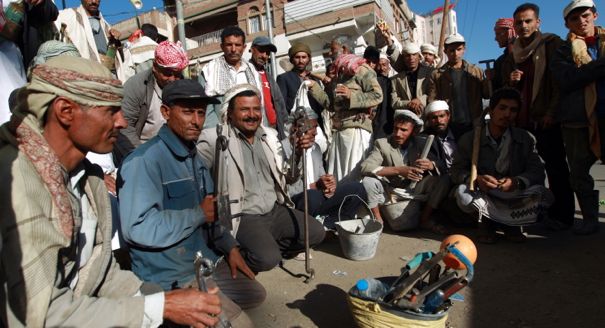
There has been growing interest in the role that minimum wage plays in achieving social justice, through improving the living standards of low-income workers and reducing inequality in the distribution of income among various segments of society.
Source: Al-Hayat
In recent years, there has been growing interest in the role that minimum wage plays in achieving social justice, through improving the living standards of low-income workers and reducing inequality in the distribution of income among various segments of society. Minimum wage is an important tool to support decent employment, and a key component in promoting social protection. Moreover, it reduces the widespread vulnerability and poverty that the working classes suffer from. A recent report by the International Labor Organization (ILO) confirms that more than 1.2 billion workers around the world do not make enough to cover their basic needs.
Policies regarding minimum wage are of paramount importance in Arab countries. There is a dire need to improve sources of economic growth through domestic demand in order to counter the slowdown in export rates and the decline in tourism revenues. Raising the minimum wage will help readjust economic balances, especially in light of fiscal constraints faced by Arab governments. It is expected that raising the minimum wage in Egypt to 1,200 pounds per month ($175) will cost the annual budget an extra 18 billion pounds ($2.7 billion). Such a step means that at least 4.8 million government employees will receive raises.
Many studies indicate that redistributing national income to enhance the purchasing power of low-income workers tends to have a positive impact on domestic demand, since a high percentage of the additional income is used to purchase local goods and services. The redistribution could also directly impact investment and stimulate the economic cycle. Increases in minimum wage in many Latin American countries, for example, not only helped consumption but also promoted investment and growth. These increases even contributed to the expansion of the middle class and helped ease social unrest.For Arab countries to reap the fruits of minimum wage reform, they must take into account the following issues:
First, minimum wage systems should be expanded to cover all workers, in both the public and private sectors. Partial coverage reduces the effectiveness of minimum wage policy as a way to stimulate demand; it also creates unfair competition at the expense of institutions and sectors that are required to apply it. A recent ILO study shows that a higher percentage of workers benefit from minimum wage in countries that adopt a uniform minimum wage at the national level, as compared to countries where the minimum wage varies between sectors or regions.
Many Arab countries have resorted to a policy of uniform minimum wage without discrimination between sectors, but the high proportion of workers in the informal sector and the spread of family work have led to a decrease in the role the minimum wage plays in economic redistribution. Arab countries can address this imbalance, by providing social safety nets in addition to implementing minimum wage reform. In that manner, they reap the benefits of both policies, in terms of supporting aggregate demand and alleviating poverty and social inequality.
Second, the concerned social parties—trade unions and employers’ representatives—should work together to set a balanced minimum wage. A very low minimum wage would reduce the effectiveness of this policy in the redistribution of income. On the other hand, if a minimum wage is high in comparison with the productivity of workers, it will lead to inflated prices and will weaken the competitiveness of domestic production—not to mention the possibility that private sector companies might not comply such a minimum wage policy.
To achieve a high rate of compliance, an effective inspection system must be put in place which imposes sanctions in the event of nonimplementation. In many Arab countries, labor inspection services suffer from a lack of resources and low staffing. Furthermore, sanctions are weak and do not compel employers to comply.
The ILO’s Minimum Wage Fixing Convention (1970) stipulates that any policy setting a minimum wage must be set after full consultation with the representative organizations of employers and workers concerned. Moreover, such a policy must address the needs of workers and their families, taking into account the cost of living, the achieved levels of production, as well as the need to maintain a high level of employment. Additionally, minimum wage should be adjusted regularly to match the fluctuations in the cost of living and other economic conditions.
Third, setting a high minimum wage runs the risk of reducing employment. Studies indicate that the direct effect of a minimum wage on employment levels in developing countries is often minimal. However, a minimum wage policy that is carefully developed can significantly impact developing new markets and increase aggregate demand. It would then pave the way for the creation of new investment opportunities and job growth.
In the end, it should be emphasized that the overall impact of increasing minimum wage depends on the extent of its effect on the competitiveness of exports. It is expected that raising the minimum wage is more difficult in open commercial economies (which highly depend on external demand that is sensitive to prices), compared with countries that compete primarily in terms of the quality and high technological content of their products.
This article was originally published in Arabic by Al-Hayat.

Former Nonresident Senior Associate, Middle East Center
Achy is an economist with expertise in development, institutional economics, trade, and labor and a focus on the Middle East and North Africa.
Recent Work
Lahcen Achy
Lahcen Achy
Carnegie does not take institutional positions on public policy issues; the views represented herein are those of the author(s) and do not necessarily reflect the views of Carnegie, its staff, or its trustees.
When the U.S.-Iran memorandum of understanding was announced, the UK, France, Germany, and Italy declared their readiness to help demine the Strait of Hormuz and lift nuclear sanctions on Tehran. But does Europe need new tools to recover a diplomatic role?

Rym Momtaz, ed.
As geopolitical rivalry weaponizes global supply chains, the EU’s true vulnerability lies in emerging-risk imports. For these goods, suppliers are growing more concentrated, substitution more difficult, and political risk is looming.

Sinan Ülgen

The EU is putting together a new security strategy to meet today’s myriad challenges. But for any proposal to be effective, the union needs to grapple with its identity and ambitions.

Pierre Vimont
The EU’s new migration policy is not suited to today’s realities. With climate change increasingly becoming a driver of displacement, Europe needs to rethink its deterrence-focused approach.

Shana Tabak
Europe seems to have accepted its sidelining in the Middle East. The EU must reassert its support for the international rules-based order and step up engagement.
Rym Momtaz