

Paper
Yezid Sayigh
{
  "authors": [
    "Yezid Sayigh"
  ],
  "type": "other",
  "centerAffiliationAll": "dc",
  "centers": [
    "Carnegie Endowment for International Peace",
    "Malcolm H. Kerr Carnegie Middle East Center"
  ],
  "collections": [
    "Arab Awakening"
  ],
  "englishNewsletterAll": "menaTransitions",
  "nonEnglishNewsletterAll": "",
  "primaryCenter": "Malcolm H. Kerr Carnegie Middle East Center",
  "programAffiliation": "MEP",
  "programs": [
    "Middle East"
  ],
  "projects": [],
  "regions": [
    "Levant",
    "Syria",
    "Middle East"
  ],
  "topics": [
    "Political Reform",
    "Security"
  ]
}
Source: Getty
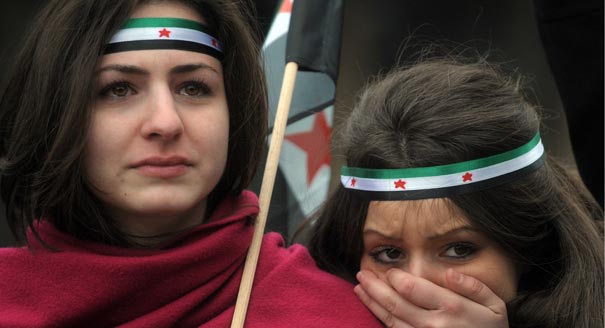
The nature of the Syrian revolution is particularly complex. A deeper social reading on Syria is required to further understand the violence in Syria and the importance of its timing during the Arab uprisings.
Source: London School of Economics and Political Science
“The nature of what’s going on in Syria—the Syrian revolution—is so particularly complex,” said Carnegie’s Yezid Sayigh during a public lecture at the London School of Economics and Political Science. Sayigh reflected upon the notion of “revolution” as a framework to “understand the nature and the strengths and weaknesses of the protagonists – both the regime and its various foes.”
Noting parallels with other historical experiences, such as the beginning of Palestinian activism, Sayigh explained the importance of social dynamics in Syria: “the sort of discourse we get and the sort of reporting we get on which a lot of policy is built is about good and bad…tyrannical regime versus democratic opposition, moderates versus radical Islamists.” Sayigh noted that it’s not necessarily wrong, but that “this kind of reporting, it doesn’t really tell us what is going on in Syria and certainly not enough to understand where things are going, and why they’ve gone where they are, and why we keep seeming to be surprised about where things have gone.”
Sayigh emphasized the importance of a social reading on Syria, explaining that “had there not been an Arab Spring...the Syrian revolution—the uprising—probably wouldn’t have started just in that time, in that way.” Additionally, by looking at violence of the armed struggle, including “who wields violence, how it’s wielded, what for, with what discourse, that, I think, tells us more about the nature of the Syrian revolution.”
This conference was recorded and hosted by the London School of Economics and Political Science.

Senior Fellow, Malcolm H. Kerr Carnegie Middle East Center
Yezid Sayigh is a senior fellow at the Malcolm H. Kerr Carnegie Middle East Center in Beirut, where he leads the program on Civil-Military Relations in Arab States (CMRAS). His work focuses on the comparative political and economic roles of Arab armed forces, the impact of war on states and societies, the politics of postconflict reconstruction and security sector transformation in Arab transitions, and authoritarian resurgence.
Recent Work
Yezid Sayigh
Yezid Sayigh
Carnegie does not take institutional positions on public policy issues; the views represented herein are those of the author(s) and do not necessarily reflect the views of Carnegie, its staff, or its trustees.

Mounting economic strain and battlefield losses will not necessarily make the Kremlin less dangerous. They could instead push Moscow toward a more aggressive hybrid campaign designed to test NATO’s Eastern flank, exploit allied hesitation, and fracture European resolve.

Maksym Beznosiuk
Over the past ten years, NATO has held almost as many summits as it did during the entirety of the Cold War. Are they still useful, or is it time to stop holding annual meetings?

Rym Momtaz, ed.

As the EU confronts profound challenges, several leaders have called for fundamental reform to the union’s model—but only modest, superficial changes have resulted. What if Europe really could be reimagined from zero today: What should such a redesigned European order look like?

Richard Youngs, ed.
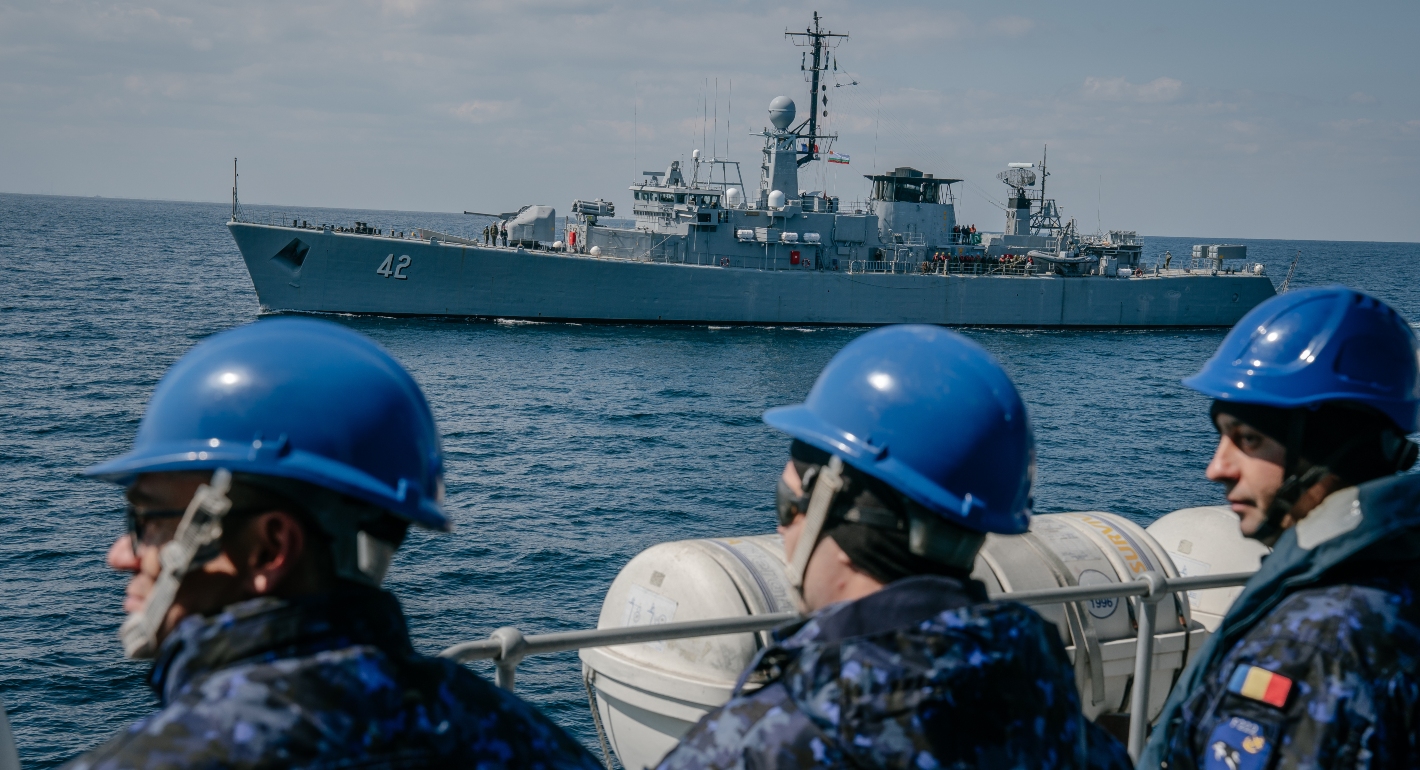
As Russia's war on Ukraine drags on, NATO is expanding its footprint in the Black Sea. Turkey, Romania, and Bulgaria are upgrading their fleets and deepening trilateral cooperation.

Dimitar Bechev
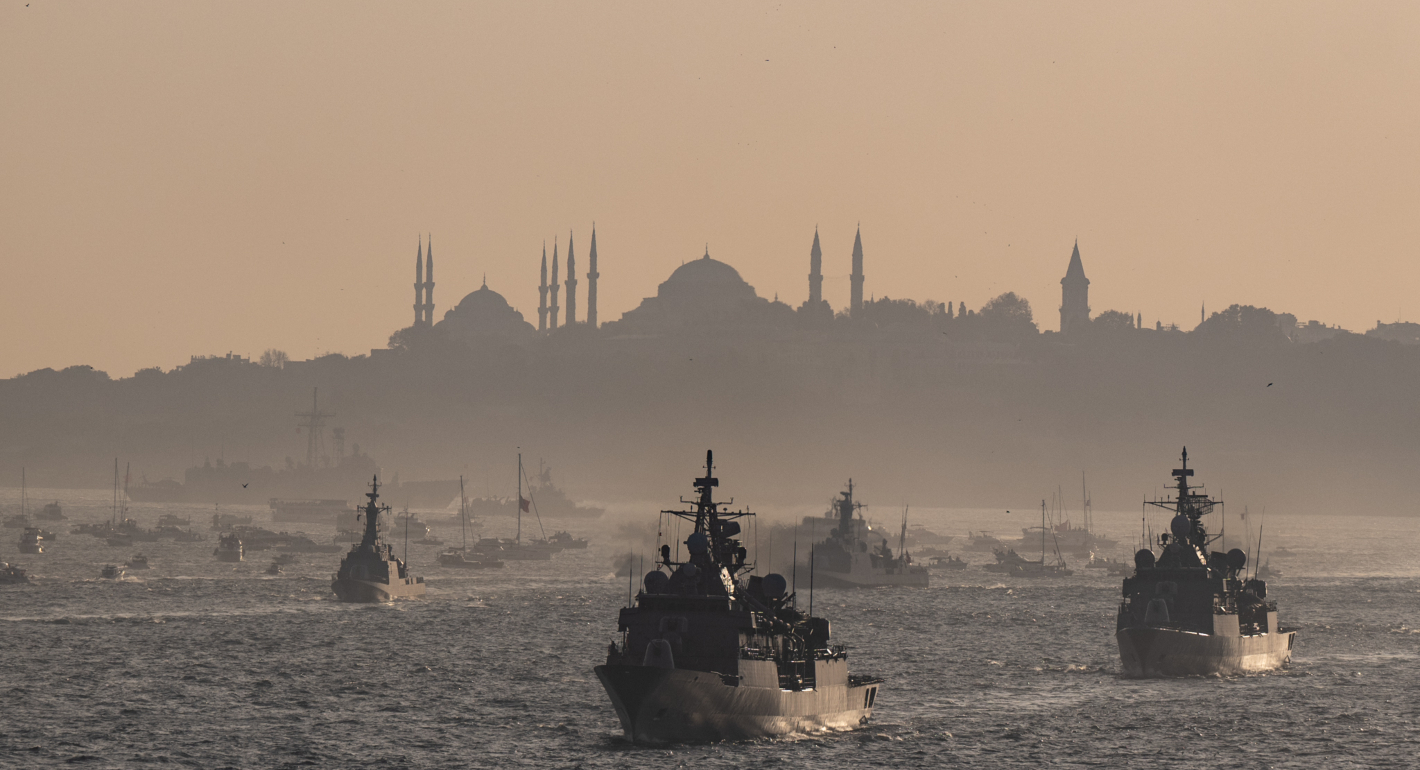
For ninety years, Turkey has been positioned as the principal gatekeeper of Black Sea security. As a result, European and NATO efforts to support Ukraine will require closer engagement with Ankara.

Thomas de Waal