

Commentary
Bayram Balci
{
  "authors": [
    "Bayram Balci"
  ],
  "type": "legacyinthemedia",
  "centerAffiliationAll": "dc",
  "centers": [
    "Carnegie Endowment for International Peace",
    "Malcolm H. Kerr Carnegie Middle East Center"
  ],
  "collections": [],
  "englishNewsletterAll": "menaTransitions",
  "nonEnglishNewsletterAll": "",
  "primaryCenter": "Carnegie Endowment for International Peace",
  "programAffiliation": "MEP",
  "programs": [
    "Middle East"
  ],
  "projects": [],
  "regions": [
    "Middle East",
    "Türkiye"
  ],
  "topics": [
    "Political Reform",
    "Religion"
  ]
}
Source: Getty
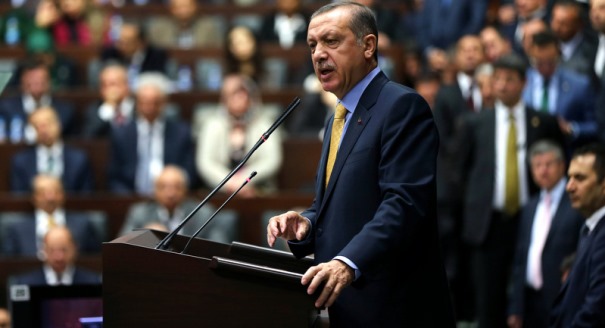
The current conflict between Prime Minister Recep Erdogan and religious authority Fethullah Gülen, if not stopped, has the potential to damage Turkey’s image and soft power in the world.
Source: Foreign Policy Journal
From the time it rose to power in 2002, the AKP benefited from the valuable support from Fethullah Gülen’s movement, with which it shares a moderate, liberal Islamic ideology. Their natural alliance was based on their common opposition to the Kemalist establishment represented by army and bureaucracy. But the weakening of the latter shattered this alliance, revealing deep tensions and bringing Prime Minister Recep Tayyip Erdoğan into direct conflict with the religious authority Fethullah Gülen. The first real illustration of this divorce was the government’s decision last November that it envisaged to close in 2015 the dershane, a network of private tutoring centers, most of which are run by the Gülen movement. Undoubtedly, this was a measure expressly targeting the Gülen movement as these centers provide to the group huge financial sources but also help it to form new members. In retaliation to this anti Gulen movement decision, some prosecutors and police, obviously close to Gulen movement, and allegedly infiltrated in the police and judiciary, have revealed in December 17th a huge scandal of corruption touching numerous people in Erdogan entourage, like the sons of three of his ministers.
Since then, the rupture between Recep Erdoğan and Fethullah Gülen, the most powerful and influential leaders in Turkey, is permanent, definitive, and, because of its seriousness, irreparable. Moreover, there are signs that this struggle, which has already seriously affected Turkish domestic politics, will continue in the international field. Indeed, the good cooperation between both forces since 2002 was not limited to Turkey. The most transnational socio-religious movement in the Muslim world, the Gülen movement had consolidated its positions abroad thanks to its close cooperation with the AKP government. In Turkey as well as abroad, this natural alliance had been beneficial for both parties, as well as for Turkey itself. As this honeymoon is over, these three winners could become losers.Understanding the very exceptional spread across the world of the Gülen movement helps realize the true meaning of what currently is happening in Turkey. Gülen is a very charismatic religious leader. But more than this, he is a source of inspiration for many people in the religious sphere, and also in many other areas such education, business, and media. Since my first research on this movement in Central Asia in 1995, I still argue that this is a sort of Jesuit phenomenon à la turque. There is indeed something very Jesuit in the style and the method of spread of its influence across the world. Gülen did not go far to find a model of inspiration for the movement he started to create at the beginning of the 1970. In fact, his model of inspiration was the missionary schools that have been established in Turkey at the end of the Ottoman Empire by Western missionaries. Some of them were Jesuits, and most importantly they played a crucial role in the formation of elites in Turkey. For many decades, last Ottoman and first Republican elites in Turkey had been formed in schools like Robert Collegea Lycée Notre Dame de Sion, for example. In 1991, when the Socialist block collapsed, Gülen’s followers went to Central Asia, the Caucasus and Balkan countries and then to Africa, where they created many schools comparable to the missionary schools that had been established in Turkey. Actually gülenistes imitated these schools, opening similar schools in Central Asia, Africa, and elsewhere, with the same objectives, to make new elites and friends for Turkey. Today, Gülen movement is the only Turkish Islamic organization in the whole Islamic world to have this level of influence. This makes it the best illustration of Turkish soft power in many continents. It is because Gülen is very well aware of this force that he has undoubtedly such an assertive attitude in the battle opposing him to his former ally. In this mother of all battles between the two prominent leaders in Turkey, both parties have a lot to lose. The first looser is going to be the AKP and its charismatic leader.
The first loser in this battle is going to be the AKP. Since it came to power in 2002, it has cultivated the image of a clean, honest and virtuous party. It is worthy to say that in Turkey this party is usually designated by its supporters as AK Parti, which means white party, or clean and uncorrupted in Turkish. This image and reputation of clean and honest party cannot maintained, as three ministers in the Erdoğan government and dozens of other people close to him have been at the center of an inquiry into serious cases of corruption. The scandal has a historical dimension. Three of his ministers have resigned, and a new cabinet was formed with many new figures. The AKP and Erdogan’s image had actually started to erode many months ago. In Gezi parks protest that shook Turkey in June and July 2013, the response of the government had been overwhelmingly brutal. Erdoğan’s reaction to Gezi Park revealed his true nature, an authoritarian man who is not capable of making the difference between winning elections and ruling his country with humility and modesty. His majoritarian and electoral concept of democracy does not fit anymore in complex Turkish society. In addition to this undemocratic character that Erdogan displayed to his county and to the international community, since December 17th, he seems to be heading a corrupt government. In fact the manner he managed Gezi Park protests and the corruption scandal has completely tarnished his image as a great leader in the Muslim world. His AKP Party was viewed in some Middle Eastern countries as a model, thanks to its formula of conciliation between Islam and democracy. Turkey was perceived as a force of stability in an eternally instable Middle East. Since Gezi Park and the December 17th “coup” neither Erdogan, nor AKP, nor Turkey can be seen as a model for any country in the world. But there is a second loser in this war: Gülen and his movement.
Since the beginning, Gülen and his close disciples have always claimed that their community did not have political ambition. According to Gülen, faith, tolerance, peace and intercultural and interreligious dialogue in his country and in the world have always been the main objectives and driving forces of his movement. Indeed, it is true that in Turkey Gülen and many organizations related to him have encouraged many meetings and dialogue between different sectors and groups that are usually opposed to each other, such as Alevis/Sunnis, seculars versus Kemalists, or Kurds versus Turks. In Europe and the US, hundreds of associations created by Gülen disciples have played the same role, inviting different religious figures from different faiths to dialogue for a better mutual understanding. In theory indifferent to politics, the Gülen movement has, however, supported the AKP government. This was for democracy and rapprochement with Europe, claimed his followers. However, all these initiatives have not completely eradicated the shadowy aspect of this movement. A lot of people continued to think that the movement had two faces, one very positive and generous, and second, very mysterious. In all the countries where the movement had implemented its activities—in Central Asia, the Caucasus, and Africa—his followers made sure that the movement did not give the impression of being religious and too politicized. In practice, the activities of the movement are still limited to education, remaining distant from politics and religious debates.
Since 17th December, this image of a religious movement interested only in faith, peace and dialogue has not been defended. In fact, even before this date, the movement had been accused of infiltrating different structures of the state, mainly the police and judiciary. Gülen and his followers have categorically denied such accusations. But since December 17th there has been a clear and undeniable illustration of this infiltration in the police and the judiciary. Gülen does not call this infiltration; he prefers talking about people in different administrations sharing his ideas. But in realty many have the impression that many Gülen’s disciples behave more as gülenists than as servants of Turkish state. In other words, since December 2013 the Gülen movement’s leaders can no longer proclaim to be an organization without political ambition. This will affect also the movement’s image abroad, with serious consequences on its ability to continue attracting people and local authorities.
In Central Asia, in Africa and elsewhere, Gülenists have put the religious dimension of their movement in the second place and, most importantly, they never taken part to political debate. In other words, a moderate socio-religious movement and indifference to politics was the image the movement wanted to give of itself. But, at least in Central Asia, local authorities have always been suspicious about this but tolerated this movement thanks to its valuable educational services. But, as this image of a non-politicized movement was completely shattered last December in Turkey, there is a risk that in Central Asia, the Caucasus, and Africa the governments attitudes towards the Gülen movement changes, making them more cautious against a possible infiltration in their administration.
Another risk and threat for the Gülen movement and its activities abroad could come from the Turkish government. At the beginning of the 1990, when the first Gülenists schools appeared in Central Asia, Turkish authorities and embassies were very hesitant to support them. In some cases Turkish ambassadors had even criticized the movement’s activities in Turkey and encouraged other countries to be careful with this religious organization. However, the very pragmatic Turgut Özal had provided his moral support to Gülenists in Central Asia, encouraging Central Asian leaders to facilitate their educational activities. After him, all Turkish leaders and diplomats continued to support morally gülenistes schools abroad. When the AKP came to power in 2002, the best period started for Gülen and his followers in Turkey and abroad. AKP officials and Turkish diplomacy after 2002 considerably supported Gülen activities everywhere in the world. However, as the honeymoon between them is now over in Turkey, and given Erdogan’s vindictive character, there are serious reasons to think that Turkish diplomacy is going to revise its attitude towards the Gülen movement abroad.
As a result, the new attitudes that countries hosting Gülen schools could adopt because of the war between him and Erdoğan, along with the possible extension of the Gülen-Erdogan war abroad, will certainly have a very negative impact on Turkish soft power. Indeed, Gülen movement, despite its obscure and mysterious character in Turkey is a wonderful soft power instrument for Ankara. In Central Asia and Africa, Gülen schools spread Turkish language and culture, they form new elites speaking Turkish, and facilitate business between Turkey and many countries. The current war between Erdogan and Gülen, if not stopped, and there is no sign indicating this, will certainly damage Turkey’s image and soft power in the world. When they were allies and worked together in Turkey and abroad, Gülen, Erdogan and Turkey were winners. The end of this alliance will make these three winners losers.
This article was originally published in the Foreign Policy Journal.
Former Nonresident Scholar, Russia and Eurasia Program
Balci was a nonresident scholar in Carnegie’s Russia and Eurasia Program, where his research focuses on Turkey and Turkish foreign policy in Central Asia and the Caucasus.
Recent Work
Bayram Balci
Bayram Balci, Daniyar Kosnazarov
Carnegie does not take institutional positions on public policy issues; the views represented herein are those of the author(s) and do not necessarily reflect the views of Carnegie, its staff, or its trustees.

Europe is facing rising populism internally as well as external pressures from Russia, China, Turkey, and the United States.

Dimitar Bechev

A notable degree of participative democracy has firmly arrived in Europe. But to have more far-reaching impact, democratic deliberation needs to move into a radically new phase.

Richard Youngs

Much has been said of the changes Brussels is trying to make to the EU enlargement process. Here’s why gradual integration might—or might not—be the answer.
Dimitar Bechev

Before the next wave of EU enlargement takes place, the union needs to grapple with thorny questions of how power is distributed among its members.


Emil Sondaj Hansen, Ditte Brasso Sørensen

A summer of escalation in the Black Sea has hurt Ukraine economically and is exacerbating world food security. A truce is needed—as is a broader reframing of Europe’s Ukraine strategy.

Thomas de Waal