

Q&A
Milan Vaishnav, Ila Patnaik
{
  "authors": [
    "Ila Patnaik"
  ],
  "type": "legacyinthemedia",
  "centerAffiliationAll": "dc",
  "centers": [
    "Carnegie Endowment for International Peace"
  ],
  "collections": [],
  "englishNewsletterAll": "ctw",
  "nonEnglishNewsletterAll": "",
  "primaryCenter": "Carnegie Endowment for International Peace",
  "programAffiliation": "SAP",
  "programs": [
    "South Asia"
  ],
  "projects": [],
  "regions": [
    "South Asia",
    "India"
  ],
  "topics": [
    "Economy"
  ]
}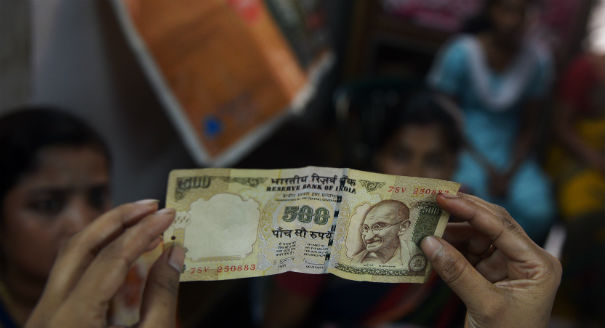
Source: Getty
In India, what merits attention is the sequence and timing of capital account liberalization, and the establishment of institutional capability for fiscal, financial, and monetary policy.
Source: Indian Express
In his article, ‘Against the flows’ (IE, February 24, goo.gl/rOG0oD), Gulzar Natarajan said capital controls were good and necessary. Liberalising our capital account, he claimed, will not benefit India either through higher growth or investment. It will only result in currency crises and higher risks, which we cannot manage.
India must, therefore, not liberalise its capital account — even the IMF has endorsed this line of reasoning according to Natarajan. But this argument ignores India’s de facto capital account openness, the aspirations of a young and ambitious country, which does not want to go back in time, and the enormous body of evidence on the failure of capital controls as a tool of macroeconomic policy.Economists like to think that there is a debate about capital account openness and that a decision about whether it should be open or closed is yet to be made. But this is not what happens in the real world. In the real world, a maturing country develops a capable financial system and sophisticated firms. It develops a liberal democracy, where the government is unable to interfere in the freedom of citizens. Once a country reaches this state of maturity, the capital account is de facto open.
Whether some economists think it should be open or not, in the eyes of the top 10 per cent of India — which makes decisions for the bulk of the economy — the capital account is open. To close it requires intruding on personal freedoms, inflicting harm on internationalised firms, and damaging the financial system.
When some Indian bureaucrats have argued in favour of a closed capital account at international forums, they have faced amusement from the audience. No country has taken this idea seriously. This so-called “lesson from the global financial crisis” is something no one is interested in learning. There has been no reduction in capital account openness — either among advanced countries or among emerging markets — after the crisis. The free movement of goods, services, ideas, capital and enterprise across national borders is an integral part of modernity.
Capital controls in emerging economies, where they exist, are like tariff or non-tariff barriers that can be switched on and off. They can be price- or quantity-based. Most evidence shows that these controls have little usefulness, both in terms of the time period for which they are actually effective, and in terms of their macroeconomic impact, which is limited and short-lived.
Advocates of capital controls have argued that their failure to deliver results is because they have been temporary. It is contended that permanent controls, which intrude deeply in the functioning of the economy, would work better. India is a rare laboratory that permits restrictions on capital flows.
The present Indian framework is a complex licence-permit raj. It is unlike what is found almost anywhere else in the world. We, in India, know that complex licence-permit systems always work badly, and are almost allergic to the thousands of pages of detailed restrictions.
Have Indian capital controls been effective? The effectiveness of controls is an often-misunderstood concept. We should measure whether they were able to achieve the objective that they were imposed for. If the all-in-cost ceiling for external commercial borrowings (ECB) was reduced from Libor plus 400 basis points to Libor plus 200 basis points, then the question to be asked is not whether borrowing went down. Instead, it should be whether this decision was able to achieve the objective of the restriction — for example, to reduce net inflows. All too often, companies respond to controls by simply changing the garb in which the same capital flows.
If companies moved from pure debt under ECB to foreign currency convertible bonds, the same money would come into India under a different name. One could then wrongly argue that the controls were effective because flows under ECB declined after restrictions were imposed. But the original objective — reducing overall inflows — was not met. Careful analyses of effectiveness have demonstrated that the Indian framework has not delivered on the objectives of macroeconomic policy.
Natarajan’s article is about the least interesting end of the capital account openness puzzle. There are two interesting questions to be asked. First, in what order and sequence should controls be removed? Second, what auxiliary actions should India undertake in order to become resilient to the new challenges that an open capital account introduces? If you have air travel, you will have plane crashes, and the country will need to develop the institutional capability to respond to crises. It is interesting and important to understand the regulatory framework required for aircraft and airports. But surely, nobody would propose that we should not have planes.
This takes us to the territory of technical questions that generally do not fit neatly in opinion pieces. What does prudent foreign borrowing mean? Should rupee-denominated debt continue to be more restricted than foreign currency-denominated debt? How can companies be encouraged to hedge their currency risk? How can we help markets for hedging develop? And so on. These are the interesting questions in the field of capital controls — not ideological sloganeering about whether capital account liberalisation is good or bad.
To a significant extent, this is about generational change. One generation ago, it was interesting and fashionable to discuss whether India should liberalise its capital account or not. Things have changed. We are now a $2 trillion economy, with capable global firms, with aspirations for a sophisticated financial system, with a liberal democracy that makes it infeasible for the government to arbitrarily restrict the freedoms of citizens. In such a country, what merits attention is the sequence and timing of capital account liberalisation, and the establishment of institutional capability for fiscal, financial and monetary policy.
This article was originally published in the Indian Express.
Former Nonresident Senior Associate, South Asia Program
Patnaik, an expert on India’s economy, was a nonresident senior associate in Carnegie’s South Asia Program.
Recent Work

Milan Vaishnav, Ila Patnaik
Ila Patnaik, Ajay Shah
Carnegie does not take institutional positions on public policy issues; the views represented herein are those of the author(s) and do not necessarily reflect the views of Carnegie, its staff, or its trustees.

As geopolitical rivalry weaponizes global supply chains, the EU’s true vulnerability lies in emerging-risk imports. For these goods, suppliers are growing more concentrated, substitution more difficult, and political risk is looming.

Sinan Ülgen

The EU is putting together a new security strategy to meet today’s myriad challenges. But for any proposal to be effective, the union needs to grapple with its identity and ambitions.

Pierre Vimont
Between the United States’ market-driven approach and China's state-led industrial strategy, Europe is reckoning with how it can remain competitive in the global economy. But is Europe in danger of becoming a U.S. or China colony?

Noah Barkin, Anu Bradford

The U.S.-sponsored TRIPP deal is driving the Armenia-Azerbaijan peace process forward. But foreign and domestic hurdles remain before connectivity and economic interdependence can open up the South Caucasus.



Thomas de Waal, Areg Kochinyan, Zaur Shiriyev

Economic growth is at the heart of a dilemma between planetary and international security.

Olivia Lazard