
• Research
  • Strategic Europe
  • About
  • Experts
Carnegie Europe logoCarnegie lettermark logo
EUUkraine
  • Donate
{
  "authors": [
    "Lina Khatib",
    "Ellen Lust"
  ],
  "type": "other",
  "centerAffiliationAll": "dc",
  "centers": [
    "Carnegie Endowment for International Peace",
    "Malcolm H. Kerr Carnegie Middle East Center"
  ],
  "collections": [
    "Arab Awakening"
  ],
  "englishNewsletterAll": "menaTransitions",
  "nonEnglishNewsletterAll": "",
  "primaryCenter": "Malcolm H. Kerr Carnegie Middle East Center",
  "programAffiliation": "MEP",
  "programs": [
    "Middle East"
  ],
  "projects": [],
  "regions": [
    "Egypt",
    "Gulf",
    "Levant",
    "Maghreb",
    "Middle East",
    "North Africa"
  ],
  "topics": [
    "Political Reform"
  ]
}

Source: Getty

Other
Malcolm H. Kerr Carnegie Middle East Center

The Transformation of Arab Activism: New Contexts, Domestic Institutions, and Regional Rivalries

The three years since 2011 have witnessed enormous changes in activism across the Arab world, but the full story of the Arab Spring has yet to be written.

Link Copied
By Lina Khatib and Ellen Lust
Published on May 15, 2014

Source: Project on Middle East Democracy

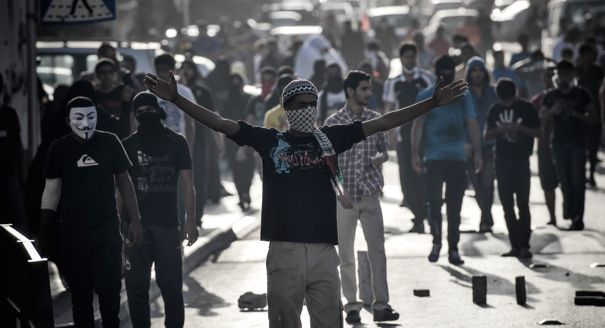
The three years since 2011 have witnessed enormous changes in activism across the Arab world. Heady days of demonstrations have given way to frustration, as activists from Morocco to Yemen struggle to define a way forward in complex, difficult, and often violent contexts. Khatib and Lust’s new book, Taking to the Streets: The Transformation of Arab Activism explores many of the challenges that activists face today. Their analysis aims not only to provide a better understanding of past events, but also to help establish expectations that better prepare activists, policymakers, and observers to anticipate and engage in the future.

From a series of country-specific cases, this policy brief analyzes three trends: the role of institutional structures and regime type in shaping activist behavior, changing contexts and new modes of activism, and the heightened influence of regional actors.

Policy Recommendations

  1. Despite greater polarization and hostility towards reform among the region’s most influential actors, the U.S. must help preserve spaces for activism wherever they exist.
     
  2. The U.S. must be willing to seriously engage and meaningfully support a broad spectrum of activists interested or involved in advocacy activities.
     
  3. The U.S. must strengthen its capacity to support activists in need of immediate, urgent assistance.

This policy brief was originally published by Project on Middle East Democracy.

About the Authors

Lina Khatib

Former Director, Middle East Center

Khatib was director of the Carnegie Middle East Center in Beirut. Previously, she was the co-founding head of the Program on Arab Reform and Democracy at Stanford University’s Center on Democracy, Development, and the Rule of Law.

Ellen Lust

Authors

Lina Khatib
Former Director, Middle East Center
Ellen Lust
Political ReformEgyptGulfLevantMaghrebMiddle EastNorth Africa

Carnegie does not take institutional positions on public policy issues; the views represented herein are those of the author(s) and do not necessarily reflect the views of Carnegie, its staff, or its trustees.

More Work from Carnegie Europe

  • Commentary
    Strategic Europe
    Europe and the Arab Gulf Must Come Together

    The war in Iran proves the United States is now a destabilizing actor for Europe and the Arab Gulf. From protect their economies and energy supplies to safeguarding their territorial integrity, both regions have much to gain from forming a new kind of partnership together.

      • Rym Momtaz

      Rym Momtaz

  • Commentary
    Strategic Europe
    The EU Needs a Third Way in Iran

    European reactions to the war in Iran have lost sight of wider political dynamics. The EU must position itself for the next phase of the crisis without giving up on its principles.

      Richard Youngs

  • Commentary
    Strategic Europe
    Europe on Iran: Gone with the Wind

    Europe’s reaction to the war in Iran has been disunited and meek, a far cry from its previously leading role in diplomacy with Tehran. To avoid being condemned to the sidelines while escalation continues, Brussels needs to stand up for international law.

      Pierre Vimont

  • Commentary
    Strategic Europe
    Can Europe Still Matter in Syria?

    Europe’s interests in Syria extend beyond migration management, yet the EU trails behind other players in the country’s post-Assad reconstruction. To boost its influence in Damascus, the union must upgrade its commitment to ensuring regional stability.

      Bianka Speidl, Hanga Horváth-Sántha

  • Commentary
    Strategic Europe
    Europolis, Where Europe Ends

    A prophetic Romanian novel about a town at the mouth of the Danube carries a warning: Europe decays when it stops looking outward. In a world of increasing insularity, the EU should heed its warning.

      Thomas de Waal

Get more news and analysis from
Carnegie Europe
Carnegie Europe logo, white
Rue du Congrès, 151000 Brussels, Belgium
  • Research
  • Strategic Europe
  • About
  • Experts
  • Projects
  • Events
  • Contact
  • Careers
  • Privacy
  • For Media
  • Gender Equality Plan
Get more news and analysis from
Carnegie Europe
© 2026 Carnegie Endowment for International Peace. All rights reserved.