

Q&A
Matt Ferchen
{
  "authors": [
    "Matt Ferchen"
  ],
  "type": "legacyinthemedia",
  "centerAffiliationAll": "",
  "centers": [
    "Carnegie Endowment for International Peace",
    "Carnegie China"
  ],
  "collections": [
    "China and the Developing World",
    "China’s Foreign Relations"
  ],
  "englishNewsletterAll": "",
  "nonEnglishNewsletterAll": "",
  "primaryCenter": "Carnegie China",
  "programAffiliation": "",
  "programs": [],
  "projects": [],
  "regions": [
    "North America",
    "South America",
    "East Asia",
    "China"
  ],
  "topics": [
    "Economy"
  ]
}
Source: Getty
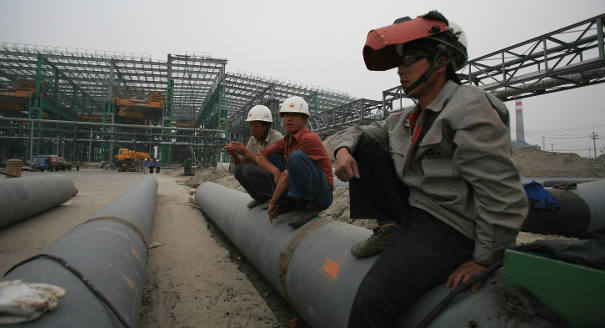
Though China is growing increasingly concerned about Venezuela’s economic, social, and political stability, it continues to provide finance and investment in an effort to strengthen relations.
Appearing on CCTV America, Carnegie’s Matt Ferchen discussed the implications of China’s increasing investment in the oil-rich country of Venezuela. Although China is growing increasingly concerned about Venezuela’s economic, social, and political stability, Ferchen explained that it continues to provide finance and investment in an effort to strengthen relations.
For instance, Ferchen said, the China Development Bank (CBD) has done more than any other organization within the Chinese system to build up the financial and oil relationship with Venezuela. However, Matt Ferchen added that the opening of a new CBD office in Caracas does not necessarily signal optimism, but instead increased skepticism of Venezuela’s current stability. Ferchen said that in order to make Chinese investments productive, China is going to have to be involved in the process of improving the situation in Venezuela, be it socially, economically, or even politically.
This interivew was originally aired on CCTV.

Former Nonresident Scholar, Carnegie-Tsinghua Center for Global Policy
Ferchen specializes in China’s political-economic relations with emerging economies. At the Carnegie–Tsinghua Center for Global Policy, he ran a program on China’s economic and political relations with the developing world, including Latin America.
Recent Work
Matt Ferchen
Matt Ferchen, Anarkalee Perera
Carnegie does not take institutional positions on public policy issues; the views represented herein are those of the author(s) and do not necessarily reflect the views of Carnegie, its staff, or its trustees.

With its public finances in shambles, the far right polling at 35 percent ahead of the 2027 presidential election, and a growing protest movement, is France’s crisis a threat to the EU’s geopolitical awakening?

Rym Momtaz, ed.

While the EU and European governments are embracing the much-lauded middle-power moment, this entails three difficult conundrums.

Richard Youngs

Europe is facing rising populism internally as well as external pressures from Russia, China, Turkey, and the United States.

Dimitar Bechev

The European Commissioner for Trade is headed to China. But after President Xi’s bridge-building visit to Washington, can a more isolated EU overcome Beijing’s stranglehold on critical raw materials? Who will blink first?
Rym Momtaz, ed.

The domestic impacts of how long it is taking to end the war in Ukraine have pushed the French electorate to the political extremes and compromised the country’s diplomatic capacity.
Rym Momtaz