

In The Media
Mario Abou Zeid
{
  "authors": [
    "Mario Abou Zeid"
  ],
  "type": "legacyinthemedia",
  "centerAffiliationAll": "dc",
  "centers": [
    "Carnegie Endowment for International Peace",
    "Malcolm H. Kerr Carnegie Middle East Center"
  ],
  "collections": [],
  "englishNewsletterAll": "menaTransitions",
  "nonEnglishNewsletterAll": "",
  "primaryCenter": "Malcolm H. Kerr Carnegie Middle East Center",
  "programAffiliation": "MEP",
  "programs": [
    "Middle East"
  ],
  "projects": [],
  "regions": [
    "Gulf",
    "Syria",
    "Iraq",
    "Middle East"
  ],
  "topics": [
    "Political Reform",
    "Security"
  ]
}
Source: Getty
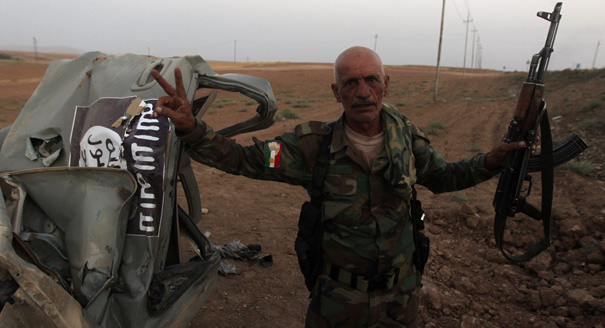
The Islamic State has ambitions in exporting its ideology outside the Middle East. What kind of threat does this pose to the global community?
Source: Press TV
As Muslims around the world were celebrating the Holy Month of Ramadan, the leader of the ISIL Takfiri terrorist group announced himself the ‘Caliph.’ The ISIL terrorist group, which currently controls parts of eastern Syria and Iraq’s northern and western regions, continues to commit acts of violence against the people of Iraq and Syria. According to reports, around 80 Kurds were massacred and hundreds of women kidnapped as slaves when the terrorist group swept into the northern Iraqi town of Kocho.
U.S. President Barack Obama has authorized military strikes on ISIL positions in Iraq. The United Nations has announced sanctions on individuals with links to the ISIL. The ISIL Takfiri militants took control of Iraq’s Mosul on June 10. They also took over the city of Tikrit but it was later liberated by the Iraqi army.
To discuss the global impact of ISIL and the threat it poses to countries outside the Middle East, Press TV’s Middle East Files spoke with Carnegie’s Mario Abou Zeid.

Former Research Analyst, Middle East Center
Abou Zeid was a research analyst at the Carnegie Middle East Center, where his work focuses on political developments in Lebanon, Syria, Iraq, and Iran.
Recent Work
Mario Abou Zeid
Mario Abou Zeid
Carnegie does not take institutional positions on public policy issues; the views represented herein are those of the author(s) and do not necessarily reflect the views of Carnegie, its staff, or its trustees.

Before the next wave of EU enlargement takes place, the union needs to grapple with thorny questions of how power is distributed among its members.


Emil Sondaj Hansen, Ditte Brasso Sørensen

The new U.S.–Denmark–Greenland agreement will help Washington exert political, economic, and financial dominance under the guise of security. Yet, it acknowledged Copenhagen’s and Nuuk’s sovereignty on the island.

Marc Pierini

A summer of escalation in the Black Sea has hurt Ukraine economically and is exacerbating world food security. A truce is needed—as is a broader reframing of Europe’s Ukraine strategy.

Thomas de Waal

Are Germany’s economic, industrial, and political struggles becoming a liability for the EU’s ability to rise to the geopolitical moment?

Rym Momtaz, ed.

European states control several Overseas Countries and Territories around the world that carry strategic, economic, and environmental weight. As great powers challenge the rules-based order, defending them is a geopolitical imperative for Europe.
Marc Pierini