• Research
  • Strategic Europe
  • About
  • Experts
Carnegie Europe logoCarnegie lettermark logo
EUUkraine
  • Donate
{
  "authors": [
    "Sarah Chayes"
  ],
  "type": "other",
  "centerAffiliationAll": "dc",
  "centers": [
    "Carnegie Endowment for International Peace"
  ],
  "collections": [
    "Anti-Corruption"
  ],
  "englishNewsletterAll": "",
  "nonEnglishNewsletterAll": "",
  "primaryCenter": "Carnegie Endowment for International Peace",
  "programAffiliation": "DCG",
  "programs": [
    "Democracy, Conflict, and Governance"
  ],
  "projects": [],
  "regions": [],
  "topics": [
    "Political Reform",
    "Democracy",
    "Economy"
  ]
}
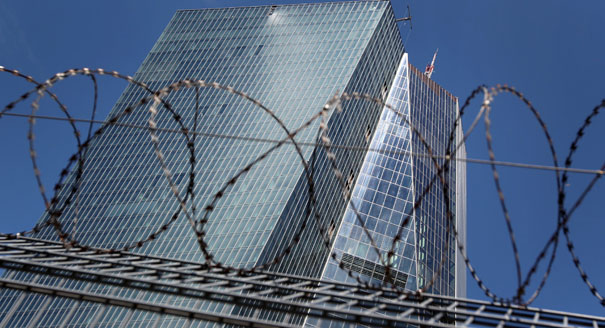
Source: Getty

Other

Corruption: The Priority Intelligence Requirements

The questions decisionmakers need to ask to truly understand countries where corruption pervades the political system.

Link Copied
By Sarah Chayes
Published on Sep 9, 2014

As a bewildering array of convulsions rocks the globe, from Honduras to Nigeria, Iraq to Ukraine, there is increasing reason to believe that acute corruption contributes to international instability. Ukraine’s revolution was in part a rejection of the entrenched corruption of Viktor Yanukovych’s regime. A large swath of Sunni Iraq fell to the self-declared Islamic State after then prime minister Nouri al-Maliki bent Iraqi state function to benefit a tight-knit Shia network, exasperating much of the public. Exploiting similar grievances and popular indignation, militant, puritanical groups are making inroads from Nigeria to Pakistan. Banners and slogans from the Arab Spring revolutions suggest they too represented, at least in part, an uprising against kleptocratic governance; several have now spun out of control. Elsewhere, without resorting to violence, populations have staged mass protests against the corrupt practices of their ruling elites.

Yet, despite the significance of the problem, little is known about how corrupt systems function. Corruption is usually understood as a fraying at the edges of a system, at worst, as system failure. It is seen as fundamentally a sideshow: an inconvenient fact of life, or the inevitable result of poor government capacity.

But in a range of countries around the world, corruption is the system—and a remarkably effective one. Governments are restructured to serve a purpose that has nothing to do with public administration. The aim is amassing personal wealth for the benefit of ruling networks—an objective they achieve with intent, skill, and efficiency. Capacity deficits and other weakness may in fact be part of the way the system functions, rather than evidence of a breakdown.

Such governments might well be regarded as little more than disguised crime syndicates. And—no less than transnational organized crime—their kleptocratic networks deserve systematic examination, to better understand the security impacts of their operations and to inform engagement with them. But senior intelligence officials concede the topic has not to date been a target for either regular collection or comprehensive and long-range analysis.

As a result, Western officials—civilian as well as military—may enter engagements with these governments blind to the real structures of power and dynamics that operate. They will be ill-equipped to predict or understand the effects of the partnerships. And they may inadvertently exacerbate the very threats they seek to reduce.

In some cases, corrupt networks are relatively structured; elements of government function have been bent to the benefit of one or a very few cliques. Elsewhere, corruption may be widespread, but without the same degree of consolidation at the top of the pyramid. Monopolies on the instruments of force may be less complete, so elite networks may engage in open, violent competition to capture revenue streams. Depending on local particularities, these two broad categories are often further differentiated, as to the levers of power corrupt networks rely on and the sources of wealth they target. And such variations may give rise to quite different types of security threat.1

Improved Western decisionmaking with regard to countries where corruption pervades the political system requires more ample and sophisticated intelligence on the structure and functioning of their kleptocratic systems. The questions below could help shape enhanced information collection and analytical study. Note that categories that may seem crisp and separate as articulated here may turn out to overlap: for instance, an army unit that is hollowed out may also provide access to an important revenue stream (international military assistance), or a government institution may seem to be either an “enabler” or a captured element of state function. Decisions as to taxonomy will be matters of judgment.

  1. The cultural environment:
     
    1. What are popular attitudes toward corruption? (Responses should be derived from conversations with ordinary people without government intermediaries or interpreters present.)
       
    2. How are culturally expected behaviors (such as patronage and support for family members) interacting with more baldly predatory practices? Has there been a recent change in the degree of downward distribution of resources (in the form of broad-based patronage or affordable commodities or services, for example)?
       
  2. The structure of a corrupt country’s kleptocratic networks:
     
    1. Do the people who dominate both government function and the capture of national revenues appear to be structured into one or more networks?
       
    2. If they are organized into networks, is this system dominated by one or a small number of predominantly allied networks? Or is the environment more chaotic, consisting of several competing networks whose capabilities are relatively equal?
       
    3. How does/do the network(s) map against other social groupings, such as tribe or ethnic/linguistic group?
       
    4. Can the network(s) be diagrammed?
       
    5. What are the key roles and responsibilities within the system? How do these roles map against formal titles and positions? How does the diagram of the formal power structure compare to the diagram of the corrupt power structure?
       
    6. Who fills each principal role? Are outside individuals or members of informal (nongovernmental) networks integrated?
       
    7. What function, if any, does the chief of state perform in the network? His/her family?
       
    8. What is the degree of redundancy in these functional positions?
       
    9. How vertically integrated is/are the network(s)?
       
    10. Is/are the network(s) affiliated with or integrated into transnational criminal or extremist/terrorist networks? The corrupt networks in a neighboring country?
       
      1. If so, characterize the relationship, utility to the corrupt networks, directionality of the vector of influence/dependency.
         
    11. What is the principal bargain among network members; that is, what is being exchanged for access to illicit resources or a cut of the take?
       
  3.  Operating procedures (“Center of Gravity”):
     
    1. Has/have the network(s) captured any levers of power/elements of state function? If so, which ones? What role do they play in the enforcement of system rules?
       
      1. What specific instrument of force (formal or informal) do the networks rely upon, including specific military or police branches, or extragovernmental armed groups?
         
      2. Do any apparently innocuous bureaucracies serve as an enforcement arm for the network(s) (such as Tunisia’s tax authority)?
         
      3. Have democratic processes been distorted?  If so, how?
         
    2. Have any levers of power/elements of state function been deliberately hollowed out? Are there any that the network(s) take pains to work around?
       
      1. Is the judiciary captured or worked around? Or does it retain independence and authority? If the latter, how is impunity—and punishment of contrarians—guaranteed?
         
      2. Are any instruments of force deliberately hollowed out (such as Nigeria’s or Ukraine’s or Iraq’s armies)?
         
    3. What revenue streams in particular does the network endeavor to monopolize? In which sectors of economic activity does it specialize?
       
      1. Are any aspects of state function deliberately distorted to this end?
         
      2. How does the effort to monopolize revenue streams explain deployment of government manpower?
         
      3. How are these revenue streams integrated into the global market?
         
      4. Do the networks shape their posture with respect to Western governments in order to capture lucrative international inputs (such as security assistance, development assistance, international grants, and loans)? If so, how?
         
        1. Do they cultivate an antiterrorism posture?
           
        2. Do they set up network-controlled “NGOs” to capture development assistance?
           
        3. Do they foster an apparently conducive business environment (such as by recapitalizing the country’s banks with public funds to provide the appearance of solvency)?
           
        4. Do they request capacity-building assistance? Insist on choosing who participates in international trainings, conferences, and the like?
           
        5. Do they make provision of aid an implicit quid pro quo for access to government officials?
           
        6. Do they seek entry into “clubs,” such as the Extractive Industries Transparency Initiative, as a fig leaf to attract investment?
           
        7. Do they threaten state collapse as the only alternative to external financing?
           
    4. How does/do the network(s) reward people for services rendered? Is it an explicit quid pro quo (including cash payment), or an exchange of favors? What proof does the leadership require of service completion?
       
    5. How does the leadership punish disobedience—both within the network and on the part of the population?
       
    6. How does/do the network(s) protect members? Does the chief of state benefit from particular protection?
       
    7. How does/do the network(s) attempt to mollify the population (for instance, nationalist fervor or populist giveaways, such as subsidized staples or housing)? Does it hijack national myths or narratives to obfuscate or justify illicit behaviors?
       
    8. What are the key internal and external enablers upon which it relies?
       
    9. How does it/do they move and store money and other essential assets? What are the names of key financial, accounting, legal, logistics, and property enterprises used?
       
    10. What are the networks’ typical or likely countermoves when under pressure? Do these change depending on the origin of the pressure?
       
  4. Vulnerabilities:
     
    1. What are the aspirations or key requirements of network members?
       
      1. What logistic or support vulnerabilities exist?
         
        1. Can funds transfers be mapped?
           
        2. Are assets held outside the country? What type and where?
           
        3. How are needed supplies or licit or illicit items for sale transported?
           
      2. Do network members have property in or prize travel to the West for themselves or their relatives?
         
        1. Are any network members or family members currently residing in or regularly visiting the West?
           
        2. Can those individuals be identified?
           
        3. Do any participate in international professional military exchanges?
           
        4. Can their conspicuous spending habits be mapped?
           
    2. What are the patterns of life of individuals who occupy key network nodes?
       
    3. Do the types of punishment or repression of dissent favored by the network(s) constitute a violation of U.S. or other Western laws or regulations governing provision of civilian or military assistance?
       
    4. Are there personal liabilities that can be exploited if necessary?
       
    5. Are any levers of power relatively free of corruption?
       
    6. What institutions or groups could serve as checks on the power/freedom of motion of the system? Are they willing to take risks? How can those risks be mitigated?
       
    7. Are there constructive actors within the system who disapprove of the way the system is functioning? Are there disgruntled actors?
       
  5. Impact and security implications:
     
    1. What impact does acute corruption have on the welfare of the country/people? What is the impact on:
       
      1. GDP?
      2. Economic diversity?
      3. Employment and other opportunities?
      4. Inequality/GINI coefficient?
      5.  Popular attitudes toward government and its institutions?
         
    2. Do the corrupt networks and their activities generate any positive effects—for the population or other outside actors?
       
    3. How do the most constructive actors, inside and outside of government, respond? (Theory of “small deeds,” public opposition, withdrawal/exile, acquiescence with violent opposition?)
       
    4. With which other significant risk factors is pervasive and systemic corruption interacting?
       
      1. Deep identity rifts?
      2. Environmental/climate/resource pressures?
      3. Recent economic contraction?
      4. Sharp internal economic disparities?
      5. Old age/dramatically poor health of ruler?
      6. Population density?
      7. Median age? (High suggests “color revolution,” low suggests violent conflict.)
      8. Proximity to a preexisting separatist, terrorist, or major criminal network?
         
    5. What category of threat if any is emanating or most likely to emanate from the acute corruption and its interaction with relevant risk factors from the above list?
       
      1. Widespread popular uprisings/revolution?
      2. Extremist ideological insurgency/terrorism?
      3. Exploitation of popular disgruntlement by a rival kleptocratic or criminal network?
      4. Symbiotic alliance with major transnational criminal organization?
      5. Symbiotic alliance with transnational terrorist network?
      6. Cultivation of internal conflict for the purposes of revenue capture?
      7. Systematic undermining of international legal regimes (such as nonproliferation or intellectual property protection regimes)?
      8. Exacerbated impact of natural disasters?

1 For a more complete analysis of the structure and functioning of acute corruption, please see “Corruption, the Unrecognized Threat to International Security” (Washington, DC: Carnegie Endowment for International Peace, June 2014), http://carnegieendowment.org/2014/06/06/corruption-unrecognized-threat-to-international-security/hcts.

Update: Question III.A.3 was added on September 22, 2014.
About the Author

Sarah Chayes

Former Senior Fellow, Democracy, Conflict, and Governance Program

Sarah Chayes is internationally recognized for her innovative thinking on corruption and its implications. Her work explores how severe corruption can help prompt such crises as terrorism, revolutions and their violent aftermaths, and environmental degradation.

    Recent Work

  • Commentary
    China Financial Markets test

      Sarah Chayes

  • Paper
    Fighting the Hydra: Lessons From Worldwide Protests Against Corruption

      Sarah Chayes

Sarah Chayes
Former Senior Fellow, Democracy, Conflict, and Governance Program
Sarah Chayes
Political ReformDemocracyEconomy

Carnegie does not take institutional positions on public policy issues; the views represented herein are those of the author(s) and do not necessarily reflect the views of Carnegie, its staff, or its trustees.

More Work from Carnegie Europe

  • Research
    New Approaches to Defending Global Civil Society

    New thinking is needed on how global civil society can be protected. In an era of major-power rivalry, competitive geopolitics, and security primacy, civil society is in danger of getting squeezed – in some countries, almost entirely out of existence.

      Richard Youngs, ed., Elene Panchulidze, ed.

  • Commentary
    Strategic Europe
    How Europe Can Survive the AI Labor Transition

    Integrating AI into the workplace will increase job insecurity, fundamentally reshaping labor markets. To anticipate and manage this transition, the EU must build public trust, provide training infrastructures, and establish social protections.

      Amanda Coakley

  • Commentary
    Strategic Europe
    Can Europe Still Matter in Syria?

    Europe’s interests in Syria extend beyond migration management, yet the EU trails behind other players in the country’s post-Assad reconstruction. To boost its influence in Damascus, the union must upgrade its commitment to ensuring regional stability.

      Bianka Speidl, Hanga Horváth-Sántha

  • EU democracy support policies
    Paper
    European Democracy Support Annual Review 2025

    European democracy support strategy in 2025 prioritized protecting democratic norms within Europe. This signals the start of a structural recalibration of the EU’s approach to democracy support.

      • Elena-Viudes-Egea
      • +6

      Richard Youngs, ed., Elena Viudes Egea, Zselyke Csaky, …

  • Commentary
    Strategic Europe
    Taking the Pulse: Can the EU Attract Foreign Investment and Reduce Dependencies?

    EU member states clash over how to boost the union’s competitiveness: Some want to favor European industries in public procurement, while others worry this could deter foreign investment. So, can the EU simultaneously attract global capital and reduce dependencies?

      • Rym Momtaz

      Rym Momtaz, ed.

Get more news and analysis from
Carnegie Europe
Carnegie Europe logo, white
Rue du Congrès, 151000 Brussels, Belgium
  • Research
  • Strategic Europe
  • About
  • Experts
  • Projects
  • Events
  • Contact
  • Careers
  • Privacy
  • For Media
  • Gender Equality Plan
Get more news and analysis from
Carnegie Europe
© 2026 Carnegie Endowment for International Peace. All rights reserved.







