

Report
- +3
James M. Acton, Alexey Arbatov, Vladimir Dvorkin, …
{
  "authors": [
    "Petr Topychkanov"
  ],
  "type": "commentary",
  "centerAffiliationAll": "",
  "centers": [
    "Carnegie Endowment for International Peace",
    "Carnegie Russia Eurasia Center"
  ],
  "collections": [],
  "englishNewsletterAll": "",
  "nonEnglishNewsletterAll": "",
  "primaryCenter": "Carnegie Russia Eurasia Center",
  "programAffiliation": "",
  "programs": [],
  "projects": [],
  "regions": [
    "South Asia",
    "Pakistan"
  ],
  "topics": [
    "Political Reform",
    "Civil Society"
  ]
}
Source: Getty
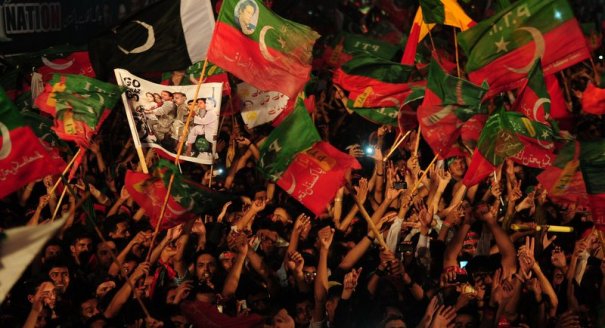
Pakistan has been in turmoil for more than 40 days: protests headed by Imran Khan and Tahir-ul-Qadri have taken the country by storm. Yet the protest movement seems to be running out of steam. The weakening of the protest movement has much to do with Prime Minister Sharif’s decision not to crack down on the protests.
Pakistan has been in turmoil for more than 40 days: protests headed by Imran Khan and Tahir-ul-Qadri have taken the country by storm. Sit-in demonstrations are taking place in Islamabad and elsewhere throughout Pakistan. The protesters’ central demand is the resignation of Prime Minister Nawaz Sharif’s government. Since the start of the demonstrations, more than ten people have died in clashes with the police, and more than a hundred people have been injured.
Yet the protest movement seems to be running out of steam, even as Imran Khan and Tahir-ul-Qadri call for more demonstrations. Fewer people are taking to the streets now, although they still number in the thousands. Public polls indicate that the protest’s leaders are gradually losing their popularity. For the time being, Prime Minister Nawaz Sharif’s position remains secure.
Imran Khan’s and Tahir-ul-Qadri’s organizational skills have also played an important role in fomenting public outrage. They have committed considerable funds to mobilizing, transporting and supplying the protestors.
It is worth noting that despite their mass scale, the protests have not become the site of terrorist attacks, which have too frequently taken place at large-scale rallies in Pakistan. Perhaps most notably, terrorist attacks claimed the life of Benazir Bhutto, the leader of the Pakistan Peoples Party, at a rally on December 27, 2007.
The factors that initially propelled Imran Khan’s movement have now begun to work against it. Having capitalized on protesters’ anger, the movement’s leaders have failed to steer their supporters toward attainable goals, and generally failed to formulate a positive agenda. Certainly, it would be naïve to think that Sharif’s government will resign merely out of fear of street protests.
Of course, a massive government crackdown on the protest movement would have helped Imran Khan and Tahir ul-Qadri, by painting them as the regime’s victims. However, this did not happen. The isolated incidents of police brutality are now being handled in court.
The movement’s impressive organization and the financial resources at its disposal raise questions about its backers. Some observers believe that the aid from abroad played some role in supporting the movement. Others think the army was involved in organizing the protests. If one of these theories proves accurate, it will tarnish the reputation of the movement and its leaders, in addition to casting doubt on the motivations of future demonstrations. After all, getting help from overseas or the military squarely contradicts the politicians’ public pronouncements.
The weakening of the protest movement also has much to do with Sharif’s reaction. Firstly, Sharif did not (or perhaps could not) crack down on the protests. As a result, people vented their feelings at the rallies in a contained way, and outbursts never translated into anything more serious. Secondly, Sharif has managed to gain the support of the major political forces inside the country. It is important that many of them refused to support Imran Khan and Tahir-ul-Qadri, even if they did not directly side with the prime minister. Thirdly, he was able to keep the army above the political fray, thanks to the support of General Raheel Sharif, his appointee to the position of the Chief of Staff of the Army. Several other appointments to key positions in the military were made on September 23. Most importantly, Lieutenant General Rizwan Akhtar was appointed director-general of the Inter-Services Intelligence (ISI), which has further strengthened the support for Nawaz Sharif among the armed forces. At the very least, this move has demonstrated the army’s reluctance to interfere with the political struggle, if not inspired direct support for the prime minister.
Former Fellow, Nonproliferation Program, Moscow Center
Topychkanov was a fellow in the Carnegie Moscow Center’s Nonproliferation Program.
Recent Work

James M. Acton, Alexey Arbatov, Vladimir Dvorkin, …
Petr Topychkanov
Carnegie does not take institutional positions on public policy issues; the views represented herein are those of the author(s) and do not necessarily reflect the views of Carnegie, its staff, or its trustees.

Radical-right parties are expected to do well in upcoming elections in four of the EU's biggest member states. If successful, they could prevent the union from addressing key challenges ahead.

Stefan Lehne
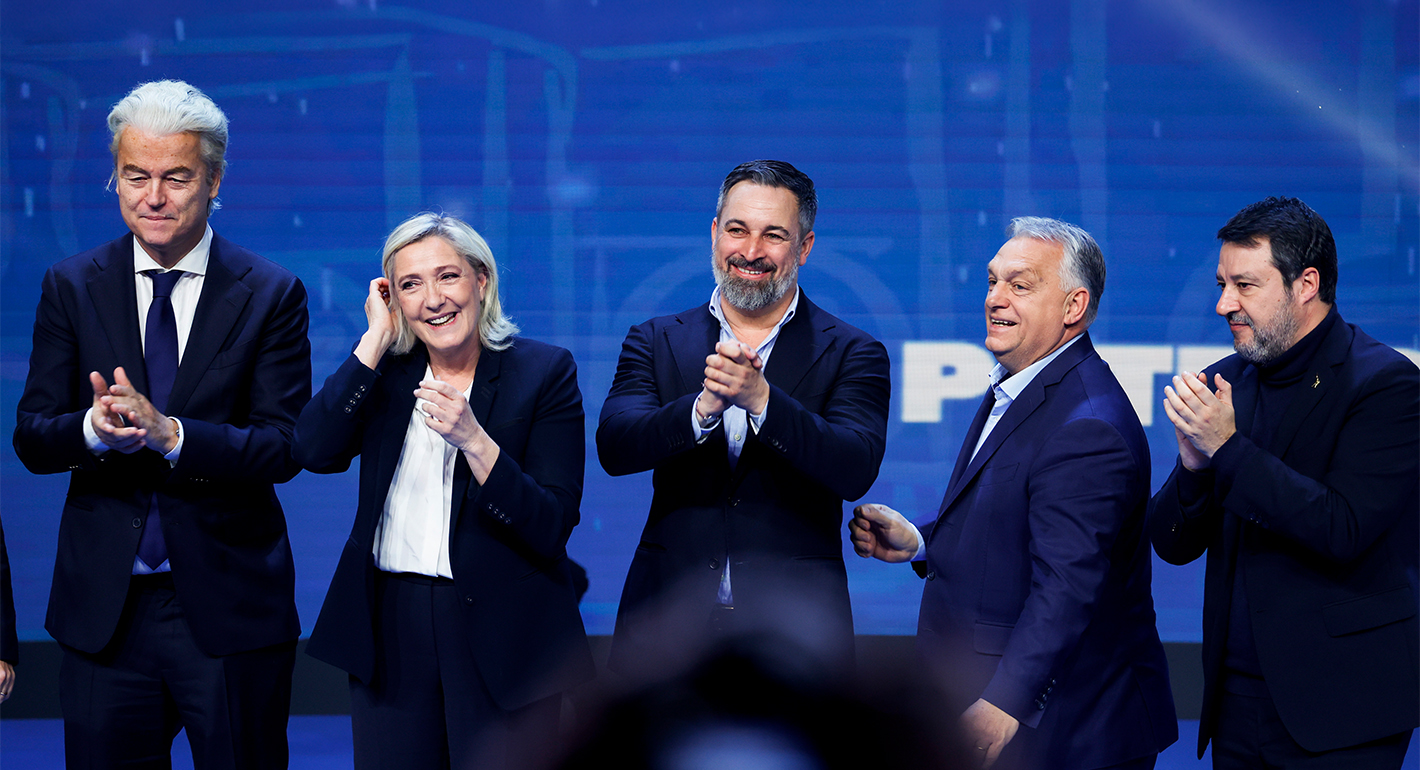
In supporting Europe’s far-right, MAGA and Russia both want the same thing: a weaker EU. Europe must defend itself without abandoning the openness these forces exploit.
Armida van Rij

As the EU confronts profound challenges, several leaders have called for fundamental reform to the union’s model—but only modest, superficial changes have resulted. What if Europe really could be reimagined from zero today: What should such a redesigned European order look like?

Richard Youngs, ed.
The battle over free speech has taken center stage since U.S. Vice President JD Vance accused Europe of censorship. From travel bans to social media regulation, especially around the Israel-Palestine conflict, are liberal democratic governments weaponizing free speech?

Rym Momtaz, ed.
Preparing candidate countries for EU membership is no longer enough. As the enlargement process becomes a reality, the union must also prepare its own societies.

Iliriana Gjoni