

Article
Dalia Ghanem
{
  "authors": [
    "Dalia Ghanem"
  ],
  "type": "legacyinthemedia",
  "centerAffiliationAll": "dc",
  "centers": [
    "Carnegie Endowment for International Peace",
    "Carnegie Europe",
    "Malcolm H. Kerr Carnegie Middle East Center"
  ],
  "collections": [
    "Europe’s Southern Neighborhood"
  ],
  "englishNewsletterAll": "menaTransitions",
  "nonEnglishNewsletterAll": "",
  "primaryCenter": "Malcolm H. Kerr Carnegie Middle East Center",
  "programAffiliation": "MEP",
  "programs": [
    "Middle East"
  ],
  "projects": [],
  "regions": [
    "Gulf",
    "Levant",
    "Maghreb",
    "Syria",
    "Algeria",
    "Middle East",
    "North Africa"
  ],
  "topics": [
    "Political Reform",
    "Security"
  ]
}
Source: Getty
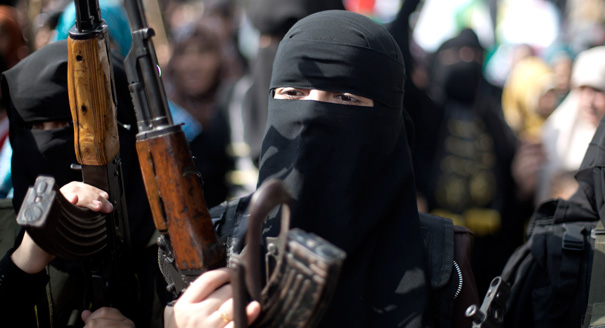
Women, who not only offer moral support, but also combatant support in the field, contribute—directly or indirectly—to an industry of death, as they strive for the inexorable march of jihadism, and the extermination of those they see as “impious” and “apostates.”
Source: openDemocracy
Last June, the Islamic State (IS) announced the creation of an all-female brigade called Al Khansa, active in Al Anbar province (Iraq) and in Raqqa (Syria). The brigade comes after the creation of the Free Syrian Army’s (FSA) women brigades baptized Oumana Aïcha and Banat al Walid, active in Homs and Aleppo.
This news has made headlines, as if violence by women were an unprecedented, almost unusual fact. Public reaction to the existence of those brigades lies in society’s perception of women as innocent victims. The word “executioner,” for example, is generally not associated with females.
But violence by women is a reality. Women have often played deadly roles in conflicts, even as non-combatants. The reasons for this are varied, but in looking at conflicts in the Middle East and North Africa in modern history, one can see that there are certain similarities between the reasons for which women are joining the Islamic State and the Free Syrian Army and the Algerian experience of the 1990s.During the Algerian conflict in that period, hundreds of women first joined the Islamic Salvation Front, and later, armed groups like the Armed Islamic Group (GIA)—one of the first groups to train units exclusively comprised of women. Then, as now, jihadist women often joined as first-aid providers and nurses, but their roles evolved according to the circumstances and strategies of their organizations.
In Algeria, women in the field passed from being nurses to jailers (of the sabaya captives) to fighters on the frontlines. After being trained in the use of firearms and learning different fighting techniques, they actively participated in sabotage, assassinations, and fake checkpoint missions, and landed key positions within their organisations.
This was, for instance, the case of Lalla Fatma or Djabri Kheira, two jihadists in a group active in Medea in 1994. These women and their female brigades carried out many massacres (Magta’ Lazrag, Douar Bedarna, and Douar of Nechachba). Others, such as the women nicknamed “the ear cutters” by the survivors of the Bentalha slaughter (1997), participated in the massacres by despoiling their victims of their gold, snatching teeth and cutting off fingers and ears in order to obtain jewellery.
Taking this experience as a reference, jihadist women from the FSA and the IS who are currently on first-aid and nursing missions are likely to be called upon to play more active roles in the future. Two or three brigades are already active in the armed struggle, such as Banat al Walid.
But why do women become jihadists? The motivations are varied. One motivation is economic, as joining armed organizations secures women a livelihood. The Islamic State’s female jihadists earn around $200 per month, which is a substantial sum under the current conditions in Syria and Iraq.
There are also those who join for ideological reasons. A large number of these evoke their desire to “glorify the word of God on earth” or to demonstrate “their love for God and the desire of raising the banner of Islam.” Women also join by “compromise:” after “serving” the armed group, they are compromised and are incapable of backtracking.
The progress of an individual in an armed group is gradual and usually slow. It begins with several small tests that eventually lead to a more important mission. These steps are usually non-violent. This is the case, for example for Um Omar, leader of Katibet Oumana Aisha in Aleppo, in the Salah Eddine neighborhood:
I started by going to demonstrations, and then I participated in nursing the injured. Later I helped to reopen schools before I participated in the armed struggle. Today I am a chief of katiba.
Some of them participate in armed struggle with the aim of rectifying a grievance of which they have been a victim. Carrying weapons enables them to act, and to avoid being subjected to potential or proven aggressions such as rape. A combatant from Katibat Banat Al Walid in Homs stated: “Our main goal is to protect ourselves against the fierceness of Assad groups.”
Familial ties also lead to the active participation of women. Forced or consensual marriage additionally helps in consolidating alliances, making desertion more difficult.
Then and now, these women, who not only offer moral support, but also combatant support in the field, contribute—directly or indirectly— to an industry of death, as they strive for the inexorable march of jihadism, and the extermination of those they see as “impious” and “apostates.”
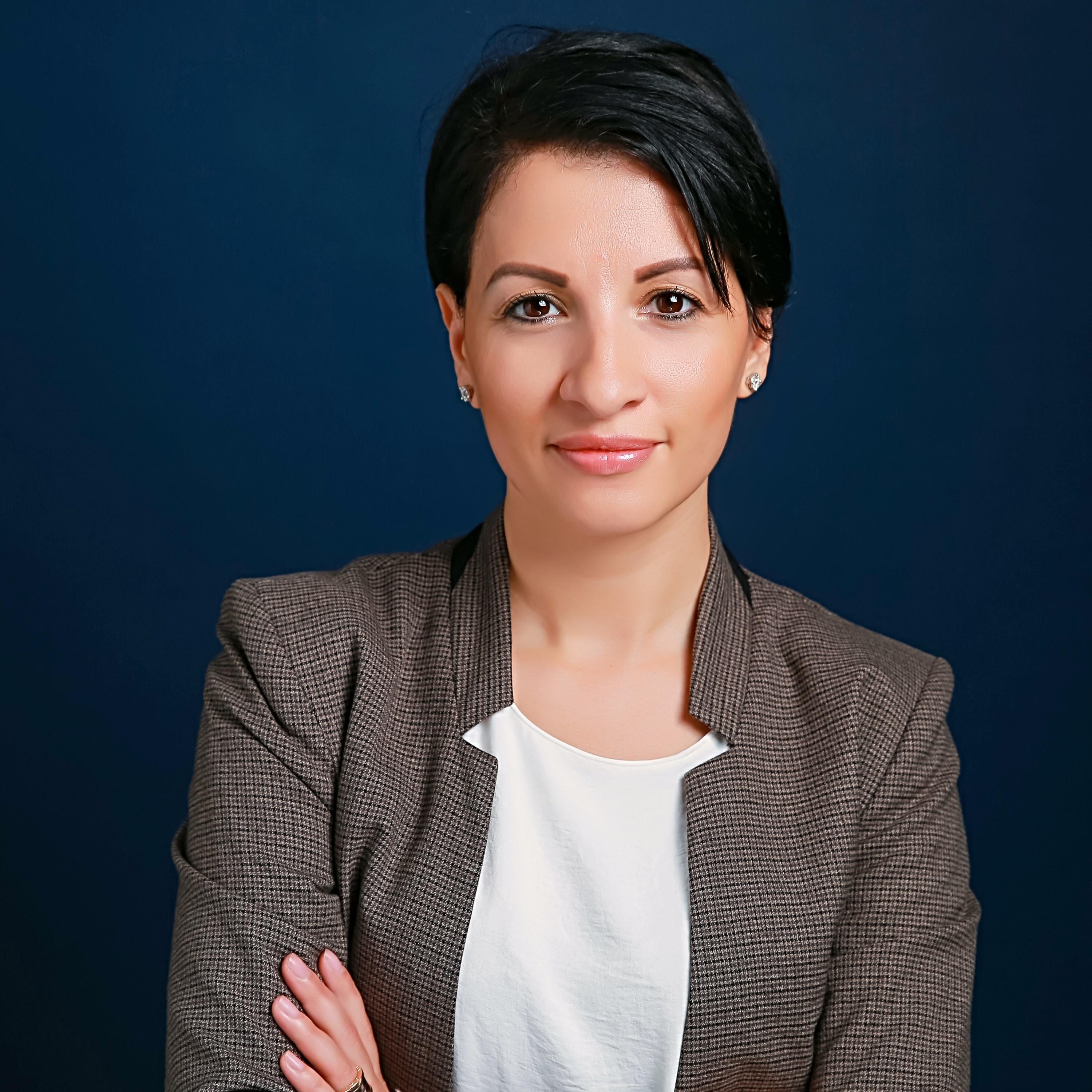
Former Senior Resident Scholar, Malcolm H. Kerr Carnegie Middle East Center
Dalia Ghanem was a senior resident scholar at the Malcolm H. Kerr Carnegie Middle East Center in Beirut, where her research focuses on Algeria’s political, economic, social, and security developments. Her research also examines political violence, radicalization, civil-military relationships, transborder dynamics, and gender.
Recent Work
Dalia Ghanem


Frances Z. Brown, Judy Dempsey, Dalia Ghanem, …
Carnegie does not take institutional positions on public policy issues; the views represented herein are those of the author(s) and do not necessarily reflect the views of Carnegie, its staff, or its trustees.
Between the United States’ market-driven approach and China's state-led industrial strategy, Europe is reckoning with how it can remain competitive in the global economy. But is Europe in danger of becoming a U.S. or China colony?

Noah Barkin, Anu Bradford

Preparing candidate countries for EU membership is no longer enough. As the enlargement process becomes a reality, the union must also prepare its own societies.

Iliriana Gjoni
Debate is heating up on how Turkey could be integrated into a common European defense framework. Commercial and industrial deals offer a better chance at alignment than sweeping political efforts.

Marc Pierini
Countries face several hurdles in joining the EU, including the final stage of ratifying their accession treaties. Procedural reforms and substantive adjustments could help move the process forward.

Stefan Lehne
Europe has an interest in supporting Armenian leader Nikol Pashinyan as he tries to make peace with neighbors and loosen ties with Russia. But it is depersonalized support in the long term, not quickfire flash, that will win the day.

Thomas de Waal