

Commentary
Nathan J. Brown
{
  "authors": [
    "Nathan J. Brown"
  ],
  "type": "legacyinthemedia",
  "centerAffiliationAll": "dc",
  "centers": [
    "Carnegie Endowment for International Peace"
  ],
  "collections": [],
  "englishNewsletterAll": "menaTransitions",
  "nonEnglishNewsletterAll": "",
  "primaryCenter": "Carnegie Endowment for International Peace",
  "programAffiliation": "MEP",
  "programs": [
    "Middle East"
  ],
  "projects": [],
  "regions": [
    "North America",
    "United States",
    "Middle East",
    "North Africa"
  ],
  "topics": [
    "Political Reform"
  ]
}
Source: Getty
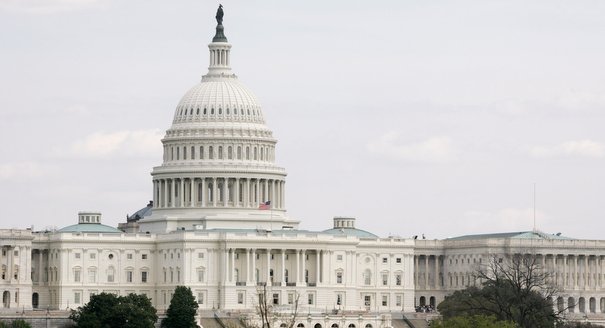
These days, area studies supported by Title VI of the Higher Education Act are in the crosshairs.
Source: Washington Post
In 2013, the Monkey Cage led the charge against the attempt by congressional appropriators to eliminate National Science Foundation funding for political science. These days, area studies supported by Title VI of the Higher Education Act are in the crosshairs. The unique Middle East politics of the threat to Title VI should not distract from the common issues in play with another political challenge to federal support for scholarship.
I have to confess that this year’s threatened hit list would strike close to my heart: That act funded my doctoral studies and I want junior scholars to have the same support I did. And today I teach, proudly, at the George Washington University’s Title VI National Resource Center for Middle East Studies. Political attacks on Title VI funding for Middle East Studies are a quadrennial ritual, which has rarely made significant inroads. Several trends, from the specific (the increasingly contentious politics surrounding Israel) to the general (rising pressure on federal budgets), make this year’s attacks more worrying. They should be of great concern not only for the insular world of Middle East Studies, but for all academics concerned about the politicization of federal funding for academic research.
U.S. area studies programs have been essential for both U.S. policy and beyond American shores. A recent study of the relevance of political science to policymakers found that area studies were the form of academic research that policymakers most valued: 69 percent of respondents described area studies as very useful and 97 percent as at least somewhat useful (only 32 and 80 percent had the same views of political science). U.S. area studies are even more valued abroad, where authoritarian governments view academic freedom in the social sciences and even the humanities as dangerous. Federal support for these programs over the past two generations has produced the core of American students and scholars who today teach, research and write about vital areas of the world – and are often the only sources of knowledge when crises erupt in unfamiliar places.
Ironically, U.S. politics is now undermining this vital national asset. Title VI programs took a major hit for budgetary reasons in 2012, when the sequester forced a 47.5 percent reduction in the funding of all National Resource Centers. Funding levels were partially restored* in the 2014-18 competition, but only after crippling uncertainty driven by multiple delays and swirling politics. A host of academic programs funded by Title VI are vulnerable to congressional reauthorization taking place this year. Since knowing about the world would seem to be a good thing, particularly at a time of such great regional and global upheaval, it may be confusing why the area studies and language training supported by Title VI would be at risk from politics. But this year’s battle has already begun, and the last reauthorization battle in 2008 may give a taste of what is in store. On Sept. 29, Rep. Nita Lowey, the ranking Democratic member of the House Appropriations Committee, wrote to Secretary of Education Arne Duncan warning of “concerns that a number of imbalanced programs of Middle East Studies are disproportionately focused on and are biased against Israel.”Much of the ferment over Title VI is predictably tied to the Israeli-Palestinian vortex of vitriol. Competing interpretations of Ottoman history or civil-military relations in North Africa that occupy so much academic attention rarely figure in these debates. It is distressing that all discussion about international education boils down to a fight over various orientations to the Israeli-Palestinian conflict. Those who have been offended by specific individuals or events at particular universities see Title VI reauthorization as a political tool to cut off funding to those whose opinions they dislike, which often translates into attacks on particular Title VI centers. This year, the most vicious of these attacks came against UCLA’s Middle East Center. A self-appointed watchdog group issued a report that was characterized by inaccuracies and hyperbole about supposed “anti-Semitism” for programs that were critical of Israel. The attack has already been widely circulated on Capitol Hill.
Yet what do critics seek to do about it? One idea – to try to defund specific programs that are deemed politically incorrect – seems to be in decline, though it is not dead. A second approach – to use civil rights procedures to claim implausibly that specific programs are somehow violating the law – has mercifully failed to date. The result of those long, drawn-out past wars was simply that applicants for federal funds for international and regional studies were asked to give an explanation of “how the activities funded by the grant will reflect diverse perspectives and a wide range of views and generate debate on world regions and international affairs.” This is, of course, what most applicants already seek to do as part of their core mission; some critics are seeking to put more teeth (and politics) into the oversight of that mission.
The strategy that critics now seem to be developing is more dangerous, however: moving beyond an attack on those academics who annoy them into an effort to bring the entire infrastructure of federal support crashing down. One of the leading critics of Title VI, Martin Kramer of Shalem College in Israel, concludes that “if you think that Title VI, on balance, does more good than harm, you’re just going to have to accept that some of your tax dollars will go to agitprop for Hamas. If you think that’s totally unacceptable, you should favor the total elimination of Title VI from the Higher Education Act, now up for reauthorization.”
Should programming that is critical of Israel on some campuses endanger all funding for international education? Should federal officials or members of Congress pass judgment on individual lecture series? And if an individual faculty member offends a supporter of a particular political position on the Israeli-Palestinian conflict, should students of Swahili and teachers of Tagalog be caught in the crossfire? This expansion of the war could boomerang on the critics, however, if those other Title VI area studies constituencies can come together in a defensive coalition to protect the core mission of international education and language training.
In Washington, D.C., where any issue can be caught up in polarized bickering, Title VI has already been dragged in. The conservative Heritage Foundation published a lengthy broadside against Title VI by Senior Fellow Mike Gonzalez that boils down to three points: First, the author, as might be expected from a senior fellow at Heritage, does not approve of the Obama administration’s foreign policies; second, the U.S. government has funded international education; and third, this cannot be, to Gonzalez, merely a coincidence. Linking once bipartisan federal support for international education with the foreign policy decisions of the current administration risks making reauthorization a proxy for partisan battles.
But this is silly. To know more about the world benefits everyone in general but nobody specifically. Programs like that can wind up on the cutting room floor because they lack focused and motivated defenders. The Obama administration has been no friendlier to the cause of international education than many on the other side of Washington’s big divide. The unfortunate result may be to undermine the United States’ ability to understand regions of the world in which it is deeply involved. Standing against their efforts is merely the hope that this Congress may yet act like its predecessors and reauthorize Title VI based on the nonpartisan grounds that knowledge of the world is good. Just as academics who harbor few hopes of winning National Science Foundation awards in political science rallied in defense of that program, they should now take a strong stance in support of Title VI and federal support for high quality area studies.
*The article originally state funding levels were restored in the 2014-18 competition, however they were only partially restored. Only $4 million has been restored to the NRCs out of the $16 million cut in FY 2011.
This article was originally published in the Washington Post.

Nonresident Senior Fellow, Middle East Program
Nathan J. Brown, a professor of political science and international affairs at George Washington University, is a distinguished scholar and author of nine books on Arab politics and governance, as well as editor of five books.
Recent Work
Nathan J. Brown
Nathan J. Brown
Carnegie does not take institutional positions on public policy issues; the views represented herein are those of the author(s) and do not necessarily reflect the views of Carnegie, its staff, or its trustees.

The EU can impose sanctions but struggles to enforce them without the United States. With Washington increasingly disinterested in backing European interests, the bloc must now fend for itself.


Nicu Popescu, Tiago Antunes

Ahead of a tough winter for Ukraine, Donald Trump’s swing back toward Russia bodes ill. But instead of panicking, Kyiv’s European allies are focusing on action.

Rym Momtaz

While the EU and European governments are embracing the much-lauded middle-power moment, this entails three difficult conundrums.

Richard Youngs

Europe is facing rising populism internally as well as external pressures from Russia, China, Turkey, and the United States.

Dimitar Bechev

A notable degree of participative democracy has firmly arrived in Europe. But to have more far-reaching impact, democratic deliberation needs to move into a radically new phase.
Richard Youngs