

Commentary
As we close out another season of Strategic Europe, it is worth taking stock of the deep shifts underway.
Rym Momtaz
{
  "authors": [
    "Yuval Weber"
  ],
  "type": "commentary",
  "centerAffiliationAll": "",
  "centers": [
    "Carnegie Endowment for International Peace",
    "Carnegie Russia Eurasia Center"
  ],
  "collections": [],
  "englishNewsletterAll": "",
  "nonEnglishNewsletterAll": "",
  "primaryCenter": "Carnegie Endowment for International Peace",
  "programAffiliation": "",
  "programs": [],
  "projects": [],
  "regions": [
    "Russia",
    "Eastern Europe",
    "Ukraine"
  ],
  "topics": []
}
Source: Getty
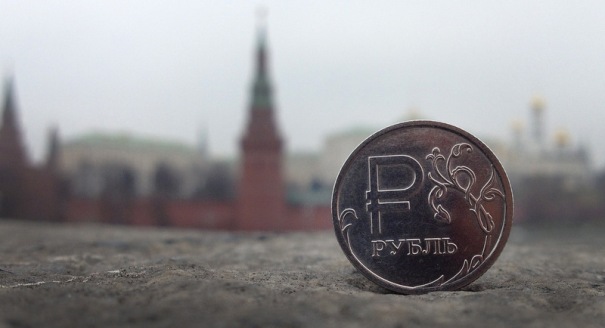
The financial troubles of the ruble represent the most striking and dangerous strategic challenge facing the Russian state since the conflict in Ukraine began.
The leading news over the past few weeks from Russia has shifted from diplomatic developments regarding Ukraine to the rapidly depreciating value of the ruble against the U.S. dollar and the Euro, which fell to all time lows of 48.5 rubles to the dollar and just over 60 rubles to the Euro on November 7.
The financial troubles of the ruble represent the most striking and dangerous strategic challenge facing the Russian state since the conflict in Ukraine began. The short and medium-term costs of a plunging currency in an import-reliant country will reveal President Vladimir Putin’s resolve in reordering the European security environment and outlining a less unipolar world order, as he characterized it in his recent speech to foreign policy experts at the Valdai Club.
In the study of conflict, scholars begin by identifying the issue at stake as well as the actors interested in the outcome of that issue. Central to those definitions is assessing the willingness of an actor to bear the costs of conflict in achieving his preferred settlement of the issue. This is resolve in its most direct sense: how strongly committed is this leader to achieving his preferred outcome, come what may?
For Putin, the issues at stake are not merely the national security and foreign economic policies of Ukraine with President Petro Poroshenko, but the distribution of power along Russia’s borders and the ability of the international community to permit (or not) irregular transfers of power and under what conditions. Putin has made clear that Ukraine joining NATO and the EU is unacceptable to Russia, that Russia as a major regional power needs to be consulted on security affairs in what it considers its sphere of influence, and that the “international community” is a stalking horse for U.S.-led hegemony, permitting regime change in favorable situations but fighting it in others.
Putin has thus raised the stakes of whether Ukrainians can expel a leader and choose their own policies to a bigger question of how the international politics should operate, itself a challenge to U.S. resolve over its own place in the world. The Russian leader’s bet is that his adversaries do not value the direct stakes (Ukraine) as highly as he does, and that his resolve in this crisis bargaining situation can then scale upwards into reordering international politics.
The method by which Putin has raised the stakes in response to events earlier this year—annexing Crimea and waging a proxy fight in Ukraine—comes at the cost of violating Russia’s de facto 1994 Budapest Accord commitments as well as the post-world wars norm of not altering European borders by force codified in the Helsinki Accords.
The consequences were financial sanctions against high-level persons and institutions by OECD countries to try and compel Russia to reverse its actions to uphold those legal commitments. Obviously, Putin has rejected the pressure and the result has been a cratering of investor confidence. Numerous economists and the business press have outlined the causes: stress in the banking sector as the leading banks are now prohibited from borrowing abroad for more than 30 days has created pressure on those with foreign-currency denominated loans, rising inflation and low to negative economic growth estimates are creating conditions for stagflation, and capital flight has doubled from 2013. Energy prices that have long been falling as a result of increased shale production in the United States have created budgetary shortfalls.
Sanctions-induced trouble has weakened demand for ruble, helping the ruble depreciate 14.44 percent against the dollar this month and 35.49 percent since July. This was its worst performance since the two other serious devaluations in post-Soviet financial history: the downward turn following the global financial crisis in 2008 and the 1998 collapse 1. The foreign exchange reserves have declined 86.3 billion dollars, or 16.76 percent, in the past year to the point that the Russian Central Bank has indicated that it will stop defending the ruble and let it float.
The question for President Putin is whether the issues at stake—Ukraine itself and as the proxy for reordering international relations—are sufficiently valuable to withstand the economic damage being done to Russia and the declining living standards that would threaten any government’s social contract. As this column goes to press, news reports indicate that Russian troops have openly entered Ukraine and are approaching Mariupol, so it appears that the weak exchange rate causing concern among the residents of Moscow is just another political bargaining challenge accepted by the Russian president.
Yuval Weber, PhD, is an associate professor in the National Research University—Higher School of Economics.
1 From August 2008 to February 2009, the ruble declined 53.39 percent against the dollar (including a 13.65 percent decline from January to February before the Russian Central Bank’s interventions stabilized the currency), while the much more devastating 1998 collapse saw the ruble fall 113.40 percent from August to September and 255.64 percent to January 1999. (All figures from the Russian Central Bank)
Yuval Weber
Carnegie does not take institutional positions on public policy issues; the views represented herein are those of the author(s) and do not necessarily reflect the views of Carnegie, its staff, or its trustees.

As we close out another season of Strategic Europe, it is worth taking stock of the deep shifts underway.

Rym Momtaz

The hybrid warfare landscape is evolving rapidly, leaving policymakers without clear strategies. To better inform their work in addressing emerging challenges, governments must dig deeper into the underlying dynamics at play.


Raluca Csernatoni, Alicia Wanless
The EU had to compromise to adopt a twenty-first sanctions package against Russia, exposing growing cracks in the union’s resolve. Is this latest, weaker round worth it to keep pressure on Moscow?
Rym Momtaz, ed.

Trump is distracted and Ukraine wants Europe to step up. The continent’s leaders must find their voice and assert it in talks with Russia.

Alissa de Carbonnel

Mounting economic strain and battlefield losses will not necessarily make the Kremlin less dangerous. They could instead push Moscow toward a more aggressive hybrid campaign designed to test NATO’s Eastern flank, exploit allied hesitation, and fracture European resolve.

Maksym Beznosiuk