


Commentary
European Commission President Ursula von der Leyen is about to give her annual address on the state of the EU. Here’s what she won’t—but should—say.
Rym Momtaz
{
  "authors": [
    "Yuval Weber"
  ],
  "type": "commentary",
  "centerAffiliationAll": "",
  "centers": [
    "Carnegie Endowment for International Peace",
    "Carnegie Russia Eurasia Center"
  ],
  "collections": [],
  "englishNewsletterAll": "",
  "nonEnglishNewsletterAll": "",
  "primaryCenter": "Carnegie Endowment for International Peace",
  "programAffiliation": "",
  "programs": [],
  "projects": [],
  "regions": [
    "Russia"
  ],
  "topics": [
    "Political Reform",
    "Economy",
    "Climate Change",
    "Foreign Policy"
  ]
}
Source: Getty
In reduced economic circumstances the big test for Russia is whether it will be forced to retrench, or whether Vladimir Putin will take his chances on expansionist foreign policy at a moment when there’s less money to go around to combat legitimate threats.
As sanctions continue to weaken growth in Russia, sagging oil prices now threaten to exacerbate the economic pain and send Russia into recession. The grim economic news at a time when Russia is at its most active internationally since the end of the Cold War does have an interesting consequence.
Observers of Russia will now be able to test one of the main charges leveled at the country—is Russia a petrostate for which increased energy revenues permits increased foreign policy aggression and expansionism, or is it responding to legitimate security threats?
Scholars and commentators critical of Russia often argue that its foreign policy is determined by the price of oil and that its actions are a byproduct of energy wealth. Their underlying assumption is that Russia is inherently expansive and that its only constraints are the fiscal resources at its disposal. If this is true, then there should be observable evidence that the tough economic times ahead will constrain Russian policy abroad and force retrenchment from its policy of challenging the Euro-Atlantic international order and its strategic positions on Ukraine, Crimea, Syria, and elsewhere that, so this logic would have it, were built up as a result of the oil wealth of the previous decade.
The other side of the bet is that foreign expansiveness is not a given but that states respond instead only to threats as determined by their decision-makers. For energy-dominated states like Russia, energy revenues provide fiscal capabilities but the international environment provides threats and opportunities to which states must respond. If this is true, then the tough economic times ahead will not constrain Russian policy abroad. Instead, the status quo of pursuing a favorable settlement in Ukraine, reordering the distribution of power along Russia’s borders and constructing an international system less dominated by the United States should continue apace.
The key distinction between the two positions is that the first indicates that external forces drive foreign policy, while the second means that foreign policy is determined by individuals (in this case, Vladimir Putin and his circle), who are required to balance international and domestic needs. If the second position is correct, then the domestic political strength Putin has built up over the past 14 years will be put to the test.
That evidence should become available during 2015. The news from OPEC’s meeting last week provided little in the way of good news for Russia’s short and medium-term fiscal forecasts. The cartel finds itself facing declining prices in an environment of weak economic activity in Europe and increasing production from the United States. OPEC—dominated informally by the triumvirate of Saudi Arabia, Kuwait, and United Arab Emirates—has taken the decision that its long-term strategy is best served by maintaining market share and hoping that the combination of low prices and high production weakens shale drilling in the United States. With over 2 trillion dollars residing in their sovereign wealth funds and over 800 billion dollars in their currency reserve funds to cover the consumption needs of very small populations, the triumvirate can afford to wait out the current supply shock.
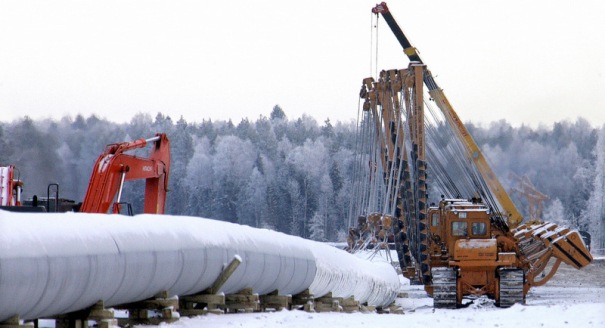
OPEC’s decision and the supply environment will put Russia in a tighter spot. Although it maintains 601 billion dollars in its aggregate currency reserves—429 billion dollars in foreign exchange reserves, 82 billion dollars in the National Wealth Fund and 90 billion dollars in the National Reserve Fund—Russia has a much larger population and social commitments than do the states in the triumvirate, along with the need to redevelop Crimea, overhaul the military completely, and maintain its humanitarian and “other” support for rebels challenging the Ukrainian government in the Donbass. Russia has spent 100 billion dollars from its reserves in the past year just to get to the tough position it is in now. Monday’s news that the long-touted South Stream pipeline project is cancelled bodes poorly for future growth.
At minimum, before there is definitive evidence as to whether Russia will retrench or maintain the status quo, there will be domestic reforms and other actions to delay that decision. An upcoming campaign to crack down on corruption will have the effect of a tax cut on small and medium-sized business as they will have to pay less in bribes and gain in productivity from dealing with corrupt officials less. Alleged support for anti-fracking protests in Eastern Europe will slow down expansion of that technology to countries such as Romania and Bulgaria.
These are fairly small factors in the grand scheme of things. The big test is whether reduced economic circumstances will force Russia to retrench, or whether Vladimir Putin will continue to take his chances on expansionist foreign policy at a moment when there’s less money to go around to combat legitimate threats.
Yuval Weber is an associate professor in the National Research University—Higher School of Economics (Moscow) and an associate in John Goodwin Tower Center for Political Studies, Southern Methodist University (Dallas, Texas).
Yuval Weber
Carnegie does not take institutional positions on public policy issues; the views represented herein are those of the author(s) and do not necessarily reflect the views of Carnegie, its staff, or its trustees.

European Commission President Ursula von der Leyen is about to give her annual address on the state of the EU. Here’s what she won’t—but should—say.

Rym Momtaz

The aftermath of the Ceuta crisis shows Europe has drawn the wrong lessons. Rather than doubling down on failed migration policies, the EU needs to address the underlying roots of such episodes.

Richard Youngs

Canadian Prime Minister Mark Carney has twice inspired praise for standing up to U.S. President Donald Trump: at the 2026 World Economic Forum in Davos and on Canada-U.S. trade negotiations. Is Carney showing a third way better than the EU has in dealing with the Trump administration?
Rym Momtaz, ed.

The EU’s responses to two recent incidents expose the gulf between European perceptions and capabilities. Unless the union can bridge that gap, it will never become a real geostrategic power.
Rym Momtaz

European states control several Overseas Countries and Territories around the world that carry strategic, economic, and environmental weight. As great powers challenge the rules-based order, defending them is a geopolitical imperative for Europe.

Marc Pierini