

Article
C. Raja Mohan, Darshana M. Baruah
{
  "authors": [
    "C. Raja Mohan"
  ],
  "type": "legacyinthemedia",
  "centerAffiliationAll": "dc",
  "centers": [
    "Carnegie Endowment for International Peace",
    "Carnegie India"
  ],
  "collections": [],
  "englishNewsletterAll": "ctw",
  "nonEnglishNewsletterAll": "",
  "primaryCenter": "Carnegie India",
  "programAffiliation": "SAP",
  "programs": [
    "South Asia"
  ],
  "projects": [],
  "regions": [
    "South Asia",
    "India",
    "East Asia",
    "China"
  ],
  "topics": [
    "Foreign Policy",
    "Security"
  ]
}
Source: Getty
Narendra Modi has made up for lost time in Mauritius when he outlined a comprehensive framework for India as a maritime power.
Source: Indian Express
It is not easy to recall the last time when an Indian Prime Minister articulated India’s objectives and policy for the Indian Ocean. Narendra Modi has made up for the lost time today in Mauritius when he outlined a comprehensive framework for India as a maritime power.
Despite India’s growing reliance on the seas over the last quarter of a century and a series of minor maritime initiatives by a number of government agencies, the top political leadership never had the time or inclination to lay out a clear set of goals in the Indian Ocean and the maritime domains beyond.
Delhi had much else on its mind, including the troubles with China and Pakistan and its large and contested land frontiers. India was not alone in its continental obsessions. China, like India, was long consumed by the threats to its land borders. For nearly a decade though, the top leaders of the Chinese Communist Party had made it their business to wake up the nation to its historic maritime destiny at hand.The CCP leadership never lost an opportunity to tell the world of China’s ‘maritime rights’ and assert them vigorously much to the discomfiture of its neighbours in East Asia. More recently it has proclaimed a grand vision to build a maritime silk road between the Pacific and the Indian Oceans.
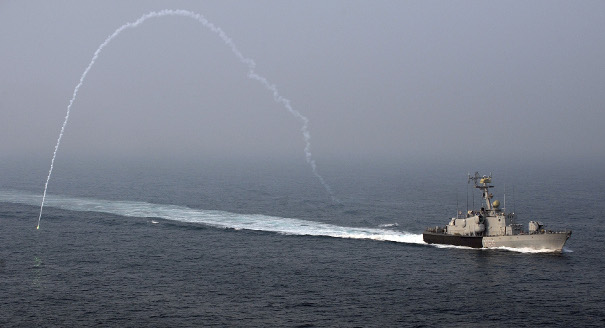
Modi pitched it very differently today when he handed over a warship, the Barracuda, to the coast guard of Mauritius. Declaring that the Indian Ocean littoral is at the very top of India’s foreign policy priorities, Modi laid a five-fold policy framework. It begins with the affirmation that Delhi will do everything to secure India’s mainland and island territories and defend its maritime interests.
The second dimension is about deepening partnerships with friends and partners in the Indian Ocean, especially island republics like Seychelles and Mauritius. The last two days have seen Modi shed many traditional Indian inhibitions in expanding security cooperation with the two island republics that occupy critical locations in the South Western Indian Ocean.
The third level relates to building multilateral cooperative maritime security in the Indian Ocean. Modi said India will help strengthen regional mechanisms in combatting terrorism and piracy and responding to natural disasters.
Sustainable development for all, Modi said, is the fourth element of India’s maritime policy. While talking about the prospects for blue economy in the region, Modi demonstrated Delhi’s new sensitivity to climate change, that so threatens the very existence of the small islands.
Finally, Modi has discarded the long standing Indian self perception as a lone ranger in the Indian Ocean. For decades India made no secret of its reluctance to cooperate with other major powers in the Indian Ocean. Delhi constantly sought to differentiate between itself and ‘extra-regional’ powers, who it hinted had no business of being around in the Indian Ocean.
While insisting that ‘those who live in the region have the primary responsibility for peace, stability and prosperity in the Indian Ocean’, Modi recognised that ‘there are other nations around the world, with strong interests and stakes in the region’.
Modi declared that ‘India is deeply engaged with other powers’. ‘We do this through dialogue, visits, exercises, capacity building and economic partnership’. This declaration, of course fits in nicely with the joint vision for the Indian Ocean and the Asia Pacific that Modi had unveiled with the U.S. President Barack Obama at the end of January in Delhi.
India is no longer hesitant about taking a larger responsibility for securing the Indian Ocean, promoting regional mechanisms and working with great powers like the United States and France with which India now shares many interests.
This article was originally published in the Indian Express.
Former Nonresident Senior Fellow, Carnegie India
A leading analyst of India’s foreign policy, Mohan is also an expert on South Asian security, great-power relations in Asia, and arms control.
Recent Work

C. Raja Mohan, Darshana M. Baruah


Alexander Gabuev, Paul Haenle, C. Raja Mohan, …
Carnegie does not take institutional positions on public policy issues; the views represented herein are those of the author(s) and do not necessarily reflect the views of Carnegie, its staff, or its trustees.

Are Germany’s economic, industrial, and political struggles becoming a liability for the EU’s ability to rise to the geopolitical moment?

Rym Momtaz, ed.

European Commission President Ursula von der Leyen is about to give her annual address on the state of the EU. Here’s what she won’t—but should—say.
Rym Momtaz

The aftermath of the Ceuta crisis shows Europe has drawn the wrong lessons. Rather than doubling down on failed migration policies, the EU needs to address the underlying roots of such episodes.

Richard Youngs

Canadian Prime Minister Mark Carney has twice inspired praise for standing up to U.S. President Donald Trump: at the 2026 World Economic Forum in Davos and on Canada-U.S. trade negotiations. Is Carney showing a third way better than the EU has in dealing with the Trump administration?
Rym Momtaz, ed.

The EU’s responses to two recent incidents expose the gulf between European perceptions and capabilities. Unless the union can bridge that gap, it will never become a real geostrategic power.
Rym Momtaz