

Research
- +6
Yasmine Farouk, Nathan J. Brown, Maysaa Shuja Al-Deen, …
{
  "authors": [
    "Anouar Boukhars"
  ],
  "type": "other",
  "centerAffiliationAll": "dc",
  "centers": [
    "Carnegie Endowment for International Peace",
    "Malcolm H. Kerr Carnegie Middle East Center"
  ],
  "collections": [],
  "englishNewsletterAll": "menaTransitions",
  "nonEnglishNewsletterAll": "",
  "primaryCenter": "Carnegie Endowment for International Peace",
  "programAffiliation": "MEP",
  "programs": [
    "Middle East"
  ],
  "projects": [],
  "regions": [
    "North Africa",
    "Algeria",
    "Morocco",
    "Tunisia",
    "Southern, Eastern, and Western Africa",
    "Maghreb"
  ],
  "topics": [
    "Security"
  ]
}
Source: Getty
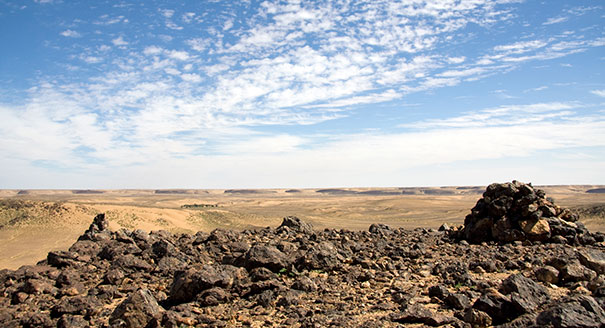
A coordinated international approach that skilfully uses the comparative advantage of each regional institution would greatly help tackle rising insecurity across the Sahara and the Sahel.
Source: FRIDE
There has been a marked intensification of conflict across the Sahara and the Sahel. This has created a new normal, where ethnic tensions are reinforced, religious divisions are more pronounced and crises are less local. The current conflicts in Mali, Libya, and Nigeria – for example – show this, having been deeply shaped by a cross-section of Saharan radicalised militants that mix with transnational smuggling networks and independence movements. To be sure, the old normal was also marred by terrorism and other forms of political violence, border disputes, and occasional acts of banditry. But the nature of conflicts in the Sahel and the Sahara has changed, and the patterns of violence have become more complex. The sources of crises have also become more mobile, acquiring a cross-border dimension that requires regional solutions. So far, bilateral, regional, and international responses have been numerous, but largely contradictory and short-sighted.The good news is that regional and international actors are increasingly aware that any effective response framework needs to be wellcoordinated, and adapted to the geographic and organisational interdependence of networks and populations across the Sahel-Sahara zones. The bad news, however, is that it has been very difficult to design and implement a coordinated security and development strategy that transcends the narrow confines of counter-terrorism, international institutional rivalries, and regional inter-state rivalries....
Former Nonresident Fellow, Middle East Program
Boukhars was a nonresident fellow in Carnegie’s Middle East Program. He is a professor of countering violent extremism and counter-terrorism at the Africa Center for Strategic Studies, National Defense University.
Recent Work



Yasmine Farouk, Nathan J. Brown, Maysaa Shuja Al-Deen, …

Frederic Wehrey, Nathan J. Brown, Bader Al-Saif, …
Carnegie does not take institutional positions on public policy issues; the views represented herein are those of the author(s) and do not necessarily reflect the views of Carnegie, its staff, or its trustees.

With its public finances in shambles, the far right polling at 35 percent ahead of the 2027 presidential election, and a growing protest movement, is France’s crisis a threat to the EU’s geopolitical awakening?

Rym Momtaz, ed.

Europe is facing rising populism internally as well as external pressures from Russia, China, Turkey, and the United States.

Dimitar Bechev

The new U.S.–Denmark–Greenland agreement will help Washington exert political, economic, and financial dominance under the guise of security. Yet, it acknowledged Copenhagen’s and Nuuk’s sovereignty on the island.

Marc Pierini

A summer of escalation in the Black Sea has hurt Ukraine economically and is exacerbating world food security. A truce is needed—as is a broader reframing of Europe’s Ukraine strategy.

Thomas de Waal

Are Germany’s economic, industrial, and political struggles becoming a liability for the EU’s ability to rise to the geopolitical moment?
Rym Momtaz, ed.