

Commentary
As we close out another season of Strategic Europe, it is worth taking stock of the deep shifts underway.
Rym Momtaz
{
  "authors": [
    "Dmitri Trenin",
    "Yu Bin"
  ],
  "type": "legacyinthemedia",
  "centerAffiliationAll": "dc",
  "centers": [
    "Carnegie Endowment for International Peace",
    "Carnegie Russia Eurasia Center"
  ],
  "collections": [],
  "englishNewsletterAll": "ctw",
  "nonEnglishNewsletterAll": "",
  "primaryCenter": "Carnegie Russia Eurasia Center",
  "programAffiliation": "russia",
  "programs": [
    "Russia and Eurasia"
  ],
  "projects": [],
  "regions": [
    "East Asia",
    "China",
    "Russia"
  ],
  "topics": [
    "Economy",
    "Trade",
    "Foreign Policy"
  ]
}
Source: Getty
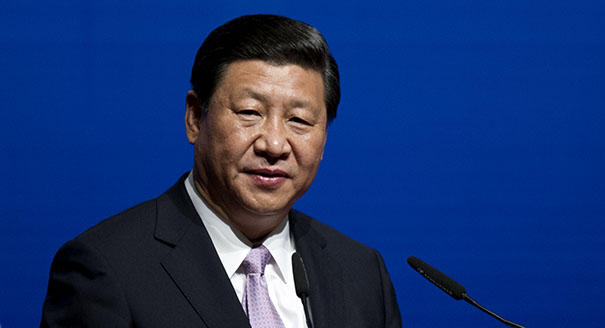
Xi Jinping’s visit to Russia has high value in the wake of the Ukraine crisis and the West’s response.
Source: China Radio International’s People In the Know
China’s President Xi Jinping is going to Russia for his fourth visit to the country since he became the Chinese president in 2013. His main agendas in Russia include an attendance at the 70th anniversary celebration of Russia’s victory in World War II. The visit is also expected to bring forth now cooperative initiatives between the two neighbors bonded by an ever deeper strategic partnership.
On China Radio International, Carnegie Moscow Center’s Dmitri Trenin discussed Xi Jinping’s visit to Russia with Zheng Chenguang. He was joined by Yu Bin, a professor of political science at the Wittenberg University in the United States.
The visit has high symbolic value in the wake of the Ukraine crisis and the West’s response, Trenin said. He added that Russia regards China as a potential replacement for the sanction regime losses as well as an opportunity to reform its own economy through joint projects in infrastructure and science and technology.
This interview was originally broadcast on China Radio International.
Former Director, Carnegie Moscow Center
Trenin was director of the Carnegie Moscow Center from 2008 to early 2022.
Yu Bin

As we close out another season of Strategic Europe, it is worth taking stock of the deep shifts underway.

Rym Momtaz

The hybrid warfare landscape is evolving rapidly, leaving policymakers without clear strategies. To better inform their work in addressing emerging challenges, governments must dig deeper into the underlying dynamics at play.


Raluca Csernatoni, Alicia Wanless
The EU had to compromise to adopt a twenty-first sanctions package against Russia, exposing growing cracks in the union’s resolve. Is this latest, weaker round worth it to keep pressure on Moscow?
Rym Momtaz, ed.

Trump is distracted and Ukraine wants Europe to step up. The continent’s leaders must find their voice and assert it in talks with Russia.

Alissa de Carbonnel

Mounting economic strain and battlefield losses will not necessarily make the Kremlin less dangerous. They could instead push Moscow toward a more aggressive hybrid campaign designed to test NATO’s Eastern flank, exploit allied hesitation, and fracture European resolve.

Maksym Beznosiuk