

In The Media
Lina Khatib
{
  "authors": [
    "Lina Khatib"
  ],
  "type": "legacyinthemedia",
  "centerAffiliationAll": "dc",
  "centers": [
    "Carnegie Endowment for International Peace",
    "Malcolm H. Kerr Carnegie Middle East Center"
  ],
  "collections": [],
  "englishNewsletterAll": "menaTransitions",
  "nonEnglishNewsletterAll": "",
  "primaryCenter": "Malcolm H. Kerr Carnegie Middle East Center",
  "programAffiliation": "MEP",
  "programs": [
    "Middle East"
  ],
  "projects": [],
  "regions": [
    "Levant",
    "Syria",
    "Middle East"
  ],
  "topics": [
    "Political Reform",
    "Global Governance",
    "Security"
  ]
}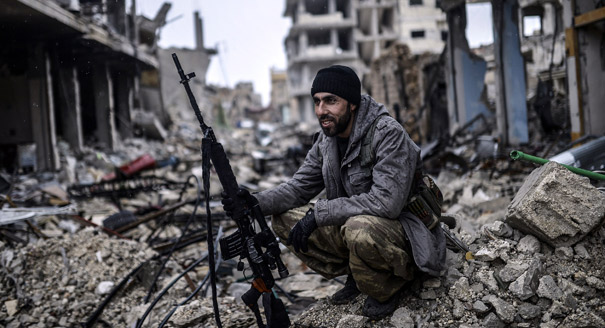
Source: Getty
Syria, after Assad, will need a governing model that guarantees equitable political inclusion for all citizens regardless of their sectarian affiliation.
Source: Al-Hayat
There are some indicators in the context of the Syrian conflict that we may be entering a new phase in which the Bashar al-Assad regime is weaker than ever before. Claims about the possible arrest of Ali Mamlouk over an alleged coup plot and the death of Rustum al-Ghazali in dubious circumstances indicate that there are core members of the regime that have been exploring alternatives to Assad’s rule. The areas under regime control are also shrinking, and the capacity of the Syrian army is also lesser than ever before. This hastens the need to think about what governing model would work for Syria were the regime to collapse in the foreseeable future. Because even though the Assad regime has been catastrophic for Syria, its end would also bring further disasters if the political transition is not handled conscientiously by both Syrian opposition groups and the international community.
A key point of discussion is that of the political system that would best serve to keep Syria together. With Syria divided between an oil-rich north east, an urbane south, northern areas with significant presence of Islamist groups, a so-called “Islamic State,” and a Sahel dominated by the Alawite minority, there is a real concern that were the central government to collapse, Syria’s divisions would translate into a crumbling of the state itself. As such, some in the international arena have explored the idea of implementing a political system based on sectarian representation as a way of resolving the Syrian conflict. But as the Lebanese and Iraqi models have vividly shown, this method of short-term conflict resolution leads to long term conflicts in the future.The political system in Lebanon took existing sectarian fault lines in society and institutionalized them. By making sectarianism the core factor upon which community interests are represented in government, this system made sectarian identity stronger than national identity. This in turn made the state weak, which paved the way for non-state actors to attempt to overwhelm its authority. The cases of Hezbollah in the south and Sunni militants in the north demonstrate this. The sectarian system in Lebanon was supposed to guarantee political representation for its different sects, but it ended up contributing to the marginalization of many, namely Sunnis living in remote northern areas like Akkar, and Shiites in the south. This is because state resources were not distributed equitably, but were coopted by the traditional community leaders who wanted to use them to increase their wealth and feudal authority.
Non-state actors have emerged under the pretext of restoring the stature of those neglected communities. While Sunni militants in the north remain marginal in reach and influence, Hezbollah has risen to become the strongest political entity in Lebanon today, and has managed to orchestrate the freezing of political processes in the country as a way to halt any official questioning about its possession of weapons and its intervention in the Syrian conflict in aid of the Assad regime. Hezbollah’s intervention in Syria has in turn been used by some Sunni militant groups in the north as an excuse to rally for “Sunni pride.” The Lebanese state has practically disappeared in the middle of this turmoil.
In Iraq, a similar scenario has been unravelling since the invasion of 2003, with sectarian tensions contributing to the rise of the Islamic State group, which preyed on Sunni marginalization to present itself as the restorer of Sunni pride.
Syria prior to the current conflict did not have a sectarian problem on a significant scale. There were some tensions between different communities (a little-known example is tension between Shiites and Alawites), but the sense of Syrian national identity prevailed. Bashar al-Assad sought to sectarianize the conflict by presenting himself as the protector of Syria’s minorities. It is therefore both in the interests of the Islamic State group as well as the Assad regime that sectarianism is sustained in Syria and Iraq. It is also in the interests of non-state actors that sectarianism prevails in the Middle East more generally. The stronger the sectarian sentiment, the weaker the central states, and the more room there is for non-state actors to exert influence.
But while it is important to bear in mind those tensions among different sectarian groups in the Middle East, it is also crucial to pay attention to differences within communities as well. For example, in Iraq, not all Shiites participating in the Hashd al-Shaabi militias fighting the Islamic State group are pro-Iranian, since many of them follow the Najaf school of reference, which is opposed to Iran. There are also many Sunnis who are against the Islamic State group. In Syria, some Sunnis support Bashar al-Assad, some support the Islamic State, others support the myriad Islamist groups that have emerged since 2011, while others support the Free Syrian Army or other moderate entities.
It would therefore be impossible to imagine a political system in Syria that would guarantee equitable representation for all its groups on the basis of sectarian allocation alone. Reducing political representation to sectarian affiliation would overlook the political leanings of different actors on the ground. Any political system that upholds the concept of “protection” of minorities will also be problematic; as long as minorities are viewed as entities to be “protected”, they become second-class citizens without full political rights.
What is needed for Syria after Assad therefore is a system that guarantees equitable political inclusion for all citizens regardless of their sectarian affiliation. This means beginning a conversation about power sharing that explores ideas like geographical (not sectarian-based) federalism and decentralization as possible scenarios to keep the country together. But this conversation must not be led by external actors. It has to be a Syrian-directed conversation, otherwise we would be risking a repetition of the post-Saddam Iraq scenario in which foreign actors set the agenda for Iraqis, causing Iraq to continue to pay the price. The tensions witnessed within the Assad regime today are a serious sign that change is possible, but it is up to all the stakeholders in the Syrian conflict to handle this opportunity responsibly.
This article was originally published in Arabic by Al-Hayat.
Former Director, Middle East Center
Khatib was director of the Carnegie Middle East Center in Beirut. Previously, she was the co-founding head of the Program on Arab Reform and Democracy at Stanford University’s Center on Democracy, Development, and the Rule of Law.
Recent Work
Lina Khatib
Lina Khatib
Carnegie does not take institutional positions on public policy issues; the views represented herein are those of the author(s) and do not necessarily reflect the views of Carnegie, its staff, or its trustees.

European states control several Overseas Countries and Territories around the world that carry strategic, economic, and environmental weight. As great powers challenge the rules-based order, defending them is a geopolitical imperative for Europe.

Marc Pierini

Mounting economic strain and battlefield losses will not necessarily make the Kremlin less dangerous. They could instead push Moscow toward a more aggressive hybrid campaign designed to test NATO’s Eastern flank, exploit allied hesitation, and fracture European resolve.

Maksym Beznosiuk
Over the past ten years, NATO has held almost as many summits as it did during the entirety of the Cold War. Are they still useful, or is it time to stop holding annual meetings?

Rym Momtaz, ed.

As the EU confronts profound challenges, several leaders have called for fundamental reform to the union’s model—but only modest, superficial changes have resulted. What if Europe really could be reimagined from zero today: What should such a redesigned European order look like?

Richard Youngs, ed.
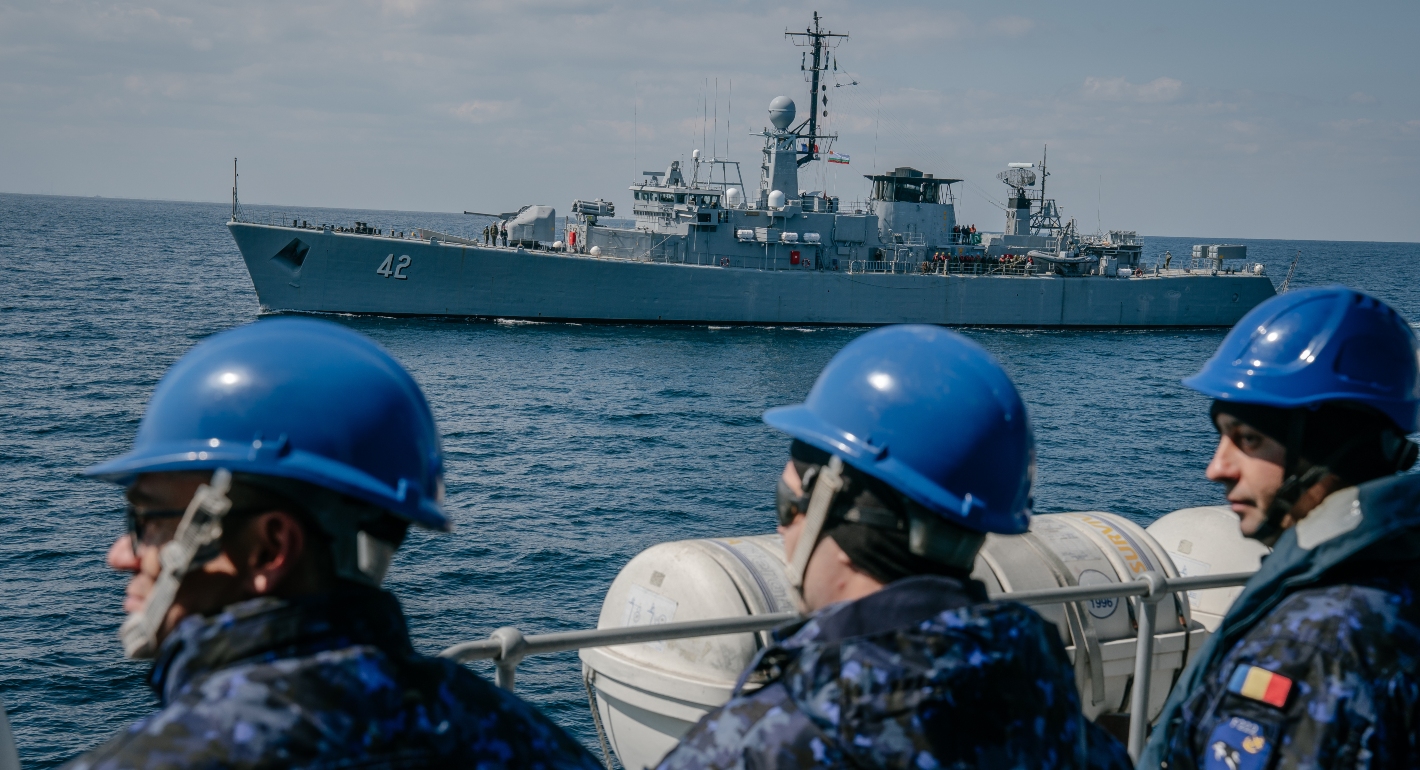
As Russia's war on Ukraine drags on, NATO is expanding its footprint in the Black Sea. Turkey, Romania, and Bulgaria are upgrading their fleets and deepening trilateral cooperation.

Dimitar Bechev