

Commentary
With its public finances in shambles, the far right polling at 35 percent ahead of the 2027 presidential election, and a growing protest movement, is France’s crisis a threat to the EU’s geopolitical awakening?
Rym Momtaz, ed.
{
  "authors": [
    "Andrey Movchan"
  ],
  "type": "commentary",
  "centerAffiliationAll": "",
  "centers": [
    "Carnegie Endowment for International Peace",
    "Carnegie Russia Eurasia Center"
  ],
  "collections": [
    "Inside Russia"
  ],
  "englishNewsletterAll": "",
  "nonEnglishNewsletterAll": "",
  "primaryCenter": "Carnegie Endowment for International Peace",
  "programAffiliation": "",
  "programs": [],
  "projects": [],
  "regions": [
    "Russia"
  ],
  "topics": [
    "Political Reform",
    "Economy",
    "Climate Change"
  ]
}
Source: Getty
Official statistics suggest that Russia’s oil and gas industry accounts for only a quarter of the country’s GDP. However, when other factors are factored in, the economy is seen to be much more heavily dependent on hydrocarbons. With oil prices looking set to stay low for a long time, this is bad news for the Russian economy.
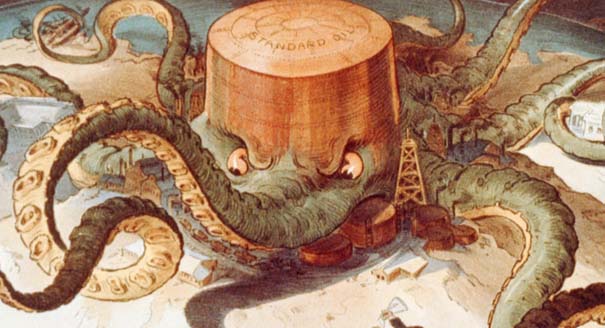
In March 2014, Lindsey Graham, the outspoken U.S. Republican senator who is now running for president, referred to Russia as merely “an oil and gas company masquerading as a country.” Graham is known for making alarmist and controversial statements—he recently said that falling oil prices were the result of a plot by Sunni Arabs against Iran and Russia—and it would be easy to dismiss this one as yet another outlandish bid for publicity.
Before we quickly dismiss Graham, however, we should recall the words of Leonardo da Vinci, “We derive more benefit from having our faults pointed out by our enemies than from hearing the opinions of friends.” Given that the fall in oil prices appears to be a long-term trend, if Graham is actually right, Russia is facing an economic crisis the like of which it hasn’t seen for many years.
At first glance, it is absurd to call Russia “merely an oil and gas company.” The share of hydrocarbon production in the country’s GDP has not exceeded 26.5 percent for 25 years and the share of oil and gas export has not risen above 14.5 percent of GDP. Those who champion Russia’s underlying economic stability point to these very reasonable numbers. But things aren’t quite so simple. Although three quarters of Russia's official GDP is not pouring out of its oil wells, the country is still heavily dependent on oil. We also need to identify how the non-oil components of Russian GDP are financed.
Next, 20-22 percent of GDP is comprised of state budget expenditures. At least 60 percent of consolidated budget revenues come from the mineral extraction tax, excise duties, export duties, value-added tax on imports and other taxes attributable to the oil and gas sector directly or indirectly. This adds an additional 13 percent to our calculation of the oil-based GDP.
By this rough tally, 57 percent of Russia's GDP already depends on oil. But we also need to factor in the direct influx of petrodollars that is converted into investments and spending in other sectors of the economy and additional consumption. It is hard to put a number on this, but by various estimates it has ranged between 10 and 13 percent of GDP in recent years. So our overall figure is now up to 67—70 percent.
The nature of the oil dependence is illustrated in Table 1 by tracking changes in Russia’s consolidated budget revenues against WTI oil prices. No explanation is needed. Table 2, which compares the rise and fall of Russia's gold and foreign-exchange reserves with changes in oil prices, paints exactly the same picture. And, as Table 3 shows, if we take Russia's dollar denominated GDP growth rates and track them against changes in oil prices, the curves again practically coincide.


This begs the question: What are the effects of this dependence? An indirect answer can be found by measuring Russia’s GDP in terms of barrels of oil. In 1992, when Russia was almost at the bottom of a structural crisis, its non-oil GDP (GDP minus actual production of oil) was equivalent to 19.5 billion barrels of oil in 1992 prices. In 1999, when oil prices were at their lowest, Russia’s non-oil GDP dipped below the equivalent of eight billion barrels. However, even today, in 2015, Russia’s non-oil GDP is still only worth 16.7 billion barrels in current prices (see Table 4). During the same period, Poland’s non-oil GDP increased by 37 percent, while Norway, which has almost halved its oil production in the last 25 years, has maintained its non-oil GDP calculated in barrels of oil at the same level (see Table 5).


Even the ruble, it transpires, is ruled by the world oil market, not the Central Bank. When the oil price is above 60 U.S dollars a barrel, the real ruble exchange rate is higher than the inflation-adjusted exchange rate. When the oil price is below 60 dollars, the ruble is cheaper (see Table 6). The oil price is currently below 60 dollars, so the ruble has caught up with its inflation rate for the first time since 2005 and the value of dollars measured in rubles is rising above the “inflation curve.” Furthermore, the extent of the ruble’s deviation from its theoretical value, based on historical inflation, can be determined almost exactly by the oil price. (See Table 7).


This time at least, it turns out that Senator Graham got it right. The health of Russia’s economy depends not on domestic policies, sanctions, technological innovations, the decision to seek rapprochement with the West or friendship with China. The only factor that influences Russia’s economy is the price of oil and gas.
There is more bad news. The fall in world oil prices is not, as Graham believes, a plot by Sunni Arabs. The world oil supply exceeded 95 million barrels per day (mbpd) at the end of 2014, while demand plateaued at 93 mbpd. The trend looks set to continue. Over the last five years, the increase in oil supply in percentage points has outpaced demand by a factor of almost two. All indicators suggest that we are at the start of a long phase of low oil prices. By the end of this period, the oil industry will encounter better solar panels and super-batteries, more efficient car and aircraft engines, a mass market for electric vehicles, more energy-efficient construction materials, and other innovations.
Maybe in ten years’ time we will remember today’s oil prices as having been unreasonably high and think of Lindsey Graham’s provocative comment about Russia as a friendly warning, which we sadly failed to heed.
Andrey Movchan
Former Nonresident Scholar, Carnegie Moscow Center
Movchan is a nonresident scholar at the Carnegie Moscow Center.
Carnegie does not take institutional positions on public policy issues; the views represented herein are those of the author(s) and do not necessarily reflect the views of Carnegie, its staff, or its trustees.

With its public finances in shambles, the far right polling at 35 percent ahead of the 2027 presidential election, and a growing protest movement, is France’s crisis a threat to the EU’s geopolitical awakening?

Rym Momtaz, ed.

Europe is facing rising populism internally as well as external pressures from Russia, China, Turkey, and the United States.

Dimitar Bechev

A notable degree of participative democracy has firmly arrived in Europe. But to have more far-reaching impact, democratic deliberation needs to move into a radically new phase.

Richard Youngs

The European Commissioner for Trade is headed to China. But after President Xi’s bridge-building visit to Washington, can a more isolated EU overcome Beijing’s stranglehold on critical raw materials? Who will blink first?
Rym Momtaz, ed.

The domestic impacts of how long it is taking to end the war in Ukraine have pushed the French electorate to the political extremes and compromised the country’s diplomatic capacity.
Rym Momtaz