

Commentary
Hungarians head to the polls on April 12 for an election of national and European consequence. Three different outcomes are on the cards, each with their own implications for the EU.
Zsuzsanna Szelényi
{
  "authors": [
    "Milan Vaishnav",
    "Reedy Swanson"
  ],
  "type": "other",
  "centerAffiliationAll": "dc",
  "centers": [
    "Carnegie Endowment for International Peace"
  ],
  "collections": [],
  "englishNewsletterAll": "ctw",
  "nonEnglishNewsletterAll": "",
  "primaryCenter": "Carnegie Endowment for International Peace",
  "programAffiliation": "SAP",
  "programs": [
    "South Asia"
  ],
  "projects": [],
  "regions": [
    "South Asia",
    "India"
  ],
  "topics": [
    "Democracy",
    "Economy"
  ]
}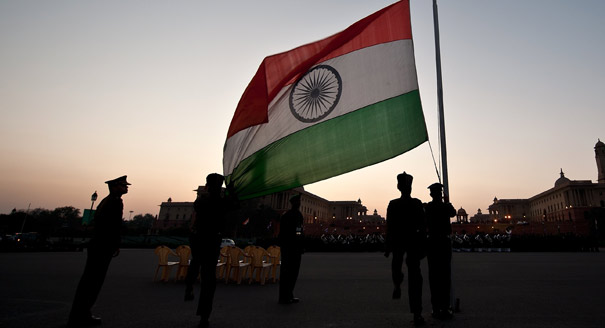
Source: Getty
The Indian voter weights economic performance more heavily now than in the past.
Source: India Review
The proposition that voters reward incumbent governments that perform well economically is considered received wisdom in many democracies. We examine this hypothesis in India, a developing democracy where scholars have found limited evidence of economic voting. Using a unique state-level panel dataset covering the years 1980–2012, we find that there is no relationship between growth and electoral performance in the aggregate. However, since 2000, there do appear to be increasing electoral returns to governments that deliver higher rates of economic growth. The positive returns to growth are much larger than those to improved law and order, while inflation has no clear impact. The results suggest a significant shift in Indian voter behavior.

Director and Senior Fellow, South Asia Program
Milan Vaishnav is a senior fellow and director of the South Asia Program and the host of the Grand Tamasha podcast at the Carnegie Endowment for International Peace. His primary research focus is the political economy of India, and he examines issues such as corruption and governance, state capacity, distributive politics, and electoral behavior. He also conducts research on the Indian diaspora.
Reedy Swanson
Former Junior Fellow, South Asia Program
Carnegie does not take institutional positions on public policy issues; the views represented herein are those of the author(s) and do not necessarily reflect the views of Carnegie, its staff, or its trustees.

Hungarians head to the polls on April 12 for an election of national and European consequence. Three different outcomes are on the cards, each with their own implications for the EU.

Zsuzsanna Szelényi

The U.S.-sponsored TRIPP deal is driving the Armenia-Azerbaijan peace process forward. But foreign and domestic hurdles remain before connectivity and economic interdependence can open up the South Caucasus.



Thomas de Waal, Areg Kochinyan, Zaur Shiriyev

The far right failed to win big in France’s municipal elections. But that’s not good news for the country’s left wing, which remained disunited while the broader right consolidated its momentum ahead of the 2027 presidential race.

Catherine Fieschi

Amid increased polarization and the influence of disinformation, radical-right parties are once again gaining traction across Europe. With landmark elections on the horizon in several countries, are the EU’s geostrategic vision and fundamental values under existential threat?

Catherine Fieschi, Cas Mudde

Economic growth is at the heart of a dilemma between planetary and international security.

Olivia Lazard