

Commentary
A summer of escalation in the Black Sea has hurt Ukraine economically and is exacerbating world food security. A truce is needed—as is a broader reframing of Europe’s Ukraine strategy.
Thomas de Waal
{
  "authors": [
    "Yukon Huang",
    "Patrick Farrell"
  ],
  "type": "legacyinthemedia",
  "centerAffiliationAll": "dc",
  "centers": [
    "Carnegie Endowment for International Peace"
  ],
  "collections": [],
  "englishNewsletterAll": "asia",
  "nonEnglishNewsletterAll": "",
  "primaryCenter": "Carnegie Endowment for International Peace",
  "programAffiliation": "AP",
  "programs": [
    "Asia"
  ],
  "projects": [],
  "regions": [
    "East Asia",
    "China"
  ],
  "topics": [
    "Economy"
  ]
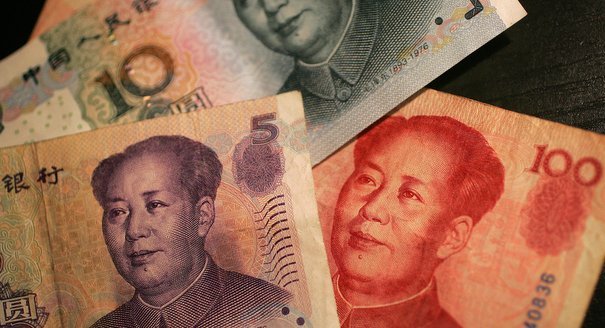
}
Source: Getty
China still has significant growth potential if it can manage to better balance the market and the role of the state.
Source: The Diplomat
Is the China growth model dead? This question has become topical as China’s growth rate has transitioned from its historic double-digit rates to its current 6-7 percent pace, with many arguing that the bottom might be as low as 3-4 percent growth before the end of this decade.
In a technical sense, the China growth model is not dead — because there was never a unique China model in the first place. China follows the same growth model that all economies adhere to. The basic model was laid out by several Nobel Prize-winning economists, who explained that growth is primarily determined by growth in investment and labor along with productivity increases. The path that China has taken during its period of explosive economic growth is similar to the paths taken decades earlier by Japan and the Asian Tigers—high levels of investment, financed by high savings rates, and supported by incentives to promote industrial production and trade, along with the shift of workers from rural to urban-based activities. The principles driving growth have not changed.The current growth slowdown has given rise to a widely shared view that China needs to shift to a more consumption-driven growth model and reduce its dependence on investment. Yet standard growth theory tells us that consumption is not part of the equation. Consumption is the result of growth; it does not drive growth. In fact, growth of personal consumption in China has been running around 10 percent per year for more than a decade, the highest rate in the world by far, multiple times faster than developed countries and twice the rate of other middle-income economies. Growth in personal consumption rates are likely to decline as economic growth moderates.
What is increasingly worrisome, however, is that the productivity of investment in China has fallen significantly after the Global Financial Crisis, in part because of the inefficiencies built into its massive $600 billion stimulus program.
There is no perfect indicator for the productivity of investment, but economists typically resort to the incremental capital-output ratio (ICOR). The ICOR tells us how much investment is needed to produce an increase in GDP, with a higher number indicating lower productivity of capital. In the decades before the crisis, China’s ICOR was relatively low and much better than most emerging market economies. Recently, its ICOR has drifted upwards and is now slightly worse than the norm.
Declining returns on investment are inevitable as an economy matures and reaches upper-middle-income status. As such, China’s growth rates were destined to decline eventually, as did the growth rates of the Asian Tigers, and the current slowdown should not be taking anyone by surprise.
However, unlike the other Asian Tigers, at this stage in its development process China’s economy is replete with many distortions. Addressing these issues has the potential to increase productivity significantly. Doing so means improving China’s capacity to produce quality goods and services in line with competitive pressures. Successful reforms will increase returns on investment.
This is a supply issue. But unlike the past, when global markets were seemingly unlimited and incomes were growing rapidly, China also needs to deal with the problem of inadequate demand.
In dealing with both issues, China can draw on the principles laid out in its own 2013 Third Plenum policy statement, which declared that the market should become the major force driving the economy. Many of these reforms involve fine-tuning the role of the state — clearly a politically sensitive issue.
Potential reforms include more efficient urbanization policies to loosen China’s restrictive labor migration and residency system, which would increase demand for urban services and increase returns to related investments. Also essential is opening up entry to private competition in services sectors — such as education, health, and finance — and protected activities that have been the exclusive domain of state-owned enterprises — such as telecommunications and energy. Policies that encourage excessive investments in the interior regions also need to be moderated, since such expenditures have been generating low returns.
In dealing with deficient domestic demand, the typical recommendation has been to encourage more household consumption. But, as discussed earlier, growth in personal consumption is more likely to moderate rather than increase in the coming years. The problem of inadequate demand in China is rooted in the fact that households have less control over assets — notably land and key natural resources, which are owned by the state. Thus, households derive less spendable income from non-wage sources in the form of dividends, rents, profits, and transfers compared with market economies. The burden for buoying up consumer demand rests with altering the role of the government in the provision of services for households in a way that remains market friendly.
Surprisingly for a socialist economy, China’s government expenditures as a share of GDP lag far behind those of other upper-middle income countries. Consolidated government expenditures are less than 30 percent of GDP, compared to an average of 35 percent for other upper-middle income countries, and 45 percent for many OECD economies. Further, the proportion of government spending that goes to social services and transfers is roughly two-thirds the level of comparable middle-income economies.
With a stronger revenue base and realigned social services responsibilities, government expenditures could be increased significantly. Coupled with productivity enhancing reforms, this would offset the loss in demand caused by curbing wasteful investment spending. A China that better balances the market and the role of the state could potentially grow at a sustainable 7 percent rate for the remainder of this decade and beyond. However, it is unclear if there is real commitment to undertaking the necessary difficult reforms.
Patrick Farrell is a junior fellow with Carnegie's Southeast Asia and Asia Programs.

Senior Fellow, Asia Program
Huang is a senior fellow in the Carnegie Asia Program where his research focuses on China’s economy and its regional and global impact.
Patrick Farrell
Former Junior Fellow, Southeast Asia Program

A summer of escalation in the Black Sea has hurt Ukraine economically and is exacerbating world food security. A truce is needed—as is a broader reframing of Europe’s Ukraine strategy.

Thomas de Waal

The hybrid warfare landscape is evolving rapidly, leaving policymakers without clear strategies. To better inform their work in addressing emerging challenges, governments must dig deeper into the underlying dynamics at play.


Raluca Csernatoni, Alicia Wanless

As geopolitical rivalry weaponizes global supply chains, the EU’s true vulnerability lies in emerging-risk imports. For these goods, suppliers are growing more concentrated, substitution more difficult, and political risk is looming.

Sinan Ülgen

The EU is putting together a new security strategy to meet today’s myriad challenges. But for any proposal to be effective, the union needs to grapple with its identity and ambitions.

Pierre Vimont

Amid uncertainty caused by the Iran war, the global drive for nonproliferation has stalled. With Europe diplomatically marginalized and countries reassessing their nuclear options, efforts to curb the spread of nuclear weapons risk becoming irrelevant.

Jane Darby Menton