

Article
Deborah Gordon, Stephen D. Ziman
{
  "authors": [
    "Deborah Gordon"
  ],
  "type": "legacyinthemedia",
  "centerAffiliationAll": "dc",
  "centers": [
    "Carnegie Endowment for International Peace"
  ],
  "collections": [],
  "englishNewsletterAll": "ctw",
  "nonEnglishNewsletterAll": "",
  "primaryCenter": "Carnegie Endowment for International Peace",
  "programAffiliation": "SCP",
  "programs": [
    "Sustainability, Climate, and Geopolitics"
  ],
  "projects": [
    "Carnegie Oil Initiative"
  ],
  "regions": [
    "North America",
    "United States"
  ],
  "topics": [
    "Climate Change"
  ]
}
Source: Getty
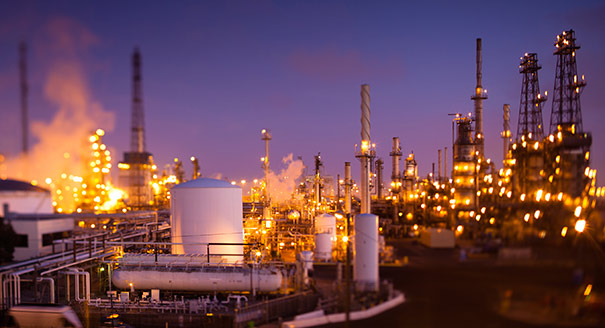
Despite its massive capital, scope, and durability, the oil sector remains extremely opaque. Open source data are needed to quantify the oil sector’s climate responsibilities.
Source: Huffington Post
The United States has never exported much crude oil—but that is likely about to change because congressional leaders recently lifted the country's 40-year-old ban on crude oil exports.
However, this new expected surge of crude oil exports will be entering a market that is already clouded by too little data transparency. Very little information is available on oil's full impacts on the environment and climate change. Better data is needed urgently in order to evaluate and quantify the oil sector's climate responsibilities.
History shows that industries and companies often go out of their way to avoid releasing valuable information to the public. Volkswagen has previously installed software to produce false emissions-test data. China has been dramatically underreporting its coal consumption. And automakers Hyundai and Kia have been overstating fuel-economy claims. These are serious abuses that point to outdated corporate norms that result in companies not reporting verifiable open-source information to the market.A prime example of this is the oil industry, the sector with the largest global energy demand and ostensibly the largest climate footprint. In the wake of an historic climate agreement in Paris, there is a new mandate for all stakeholders to know your oil and what impacts it is having on the environment.
Oil has changed dramatically over the years and continues to adapt constantly. Over the past several decades, the oil industry has developed the means to extract many different types of petroleum, such as tight oil, oil sands extra-heavy oils, ultra-deep oils and more. Technological advances, like hydraulic fracturing and injecting steam, mean that more unconventional hydrocarbon deposits in once-unreachable areas are now viable resources. Now, complex refining can turn even semi-solid and semi-gaseous oils into gasoline, diesel and other petroleum products.
These developments are remarkable, but they have made a hash of existing environmental reporting requirements. Quite simply, the oil sector has changed dramatically, and data reporting has not kept up.
We need a 21st century oil data disclosure regime that accounts for the total greenhouse gas footprint associated with the entire barrel of oil—its production, crude transport, refining, product transport and overall consumption.
Despite its massive capital, scope and durability, the oil sector remains extremely opaque. Data reporting is seriously lacking. Measurements are inconsistent and data uncertainty is high. Too few records are disclosed and validated. Any information posted online features fine print stipulating its use requires companies' permission. And more often than not, up-to-date high-quality databases are the property of private consultancies that are extremely costly or not for sale.
Open source data are needed to quantify the oil sector's climate responsibilities. That is why the Carnegie Endowment for International Peace teamed up with researchers at Stanford University and the University of Calgary to develop the Oil-Climate Index, a first-of-its-kind web tool that compares global oils' greenhouse gas emissions, barrel-for-barrel. In a small sample of just 30 global oils, there's an 80 percent difference in greenhouse gas emissions between the lowest-emitting oil and the highest.
Oil data transparency will require government action. This can be directed through executive order or by updating regulatory guidelines for greater disclosure during environmental permitting. Congress has also expressed interest in tackling the issue of providing greater information so that oil markets function more efficiently in the future.
New oil supplies will enter global markets with the recent lift of the U.S. export ban. Greater transparency is needed to better understand these (and all other) oils. At the same time, the climate deal reached in Paris will require full emissions accounting. Up-to-date, open-source oil data is required to set industry best practices and inform decision making.

Former Director and Senior Fellow, Energy and Climate Program
Gordon was director of Carnegie’s Energy and Climate Program, where her research focuses on oil and climate change issues in North America and globally.
Recent Work
Deborah Gordon, Stephen D. Ziman
Deborah Gordon, Smriti Kumble, David Livingston
Carnegie does not take institutional positions on public policy issues; the views represented herein are those of the author(s) and do not necessarily reflect the views of Carnegie, its staff, or its trustees.

While the EU and European governments are embracing the much-lauded middle-power moment, this entails three difficult conundrums.

Richard Youngs

Europe is facing rising populism internally as well as external pressures from Russia, China, Turkey, and the United States.

Dimitar Bechev

European NATO countries are wrestling with the possibility of U.S. disengagement from the alliance. With the continent’s security increasingly uncertain, governments must restore the credibility of their collective defense.



Hans-Dieter Lucas, Adam Thomson, Pierre Vimont

The new U.S.–Denmark–Greenland agreement will help Washington exert political, economic, and financial dominance under the guise of security. Yet, it acknowledged Copenhagen’s and Nuuk’s sovereignty on the island.

Marc Pierini

European Commission President Ursula von der Leyen is about to give her annual address on the state of the EU. Here’s what she won’t—but should—say.

Rym Momtaz