

Commentary
Yezid Sayigh
{
  "authors": [
    "Yezid Sayigh"
  ],
  "type": "legacyinthemedia",
  "centerAffiliationAll": "dc",
  "centers": [
    "Carnegie Endowment for International Peace",
    "Malcolm H. Kerr Carnegie Middle East Center"
  ],
  "collections": [
    "Conflict and Refugees"
  ],
  "englishNewsletterAll": "menaTransitions",
  "nonEnglishNewsletterAll": "",
  "primaryCenter": "Malcolm H. Kerr Carnegie Middle East Center",
  "programAffiliation": "MEP",
  "programs": [
    "Middle East"
  ],
  "projects": [],
  "regions": [
    "Levant",
    "Syria",
    "Middle East"
  ],
  "topics": [
    "Political Reform"
  ]
}
Source: Getty
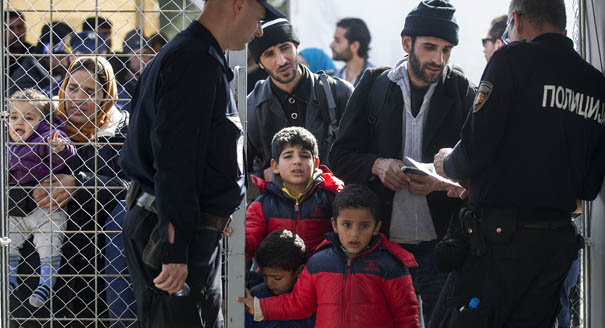
A new approach to assisting Syrian refugees must be created that focuses on integrated development, for refugees and hosts alike, involving longer time frames and smarter programmes.
Source: Al Jazeera
An extraordinary summit of the European Union and Turkey is scheduled to take place in early March, to coordinate responses to the continuing flow of refugees and migrants into Europe.
This follows the international donor conference in London four weeks earlier that pledged more than $11bn to assist Syrian refugees and internally displaced people in 2016-2020, the bulk of which came from the US and EU member-states.
These political and financial commitments are urgently needed, but should not disguise past failures or the obstacles lying ahead. Already, it is clear that the EU-Turkey joint action plan on refugees agreed on November 2015 has not yielded significant results. And the underfunding of past United Nations appeals for Syria has risen proportionally - from 30 percent of pledges in 2012 to 43 percent in 2015 - leaving donors falling ever shorter of their targets even as they give more.The international donor community must break away from its default fire-fighting mode to thinking strategically about long-term trends, needs, and responses.
Patrolling the Aegean Sea to prevent refugees crossing from Turkey and paying Turkey to absorb more refugees buys time, but cannot do more than reduce the problem partially.
As importantly, it does not address the specific challenges facing Jordan and Lebanon, which host fewer refugees than Turkey in absolute numbers, but bear a far greater burden in comparison to their population size, gross domestic product, and government budgets.
It is here that the shortcomings of the usual "emergency" framework for humanitarian assistance are most apparent, and the risk of generating chronic aid dependency among refugees is most acute.
But a second, dangerous vicious circle is emerging even as principal international donors start to recognise the limitations of their standard approach. The EU, in particular, has largely come to the view that Turkey, Lebanon, and Jordan should formalise work opportunities for Syrian refugees and allow a massive expansion in the provision of education for their children so as to reduce outward flows to Europe in coming years.
Implementing these demands is hard enough politically and socially in Turkey, with its openly supportive government, efficient central and local administration, and large population and economy.
But it is a great deal harder in Jordan and Lebanon, where host governments and populations increasingly distrust anything that could entrench the Syrian refugee presence, making it permanent, or that could encourage even more refugees to come.
Instead, a new framework for international assistance that focuses on achieving sustainable development and changing incentive structures for both refugees and hosts is needed. This requires three elements to be effective.
First, frank acknowledgement that the Syria's neighbours will continue to host large numbers of Syrian refugees for years to come - even if peace were to break out tomorrow - and that a different approach is therefore needed.
As investor and philanthropist George Soros recently argued, simply persisting with "care and maintenance" leaves refugees inadequately supported and adverse effects on host communities unaddressed.
Second, an increased financial commitment is essential. The London donor conference on February 4 set itself the objective of transforming the lives of refugees and host communities through a focus on education and economic opportunities. Recognising that this requires significantly higher levels of initial spending, Soros additionally called for "surge funding" to front-load investment in employment, health, and education programmes.
But for such assistance to be most effective, donors must end the tendency to rely on a few standard forms and channels for designing, financing, and delivering assistance. No matter how generously funded any individual programme is, it will not work on its own.
So, the third element of a more effective, long-term response is to develop a "smart" package of schemes and initiatives tailored to the institutional, socioeconomic, and market dynamics of specific host governments and communities.
A smart approach would balance donor pressure on host governments to formalise participation of Syrian refugees in their labour markets with assistance to set up special funds for them within national social security systems.
Enabling refugees to pay into these schemes would encourage them to register for formal employment, which would be more equitable for nationals who complain of being undercut by the willingness of refugees to accept lower (untaxed) pay.
Similarly, donors could help host governments to make it easier and more attractive to register the thousands of informal small businesses started up by, and catering to, refugees, potentially generating greater fee income and tax revenue for the hosts and recouping some of the cost of providing basic services and infrastructure.
Another aspect of a smart approach is for donors to achieve a more targeted balance in their technical and funding relationships with host governments on the one side, and local authorities and civil society organisations on the other.
The latter two categories are often the "first responders" to refugees, and can better integrate their needs with those of local communities.
Municipalities can group together to provide electricity generation, water treatment, and solid waste disposal solutions at the local level when national systems fall short, and are better placed to collect usage fees and recoup costs once helped to make the initial investments.
Ministries of education can similarly be incentivised and assisted to collaborate with civil society organisations that already target qualitative improvements in literacy and numeracy or in maths, natural sciences, foreign languages, and computer skills among primary school students, so as to expand their remit to include both refugee and host communities.
In all cases, the conventional humanitarian framework for refugee assistance is no longer sustainable. A new framework should focus on integrated development, for refugees and hosts alike, involving longer time frames and smarter programmes. With the first World Humanitarian Summit to be held in Istanbul in May, there is an opportunity to start redesigning it collectively.

Senior Fellow, Malcolm H. Kerr Carnegie Middle East Center
Yezid Sayigh is a senior fellow at the Malcolm H. Kerr Carnegie Middle East Center in Beirut, where he leads the program on Civil-Military Relations in Arab States (CMRAS). His work focuses on the comparative political and economic roles of Arab armed forces, the impact of war on states and societies, the politics of postconflict reconstruction and security sector transformation in Arab transitions, and authoritarian resurgence.
Recent Work
Yezid Sayigh
Yezid Sayigh
Carnegie does not take institutional positions on public policy issues; the views represented herein are those of the author(s) and do not necessarily reflect the views of Carnegie, its staff, or its trustees.
Europe has an interest in supporting Armenian leader Nikol Pashinyan as he tries to make peace with neighbors and loosen ties with Russia. But it is depersonalized support in the long term, not quickfire flash, that will win the day.

Thomas de Waal
Europe has been standing by while its Southern neighborhood is being redrawn by force. To establish a path to peace between Israel and Lebanon, it’s time for Europeans to get involved with hard power.

Rym Momtaz
Montenegro and Albania are frontrunners for EU enlargement in the Western Balkans, but they can’t just sit back and wait. To meet their 2030 accession ambitions, they must make a strong positive case.


Dimitar Bechev, Iliriana Gjoni
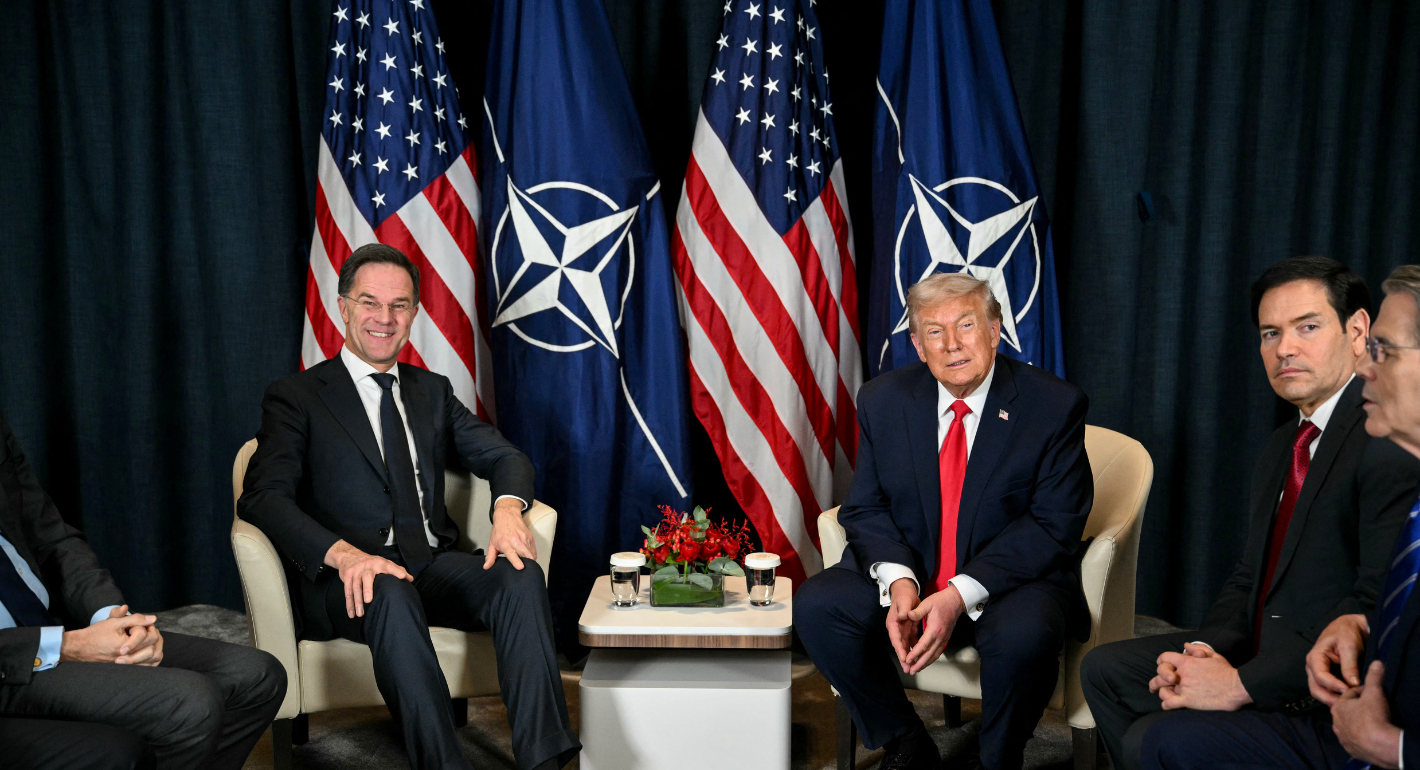
Donald Trump has demanded that European allies send ships to the Strait of Hormuz while his war of choice in Iran rages on. He has constantly berated NATO while the alliance’s secretary-general has emphatically supported him.
Rym Momtaz, ed.
The war in Ukraine is costing Russia its leverage overseas. Across the South Caucasus and Middle East, this presents an opportunity for Europe to pick up the pieces and claim its own sphere of influence.

William Dixon, Maksym Beznosiuk