

Article
A notable degree of participative democracy has firmly arrived in Europe. But to have more far-reaching impact, democratic deliberation needs to move into a radically new phase.
Richard Youngs
{
  "authors": [],
  "type": "other",
  "centerAffiliationAll": "dc",
  "centers": [
    "Carnegie Endowment for International Peace"
  ],
  "collections": [],
  "englishNewsletterAll": "menaTransitions",
  "nonEnglishNewsletterAll": "",
  "primaryCenter": "Carnegie Endowment for International Peace",
  "programAffiliation": "MEP",
  "programs": [
    "Middle East"
  ],
  "projects": [],
  "regions": [
    "North Africa",
    "Egypt"
  ],
  "topics": [
    "Democracy",
    "Civil Society"
  ]
}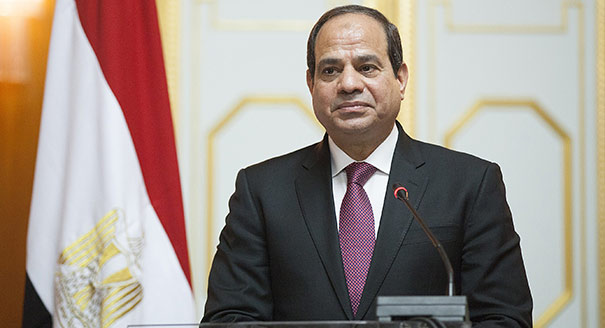
Source: Getty
President Obama must speak with President Sisi and express his objections to the accelerating crackdown on human rights and civil society.
March 23, 2016
The Honorable Barack Obama
President of the United States of America
The White House
1600 Pennsylvania Avenue NW
Washington, DC 20500
Dear Mr. President:
We are writing to urge you to speak directly with Egyptian President Abdel Fattah al-Sisi and to express both publicly and privately your objection to his accelerating crackdown on human rights, including recent moves to prosecute civil society organizations. You were correct to declare in September 2014 that “America’s support for civil society is a matter of national security,” and nowhere is that more true than in Egypt today.
President al-Sisi’s campaign against civil society takes place against the backdrop of unprecedented abuses by Egyptian security forces, including extrajudicial killing, the detention of tens of thousands of political prisoners, the widespread documented use of torture, and the forced disappearances of hundreds of Egyptians. The killing of Italian student Giulio Regeni, whose tortured body appeared on a roadside near Cairo a week after his abduction in late January, has come to international attention, but many Egyptians have shared his fate since President al-Sisi came to power.
On March 24, an Egyptian court will hear a request to freeze the bank accounts and other assets of two internationally-respected human rights defenders, Hossam Bahgat and Gamal Eid, along with members of Eid’s family. Mr. Bahgat and Mr. Eid and other activists may soon be indicted and face trial for illegally accepting foreign funding – a criminal charge that violates their right to free association and could carry a sentence of up to 25 years in prison.
The imminent proceedings are a major step in Egyptian authorities’ campaign to crush the last remnants of Egypt’s independent civil society and human rights community. In recent months, Egypt’s media has reported that dozens of organizations are under criminal investigation, essentially for their peaceful work to monitor abuses and to hold Egypt’s government accountable to its own constitution and international human rights commitments.
In recent weeks, Egyptian authorities have ordered the closure of a prominent anti-torture organization, the Nadeem Center; summoned staff from several human rights organizations for interrogation; banned prominent rights activists and advocates from traveling outside Egypt in violation of the Egyptian constitution; and harassed and threatened human rights activists with arrest and violence. The media regularly propagate vitriol against human rights defenders, portraying them as traitors and security threats.
If this crackdown is allowed to reach its conclusion, it will silence an indigenous human rights community that has survived more than 30 years of authoritarian rule, leaving few if any Egyptians free to investigate mounting abuses by the state.
The current attacks on Egypt’s rights advocates are a continuation of the same criminal prosecution of American and German NGO workers in Egypt that began in 2011. That prosecution, driven by senior members of the Egyptian government still in high office today, resulted in the June 2013 criminal convictions, in a deeply flawed trial, of 43 Egyptian and international NGO staff, including 17 American citizens. President al-Sisi, who was the head of military intelligence in 2011 when Egypt’s military government launched the investigation, has refused repeated requests to overturn the convictions.
While the current crackdown is primarily targeting domestic organizations, there are indications that international NGOs may also face increased pressure, including some that currently do not even have offices or staff working in Egypt. On March 20, the newspaper Al Masry Al Youm published the names of more than 150 individuals and civil society organizations reportedly under investigation for receiving foreign funding, including prominent American and European organizations such as the Center for International Private Enterprise, the Solidarity Center, Transparency International, Save the Children, Catholic Relief Services, CARE, AMIDEAST, the National Democratic Institute, and the International Republican Institute.
Mr. President, in your September 2014 Presidential Memorandum on Civil Society, you pledged that the United States Government – including you personally – would stand firmly with those in civil society facing pressure or harassment from their governments. While the past five years have been tumultuous and challenging for US policy toward Egypt, this is another defining moment for the United States, a moment that tests your pledge to “stand with civil society.” Secretary Kerry’s March 18 statement of concern was welcome, but further action is urgently needed. Past practice demonstrates that when the United States government speaks clearly, in one voice, and consistently on NGO freedom and human rights in Egypt, the government in Cairo listens.
It is essential that you act to stand up for human rights, freedom of association, and the rights of both Egyptian and international civil society organizations to work together on behalf of common goals. You must make crystal clear to the Egyptian President that continued assaults on civil society, including harassment of US organizations, will make it difficult for the administration to cooperate across a range of issues, including your administration’s efforts to promote American investment in Egypt and to provide financial assistance to the Egyptian government and military. If Egypt’s government continues down a path to destroy its own civil society, American support and assistance will become, in both principled and practical terms, impossible.
Sincerely,
The Working Group on Egypt
Robert Kagan (co-chair)
Brookings Institution
Michele Dunne (co-chair)
Carnegie Endowment for International Peace
Elliott Abrams
Council on Foreign Relations
Daniel Calingaert
Freedom House
Amy Hawthorne
Project on Middle East Democracy
Brian Katulis
Center for American Progress
Stephen McInerney
Project on Middle East Democracy
Ellen Bork
Foreign Policy Initiative
Reuel Gerecht
Foundation for Defense of Democracies
Neil Hicks
Human Rights First
Sarah Margon
Human Rights Watch
Tamara Wittes
Brookings Institution
Carnegie does not take institutional positions on public policy issues; the views represented herein are those of the author(s) and do not necessarily reflect the views of Carnegie, its staff, or its trustees.

A notable degree of participative democracy has firmly arrived in Europe. But to have more far-reaching impact, democratic deliberation needs to move into a radically new phase.

Richard Youngs

The domestic impacts of how long it is taking to end the war in Ukraine have pushed the French electorate to the political extremes and compromised the country’s diplomatic capacity.

Rym Momtaz

Before the next wave of EU enlargement takes place, the union needs to grapple with thorny questions of how power is distributed among its members.


Emil Sondaj Hansen, Ditte Brasso Sørensen

Radical-right parties are expected to do well in upcoming elections in four of the EU's biggest member states. If successful, they could prevent the union from addressing key challenges ahead.

Stefan Lehne

An overwhelming victory by a far-right-wing party in a small state in eastern Germany will have major repercussions for Chancellor Friedrich Merz’s coalition.

Judy Dempsey