

Commentary
The EU can impose sanctions but struggles to enforce them without the United States. With Washington increasingly disinterested in backing European interests, the bloc must now fend for itself.
Nicu Popescu, Tiago Antunes
{
  "authors": [
    "Toby Dalton",
    "Mercy A. Kuo",
    "Angie O. Tang"
  ],
  "type": "other",
  "centerAffiliationAll": "dc",
  "centers": [
    "Carnegie Endowment for International Peace"
  ],
  "collections": [
    "U.S. Nuclear Policy"
  ],
  "englishNewsletterAll": "ctw",
  "nonEnglishNewsletterAll": "",
  "primaryCenter": "Carnegie Endowment for International Peace",
  "programAffiliation": "NPP",
  "programs": [
    "Nuclear Policy"
  ],
  "projects": [],
  "regions": [
    "North America",
    "United States"
  ],
  "topics": [
    "Nuclear Policy"
  ]
}
Source: Getty
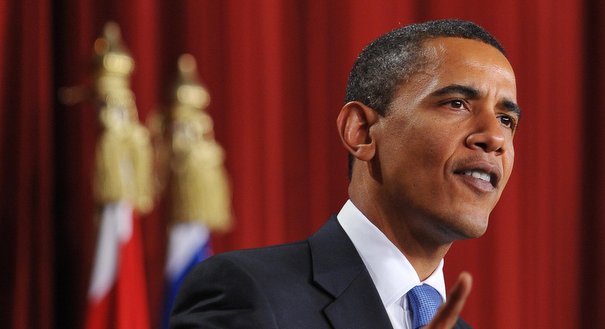
President Obama framed a very ambitious nuclear agenda at the outset of his administration that, in retrospect, was vulnerable to foreign and domestic forces that rendered progress on parts of the agenda simply unachievable.
Source: Diplomat
The Rebalance authors Mercy Kuo and Angie Tang regularly engage subject-matter experts, policy practitioners, and strategic thinkers across the globe for their diverse insights into the U.S. rebalance to Asia. This conversation with Dr. Toby Dalton – co-director of the Nuclear Proliferation Program at Carnegie Endowment for International Peace, who previously served in high-level positions at the U.S. Department of Energy – is the 39th in “The Rebalance Insight Series.”
President Obama framed a very ambitious nuclear agenda at the outset of his administration. In retrospect, it is clear that the president’s aspirations were vulnerable to foreign and domestic forces that rendered progress on parts of the agenda simply unachievable. Yet, it is vital for political leaders to challenge their bureaucracies and foreign counterparts with visionary ideas. On nuclear security, the vision has been directed into a political process that created awareness and accountability. The Iran nuclear deal was a major political gamble on a framework that can yield near-term crisis resolution and long-term confidence building if it is sustained. After a positive re-energizing of the nuclear reductions agenda with Russia through New START [Strategic Arms Reduction Treaty], further progress was stymied and momentum to reduce the salience of nuclear weapons in U.S. (and Russian) strategy has reversed. Meanwhile, North Korea’s nuclear and missile programs advanced unchecked, and efforts to strengthen the global nonproliferation architecture stalled. In sum, this is a glass half-empty assessment, but the glass envisioned by Obama was probably too tall to begin with.
Experts can debate the long-term strategic necessity of the rebalance, but it seems clear that in the short-term it probably exacerbated some of the issues it is intended to address, nuclear challenges among them. Many of these challenges stem from complex and long-standing security dilemmas. Even if some of the practical elements of the rebalance are intended to be defensive in nature, they can still motivate security spirals. For instance, North Korea’s nuclear advances, coupled with President Obama’s rhetoric of a world without nuclear weapons, created reassurance demands within the U.S. alliances with South Korea and Japan on extended deterrence and U.S. security commitments. Yet these reassurance efforts – to include symbolic displays like B2 overflights during military exercises – probably added impetus to North Korea’s actions, while also spurring nuclear and missile modernization in China that complicates the U.S.-China strategic relationship.
There were two main accomplishments at this last Nuclear Security Summit. First, enough states ratified the amended Convention on the Physical Protection of Nuclear Material that it will enter into force. The amended Convention establishes a legal framework for mandating that states protect nuclear material and facilities. Second, the summit agreed to establish a high-level contact group to review implementation of NSS initiatives, as well as the institutionalization of the nuclear security mandate in international organizations such as the International Atomic Energy Agency and Interpol. Collectively, these efforts help ensure that political attention to nuclear security won’t completely wither in the absence of high-level summitry, and that states will be accountable for progress on strengthening nuclear security practices.
Nuclear risks in East Asia and South Asia pose unique challenges to U.S. regional and/or bilateral alliances. There is no one-size-fits-all approach that can work. In East Asia, the next administration should continue the very good reassurance work against real threats from North Korea and, over the longer term, potential challenges from China. The best option would be efforts to focus on building confidence in cohesive and sustained conventional deterrence commitments that may help diminish the salience of nuclear weapons (and associated escalation risks) in the region. In South Asia, the next administration must balance the upside of burgeoning rapprochement with India, with the downside risk that India’s rise deepens Pakistan’s security dilemma. The Obama administration largely ignored the interrelationship between these forces, the result of which is a growing arms competition and deepening concerns about crisis escalation.
The nuclear threat from North Korea grows each day and, at this point, arguably surpasses all other dangers in the region. Recent developments suggest that Pyongyang is or soon will be able to target the U.S. mainland with nuclear-tipped ballistic missiles. The qualitative change in this threat to U.S. interests must take greater precedence in Washington’s policy toward the region. The next administration should articulate the relevance of this national security threat in a way that creates political space – in Congress, with allies in Asia, and with China – for diplomacy. This will require considerable risk taking, much as the Obama administration did with Iran. The diplomacy won’t be pretty, and the outcome won’t be tidy. But ignoring the problem or simply defaulting to hopeful tactics are exceedingly unlikely to diminish the direct risks to the United States.

Senior Fellow and Co-director, Nuclear Policy Program
Toby Dalton is a senior fellow and co-director of the Nuclear Policy Program at the Carnegie Endowment. An expert on nonproliferation and nuclear energy, his work addresses regional security challenges and the evolution of the global nuclear order.
Mercy A. Kuo
Diplomat
Angie O. Tang
Diplomat
Carnegie does not take institutional positions on public policy issues; the views represented herein are those of the author(s) and do not necessarily reflect the views of Carnegie, its staff, or its trustees.

The EU can impose sanctions but struggles to enforce them without the United States. With Washington increasingly disinterested in backing European interests, the bloc must now fend for itself.


Nicu Popescu, Tiago Antunes

Ahead of a tough winter for Ukraine, Donald Trump’s swing back toward Russia bodes ill. But instead of panicking, Kyiv’s European allies are focusing on action.

Rym Momtaz

While the EU and European governments are embracing the much-lauded middle-power moment, this entails three difficult conundrums.

Richard Youngs

Europe is facing rising populism internally as well as external pressures from Russia, China, Turkey, and the United States.

Dimitar Bechev

European NATO countries are wrestling with the possibility of U.S. disengagement from the alliance. With the continent’s security increasingly uncertain, governments must restore the credibility of their collective defense.



Hans-Dieter Lucas, Adam Thomson, Pierre Vimont