

Research
- +6
Yasmine Farouk, Nathan J. Brown, Maysaa Shuja Al-Deen, …
{
  "authors": [
    "Anouar Boukhars"
  ],
  "type": "other",
  "centerAffiliationAll": "dc",
  "centers": [
    "Carnegie Endowment for International Peace",
    "Malcolm H. Kerr Carnegie Middle East Center"
  ],
  "collections": [
    "Arab Awakening"
  ],
  "englishNewsletterAll": "menaTransitions",
  "nonEnglishNewsletterAll": "",
  "primaryCenter": "Carnegie Endowment for International Peace",
  "programAffiliation": "MEP",
  "programs": [
    "Middle East"
  ],
  "projects": [],
  "regions": [
    "North Africa",
    "Maghreb"
  ],
  "topics": [
    "Political Reform",
    "Democracy"
  ]
}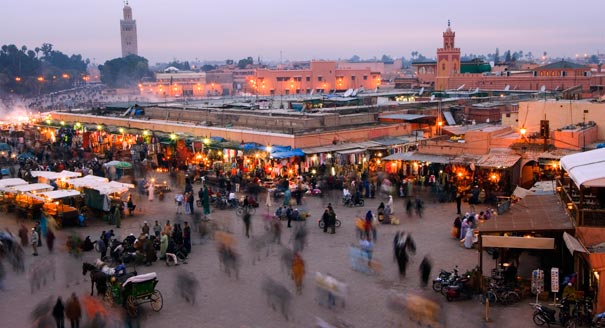
Source: Getty
Amid the volatility of the post-2011 Arab revolts, Salafi ideology and activism have emerged as the locus of societal contention and political controversy.
Source: Orient
Amid the volatility of the post-Arab revolts of 2011, Salafi ideology and activism have emerged as the locus of societal contention and political controversy. Scholars and pundits of this ultra-conservative brand of Sunni Islam continue to debate its complexity, contextual diversity and internal dynamics. The most reductive explanations associate Salafi activism with violent extremism or the austere expressions of Saudi Wahhabism. The most insightful ones are those that provide access into the diversity of the Salafi experience, uncovering the social forces and national political trajectories that power its surge in contexts where it was long thought of as a parasitic fringe of contention. Reassessing the reconfigurations of national Salafi ideological politics and their interactions with regional and transnational dynamics is crucial to understanding the ambivalence and complexities of the Salafi phenomenon in the post-Arab Uprising era.
This article takes the Maghreb as a case study to investigate how the Salafi movement in its different stripes has been reshaping both society and politics in different national political contexts. In so doing, it traces the intellectual history and popular origins behind what has become an observable sociological and political phenomenon. Tracking the evolution of different strands of Salafi thought and activism in Morocco, Tunisia and Algeria provides a nuanced understanding of the many forces that contributed to the forceful re-emergence of politicised and radical brands of Salafism in the wake of the post-Arab uprisings.
North African Salafism bifurcates between an indigenous nationalist strand and imported strands that lay either inside or outside the realm of Islamic modernism and politics. The two strands have connected at different historical intervals, producing different approaches to political and social reform. Historically, the most dominant strand embraced Salafism as a theology of rational knowledge and national social reform. During the colonial era, North African Salafism took a distinctly intellectual reform shape than that advocated by the puritanical Islamic reform movement originating in Saudi Arabia....
Former Nonresident Fellow, Middle East Program
Boukhars was a nonresident fellow in Carnegie’s Middle East Program. He is a professor of countering violent extremism and counter-terrorism at the Africa Center for Strategic Studies, National Defense University.
Recent Work


Yasmine Farouk, Nathan J. Brown, Maysaa Shuja Al-Deen, …

Frederic Wehrey, Nathan J. Brown, Bader Al-Saif, …
Carnegie does not take institutional positions on public policy issues; the views represented herein are those of the author(s) and do not necessarily reflect the views of Carnegie, its staff, or its trustees.

A notable degree of participative democracy has firmly arrived in Europe. But to have more far-reaching impact, democratic deliberation needs to move into a radically new phase.

Richard Youngs

The domestic impacts of how long it is taking to end the war in Ukraine have pushed the French electorate to the political extremes and compromised the country’s diplomatic capacity.

Rym Momtaz

Before the next wave of EU enlargement takes place, the union needs to grapple with thorny questions of how power is distributed among its members.


Emil Sondaj Hansen, Ditte Brasso Sørensen

Radical-right parties are expected to do well in upcoming elections in four of the EU's biggest member states. If successful, they could prevent the union from addressing key challenges ahead.

Stefan Lehne

An overwhelming victory by a far-right-wing party in a small state in eastern Germany will have major repercussions for Chancellor Friedrich Merz’s coalition.

Judy Dempsey