

Research
- +6
Yasmine Farouk, Nathan J. Brown, Maysaa Shuja Al-Deen, …
{
  "authors": [
    "Anouar Boukhars"
  ],
  "type": "other",
  "centerAffiliationAll": "dc",
  "centers": [
    "Carnegie Endowment for International Peace"
  ],
  "collections": [],
  "englishNewsletterAll": "menaTransitions",
  "nonEnglishNewsletterAll": "",
  "primaryCenter": "Carnegie Endowment for International Peace",
  "programAffiliation": "MEP",
  "programs": [
    "Middle East"
  ],
  "projects": [],
  "regions": [
    "North Africa"
  ],
  "topics": [
    "Political Reform",
    "Security"
  ]
}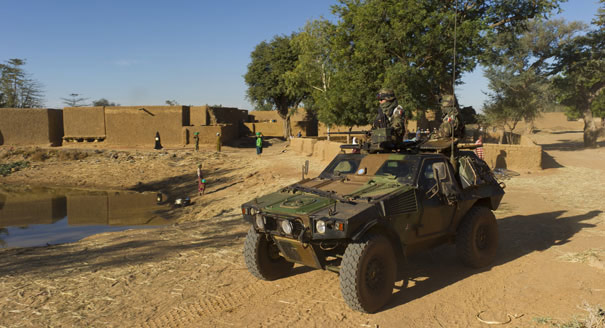
Source: Getty
Al-Qaeda in the Islamic Maghreb and its allies have escalated the race to expand their regional footprint into West Africa’s economic hubs and coastal areas that have hitherto been spared from terrorist violence.
Source: World Politics Review
The deadly terrorist attacks in Burkina Faso and Cote d’Ivoire in January and March, respectively, show the deep reach of militants affiliated with al-Qaida in the Islamic Maghreb (AQIM), and their ability to bounce back from the military drubbing they received as a result of France’s intervention in the Sahel, which began in 2013. The spectacular attacks are part of a long pattern illustrating the enduring resilience of AQIM and its ability to regenerate itself by adjusting strategy and tactics to mounting pressure from both counterterrorism operations and rising jihadi competition in the Sahel and West African region.
As alliances and rival coalitions reorder themselves in an increasingly chaotic militant landscape, AQIM and its allies have escalated the race to expand their regional footprint into West Africa’s economic hubs and coastal areas that have hitherto been spared from terrorist violence. The expansion and execution of successful terrorist attacks helps AQIM-led groups rebuild their resources and broaden their recruitment base, reaching areas riven by long-simmering communal distrust, festering local conflicts and distrust of state institutions, particularly in marginalized peripheries and rural communities. ...
Former Nonresident Fellow, Middle East Program
Boukhars was a nonresident fellow in Carnegie’s Middle East Program. He is a professor of countering violent extremism and counter-terrorism at the Africa Center for Strategic Studies, National Defense University.
Recent Work



Yasmine Farouk, Nathan J. Brown, Maysaa Shuja Al-Deen, …

Frederic Wehrey, Nathan J. Brown, Bader Al-Saif, …
Carnegie does not take institutional positions on public policy issues; the views represented herein are those of the author(s) and do not necessarily reflect the views of Carnegie, its staff, or its trustees.

Europe is facing rising populism internally as well as external pressures from Russia, China, Turkey, and the United States.

Dimitar Bechev

A notable degree of participative democracy has firmly arrived in Europe. But to have more far-reaching impact, democratic deliberation needs to move into a radically new phase.

Richard Youngs

Before the next wave of EU enlargement takes place, the union needs to grapple with thorny questions of how power is distributed among its members.


Emil Sondaj Hansen, Ditte Brasso Sørensen

The new U.S.–Denmark–Greenland agreement will help Washington exert political, economic, and financial dominance under the guise of security. Yet, it acknowledged Copenhagen’s and Nuuk’s sovereignty on the island.

Marc Pierini

A summer of escalation in the Black Sea has hurt Ukraine economically and is exacerbating world food security. A truce is needed—as is a broader reframing of Europe’s Ukraine strategy.

Thomas de Waal