

Paper
Christopher S. Chivvis, Rohan Mukherjee, Milan Vaishnav
{
  "authors": [
    "Milan Vaishnav"
  ],
  "type": "legacyinthemedia",
  "centerAffiliationAll": "dc",
  "centers": [
    "Carnegie Endowment for International Peace",
    "Carnegie India"
  ],
  "collections": [],
  "englishNewsletterAll": "ctw",
  "nonEnglishNewsletterAll": "",
  "primaryCenter": "Carnegie Endowment for International Peace",
  "programAffiliation": "SAP",
  "programs": [
    "South Asia"
  ],
  "projects": [],
  "regions": [
    "North America",
    "United States",
    "South Asia",
    "India"
  ],
  "topics": [
    "Political Reform",
    "Democracy"
  ]
}
Source: Getty
Where the government cannot carry out its sovereign responsibilities effectively and society is deeply divided along ethnic lines, many voters view strongmen as saviors.
Source: NPR
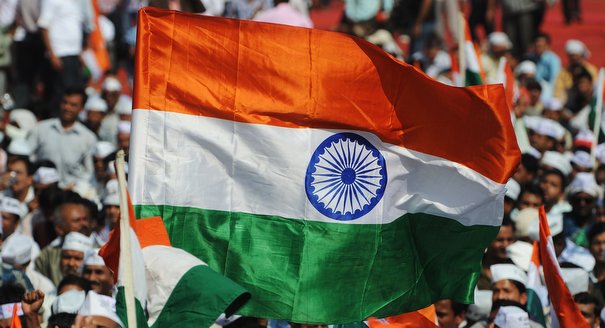
Last week, five states in India began going to the polls. One of them, Uttar Pradesh, has a population of some 200 million people. The undertaking is so vast that polling will take place in seven phases, spread out over February and March.
India's national elections are an even more complex undertaking, often lasting up to two months from the start of voting till ballots are counted and the results announced.
This is done partly to provide adequate security at polling booths, to prevent vote rigging, a practice that was rampant in much of rural – and sometimes urban – India for decades.
Though it doesn't deal with the issue directly, Milan Vaishnav's new book, When Crime Pays: Money and Muscle in Indian Politics, helps explain why India takes such extraordinary steps to protect its voting processes.
The world's largest democracy, it turns out, has a government full of men – and occasionally women – who are steeped in and emerging from the world of crime. What's curious is that the crimes many Indian politicians are accused of are not white-collar crimes like corruption or bribery, but serious offenses like murder, kidnapping, arson, banditry, rapes and more.
Yet voters keep electing them and parties keep choosing them as their candidates. In 2014, some 34 percent of India's members of parliament faced criminal cases; 21 percent faced serious ones.
Vaishnav, a senior fellow at the Carnegie Endowment for International Peace who specializes in India's political economy, spent years researching and conducting interviews on the ground. His book makes for sober reading. In an email exchange, he helped explain the "crime-politics nexus" in Indian politics and why India's case matters not just for other developing countries and nascent democracies, but also to established ones like the United States.
Criminals have been active in Indian politics for decades, dating back to the country's first elections following independence in 1947. Back then, the Congress Party [which led India's struggle for independence] was the center of political gravity and it contracted with criminals to mobilize or suppress turnout, hand out pre-election "goodies" or, in some extreme cases, capture polling booths.
Over time, political competition intensified and, as the Congress Party's hegemony began to atrophy, criminals realized that they had accumulated enough clout, notoriety and resources to cut out the politician and contest elections on their own. Criminals sought out politics to ensure their protection — from the state as well as from their rivals — and to make even more money by tapping into government contracts, funds, and patronage.
Across the world, elections have grown increasingly expensive. [Indian] parties have become so desperate for resources, they actively compete with one another to embrace "tainted" politicians who can cover the costs of their own campaigns, pay the parties for the privilege of running and subsidize candidates who don't have the same kind of wealth.
This, to my mind, is the most perplexing piece of the puzzle. It's one thing for criminals to run for office and parties to welcome them, but why would voters willingly back them?
Much to my surprise, most voters I spoke with were not only aware of politicians' criminal backgrounds, but often voted for them precisely for this reason. In an environment where the rule of law is weak — which means the government cannot carry out its sovereign responsibilities effectively — and society is deeply divided along ethnic lines, many voters view strongmen as saviors. These politicians tout their willingness and ability to "do whatever it takes" to represent their community's interests. They reinforce this message by expressly catering to their narrow segment of the electorate. In a country with a fragmented, multi-party political system, you can often win elections by rallying your core supporters.
Voter ignorance, I found, is not a compelling explanation of voter behavior. For starters, candidates who have outlaw reputations often make a great show of highlighting their criminal reputations. Far from being obscured, they are often worn as a badge of honor.
Second, voters in poor countries have all kinds of informal mechanisms of getting information outside of established media channels. In addition, literacy has steadily risen in recent years but criminality in politics is arguably gaining ground, not diminishing (judging by the increasing share of state and national politicians with pending criminal cases).
Finally, at least one study has tried to rigorously evaluate whether providing voters with information about the criminal characteristics of their politicians affects their behavior. This study, conducted in the slums of Delhi, found that such information had no discernible impact on voter behavior. One possible conclusion is that voters were not being told anything they did not already know.
In India, universal franchise was extended from the very beginning, in 1947. Over time, the core institutions of governance — the civil service, police, courts, and so on — have simply not been able to keep up with the aspirations of 1.3 billion Indians. This governance gap, further compounded by the innumerable social cleavages that exist in society, has created a vacuum for savvy political entrepreneurs to fill. This is, although it seems perverse, democracy in action.
India has the smallest police-per-capita ratio of any major country in the world. Fully one-third of judicial postings lie vacant. The ability of state and local governments to impartially deliver basic welfare services is extremely limited. As long as these infirmities exist, so will criminal politicians. Because building up the state is a long, slow task ... there are some short-term measures reformers can take, such as cleaning up how politics are funded. But to fully resolve the challenges of this unique nexus, one has to address both the supply of criminal politicians as well as the demand for them.
There are several other countries where we see the symbiosis of crime and politics. In a diverse set of countries such as Brazil, Jamaica, Nigeria, Pakistan and the Philippines, similar dynamics are at play. And this is not purely a developing world phenomenon; after all, many voters in the United States have spoken to reporters about how President Trump's demonstrated ability to bend the rules in his business career spoke to his qualifications to do whatever it took to get a "good deal" for ordinary Americans.
However, India is unique for at least two reasons. First, the scale of the issue is mind-boggling. And second, many politicians — at least 20 percent of Parliament — are accused of serious violations of the law. This speaks to the real weakness of the rule of law in India, which both creates an opportunity for the criminal politician to act as a "Robin Hood" figure, and increases the likelihood that he or she can manipulate the rules once in office, with a low probability of being punished.

Director and Senior Fellow, South Asia Program
Milan Vaishnav is a senior fellow and director of the South Asia Program and the host of the Grand Tamasha podcast at the Carnegie Endowment for International Peace. His primary research focus is the political economy of India, and he examines issues such as corruption and governance, state capacity, federalism, and electoral behavior. He also conducts research on the Indian diaspora.
Recent Work
Christopher S. Chivvis, Rohan Mukherjee, Milan Vaishnav



Sophia Besch, Eric Ciaramella, Steve Feldstein, …
Carnegie does not take institutional positions on public policy issues; the views represented herein are those of the author(s) and do not necessarily reflect the views of Carnegie, its staff, or its trustees.

While the EU and European governments are embracing the much-lauded middle-power moment, this entails three difficult conundrums.

Richard Youngs

Europe is facing rising populism internally as well as external pressures from Russia, China, Turkey, and the United States.

Dimitar Bechev

A notable degree of participative democracy has firmly arrived in Europe. But to have more far-reaching impact, democratic deliberation needs to move into a radically new phase.
Richard Youngs

European NATO countries are wrestling with the possibility of U.S. disengagement from the alliance. With the continent’s security increasingly uncertain, governments must restore the credibility of their collective defense.



Hans-Dieter Lucas, Adam Thomson, Pierre Vimont

The domestic impacts of how long it is taking to end the war in Ukraine have pushed the French electorate to the political extremes and compromised the country’s diplomatic capacity.

Rym Momtaz