

Paper
George Perkovich
{
  "authors": [
    "George Perkovich"
  ],
  "type": "legacyinthemedia",
  "centerAffiliationAll": "dc",
  "centers": [
    "Carnegie Endowment for International Peace"
  ],
  "collections": [
    "Iranian Proliferation"
  ],
  "englishNewsletterAll": "ctw",
  "nonEnglishNewsletterAll": "",
  "primaryCenter": "Carnegie Endowment for International Peace",
  "programAffiliation": "NPP",
  "programs": [
    "Nuclear Policy"
  ],
  "projects": [],
  "regions": [
    "Middle East",
    "Iran"
  ],
  "topics": [
    "Nuclear Policy"
  ]
}
Source: Getty
To build, rather than deplete political capital and power, Trump should enforce the Iran deal rather than dismantle it.
Source: Politico
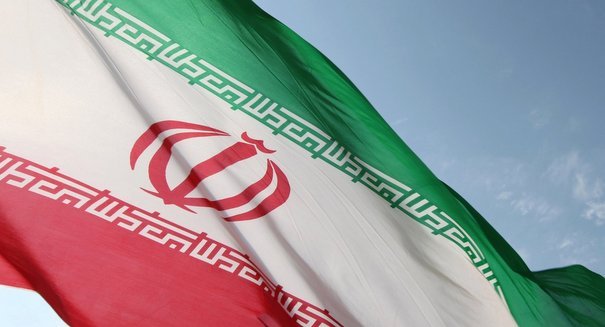
Iranian leaders were testing more than technology when they fired a medium-range ballistic missile on Sunday. They were, and are, also testing whether the new Trump administration will use any pretext to “dismantle” the 2015 nuclear deal. Tehran especially wants to see how the European Union, Russia and China would react if the U.S. threatened to do so.
On Wednesday, national security adviser Michael Flynn gave his answer: “As of today, we are officially putting Iran on notice,” he said in a stern message from the White House briefing room, though he did not specify what actions the United States might be prepared to take.
The missile test itself does not violate the nuclear deal – officially known as the Joint Comprehensive Plan of Action – but if President Trump is looking for a pretext to rip it up, he and his team certainly are creative enough to seize this one. On the other hand, Trump the dealmaker could heed his own statement on Meet the Press in August, when he said that rather than ripping it up he would “police that contract so tough that they don’t have a chance.”
Trump’s policing instinct serves him well here. Causing the Iran nuclear deal to unravel would alienate governments otherwise friendly toward him and unify those who oppose him. Such a negative shift in alignments would weaken his international power and undermine his domestic image. An early failure like this could hearten Trump’s opponents, but the impact on international security would be grave. Conversely, diligent and fair enforcement of the deal would bolster the new administration’s international position.
Most informed observers—even some of the nuclear deal’s loudest critics—now agree it is working and should be upheld. “I don’t think [Trump] should scrap it,” Prince Turki al-Faisal, a former Saudi intelligence chief and ex-ambassador to Washington and London said shortly after the U.S. election. “The general consensus in the world, not just the United States, is that it has achieved an objective, which is a 15-year hiatus in the program that Iran embarked on to develop nuclear weapons.”
High-level Israeli security officials make similar statements in private. One recently told me, “We don’t want the deal to be torn up. We want it to be enforced and if possible improved. More sanctions won’t accomplish this, but offering Iran more benefits in return for more constraints on centrifuge research and development might.”
Major powers outside the Middle East are even more adamant that the U.S. should not reignite a nuclear crisis with Iran. The United Kingdom, France, Germany, China, Russia, India, and Japan and others all cooperated with the U.S. in sanctioning and isolating Iran in order to motivate it to accept verifiable constraints on its nuclear program. If the U.S. now sabotages this arrangement and adds new unilateral sanctions on countries and companies doing business with Iran, these countries will resist in ways that will weaken the U.S. and embolden Iran.
North Korea – not Iran – is the most acute nuclear threat facing the U.S. and its allies Japan and South Korea. As Trump has noted, China’s cooperation is needed to help the U.S. persuade Pyongyang to cease the provocative expansion of its nuclear and missile capabilities. China absolutely will not oblige if the U.S. wrecks the Iran deal, and few other countries would blame Beijing.
Provoking Arab, European, and Asian resistance to the U.S. could, perhaps, be a risk worth taking if Iran were cheating on the nuclear deal. But this is not the case, according to U.S. and Israeli intelligence and the International Atomic Energy Agency.
Rather than tear up an effective (albeit imperfect) agreement, the U.S. would gain more and risk less by leading international efforts to enforce it vigorously. This focus would unify Israel, the Arab states, and Europe and would leave China, India, Russia and others with no basis to protest. The new administration, encouraged by Congress, should ensure that high-level expert leadership in the intelligence community, the departments of energy and state and the National Security Council is recruited to uphold the letter of the exceptionally detailed deal.
At the same time, the new administration can work covertly and overtly with Arab states and Israel to contest Iran’s violent inflammation of sectarian conflict in Iraq, Lebanon and Yemen. (Syria, given Russia’s role, is a more complicated story.) Iran is too big, capable and historically vested to deny it a major role in regional affairs. But the government in Tehran can and should be induced to stop its violent interference in other states.
The most common criticism of the deal is that key restrictions on Iran will be loosened between 2023 and 2030. If Trump feels compelled to make the deal better, he would avoid downside risks by quietly inviting representatives of the U.K., France and Germany to explore under what conditions, if any, Iran would be willing to extend some or all of these provisions, including restrictions on centrifuge research and development. This would be a long shot, but nothing would be lost in pursuing it.
It took years, and enormous effort across multiple U.S. administrations, to pull off the Iranian nuclear deal. Political capital is hard to win, easy to lose and even harder to get back. Gambling on the deal is an unnecessary fool’s bet. Contesting Iran would be harder if its nuclear program were unconstrained and the rest of the world blamed the U.S. for it. If only a presidency were at stake, it would be merely interesting to see how this drama plays out. But the stakes here are much higher.

Japan Chair for a World Without Nuclear Weapons, Senior Fellow
George Perkovich is the Japan Chair for a World Without Nuclear Weapons and a senior fellow in the Carnegie Endowment for International Peace’s Nuclear Policy Program. He works primarily on nuclear deterrence, nonproliferation, and disarmament issues.
Recent Work
George Perkovich
George Perkovich
Carnegie does not take institutional positions on public policy issues; the views represented herein are those of the author(s) and do not necessarily reflect the views of Carnegie, its staff, or its trustees.

When the U.S.-Iran memorandum of understanding was announced, the UK, France, Germany, and Italy declared their readiness to help demine the Strait of Hormuz and lift nuclear sanctions on Tehran. But does Europe need new tools to recover a diplomatic role?

Rym Momtaz, ed.

The EU’s new migration policy is not suited to today’s realities. With climate change increasingly becoming a driver of displacement, Europe needs to rethink its deterrence-focused approach.

Shana Tabak
Europe seems to have accepted its sidelining in the Middle East. The EU must reassert its support for the international rules-based order and step up engagement.
Rym Momtaz

Amid uncertainty caused by the Iran war, the global drive for nonproliferation has stalled. With Europe diplomatically marginalized and countries reassessing their nuclear options, efforts to curb the spread of nuclear weapons risk becoming irrelevant.

Jane Darby Menton
The U.S.-Iran war has crossed a dangerous threshold: water infrastructure in the Gulf is now a target. Ecological statecraft is no longer peripheral to security, it's part of its foundations.


Olivia Lazard, Ali Bin Shahid