

Article
Amr Adly, Hamza Meddeb
{
  "authors": [
    "Amr Adly"
  ],
  "type": "legacyinthemedia",
  "centerAffiliationAll": "dc",
  "centers": [
    "Carnegie Endowment for International Peace",
    "Malcolm H. Kerr Carnegie Middle East Center"
  ],
  "collections": [],
  "englishNewsletterAll": "menaTransitions",
  "nonEnglishNewsletterAll": "",
  "primaryCenter": "Carnegie Endowment for International Peace",
  "programAffiliation": "MEP",
  "programs": [
    "Middle East"
  ],
  "projects": [],
  "regions": [],
  "topics": [
    "Economy"
  ]
}
Source: Getty
Development does not co-exist naturally with free market policies, as many ardent liberalists assert, nor is it a process that is inevitable or prescribed.
Source: Mada Masr
The International Monetary Fund (IMF) and World Bank were established post-Second World War, in 1944, to prevent a recurrence of the Great Depression and establish balances in the international economic system. The IMF aimed to remedy deficits in the balance of payments of its member states through financial loans, in return for guarantees they would stabilize macroeconomic factors such as import and export prices and exchange rates.
By the 1970s, the fund had become almost entirely focused on developing nations, as several countries were experiencing large financial deficits, particularly in Latin America. Mexico was the first major country to declare bankruptcy in 1982, with Egypt heading in a similar direction by 1987.
In order to escape such a fate, most nations agreed to implement financial austerity measures, including: the devaluation of their national currencies to increase exports, the reduction of imports, inflation controls and reductions to budgetary expenditure.The role of international financial institutions such as the IMF was greater than merely the administering of short-term loan agreements. They facilitated the opening up of world economies to global trade fluctuations, dismantling local development models such as the support of national industry to reduce imports, and created opportunities for greater foreign investment and the selling of state-owned companies to the private sector.
As such, a hostile attitude was taken by many in developing countries towards the IMF in the 1970s and 80s, who perceived the organization to be an imperial tool that would integrate local economies into the global economy in a way that would benefit the wealthiest nations, with a loss of the relative autonomy they had enjoyed in the 1950s and 60s. Such critics largely opposed Sadat’s open door policies and perceived the IMF’s economic measures as a burden for the majority of Egyptians, particularly rapid inflation and the abolition of government subsidies.
This is not to say the IMF totally failed to benefit its recipient countries, but that such benefits were usually short lived. The focus of its programs was not at all based on building long-term economic infrastructure or the distribution of income, wealth or means of production, but rather was a last resort to save economies crippled by debt and prevent them from affecting the global financial system.
The impact of IMF loans on recipient countries differed according to their national economic policies, their ability to design and implement economic programs, the relationship of the state to the private sector and the relationship between labor and capital in each nation.
Development does not co-exist naturally with free market policies, as many ardent liberalists assert, nor is it a process that is inevitable or prescribed. Efforts to improve the lives of citizens are rather more complex processes that are dependent on varying social factors, many of which are also external and built on past legacies, making the policy proposals of individual governments difficult to implement, even if their intentions are good.
Egypt’s acceptance of an IMF loan, as with other recipient nations, is not in itself a problem or solution. The development record and policies of individual states and the variables that impact them should rather be the focus of analysis and scrutiny.
Former Nonresident Scholar, Middle East Center
Adly was a nonresident scholar at the Carnegie Middle East Center, where his research centers on political economy, development studies, and economic sociology of the Middle East, with a focus on Egypt.
Recent Work
Amr Adly, Hamza Meddeb
Robert Springborg, Ishac Diwan, Amr Adly, …
Carnegie does not take institutional positions on public policy issues; the views represented herein are those of the author(s) and do not necessarily reflect the views of Carnegie, its staff, or its trustees.

With its public finances in shambles, the far right polling at 35 percent ahead of the 2027 presidential election, and a growing protest movement, is France’s crisis a threat to the EU’s geopolitical awakening?

Rym Momtaz, ed.

The European Commissioner for Trade is headed to China. But after President Xi’s bridge-building visit to Washington, can a more isolated EU overcome Beijing’s stranglehold on critical raw materials? Who will blink first?
Rym Momtaz, ed.

The domestic impacts of how long it is taking to end the war in Ukraine have pushed the French electorate to the political extremes and compromised the country’s diplomatic capacity.
Rym Momtaz

A summer of escalation in the Black Sea has hurt Ukraine economically and is exacerbating world food security. A truce is needed—as is a broader reframing of Europe’s Ukraine strategy.

Thomas de Waal
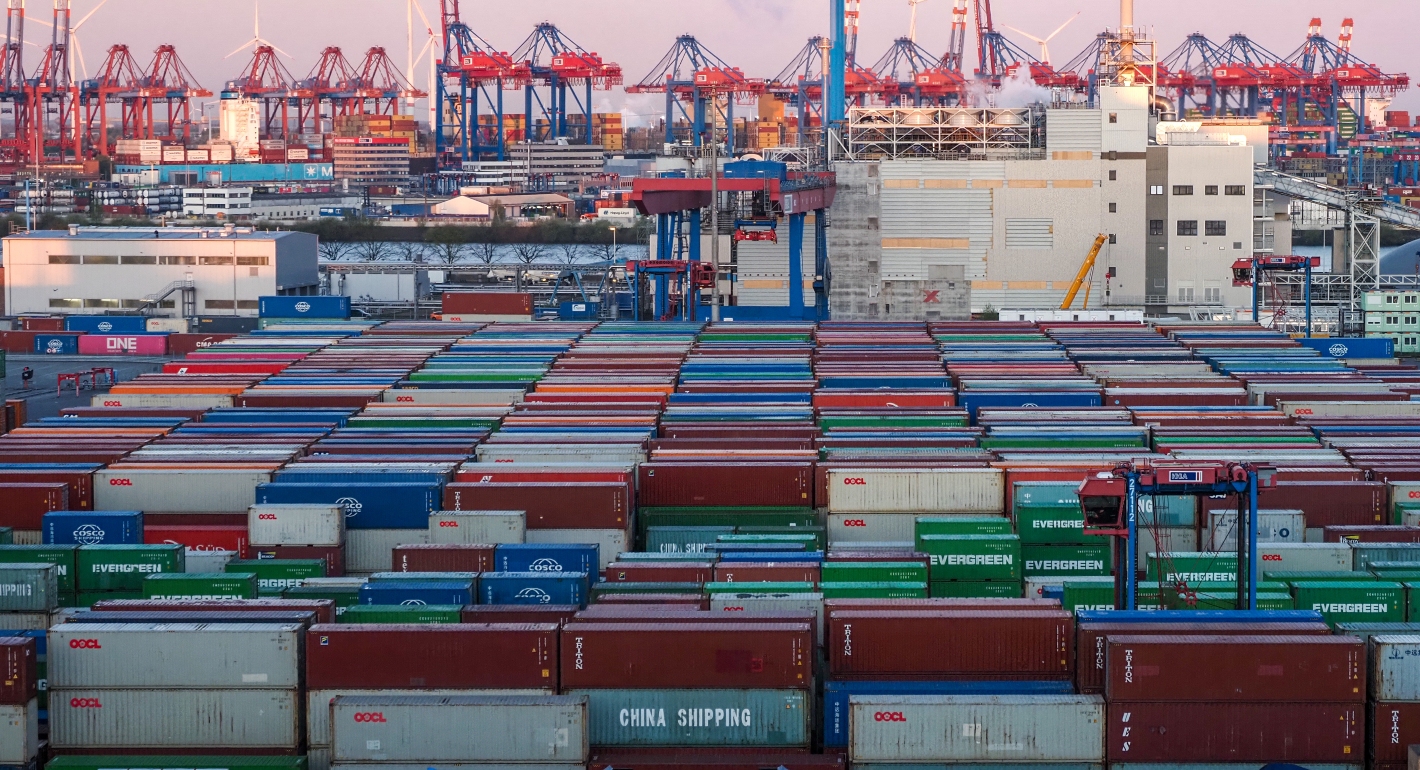
As geopolitical rivalry weaponizes global supply chains, the EU’s true vulnerability lies in emerging-risk imports. For these goods, suppliers are growing more concentrated, substitution more difficult, and political risk is looming.

Sinan Ülgen