

Article
Dalia Ghanem
{
  "authors": [
    "Dalia Ghanem"
  ],
  "type": "legacyinthemedia",
  "centerAffiliationAll": "dc",
  "centers": [
    "Carnegie Endowment for International Peace",
    "Malcolm H. Kerr Carnegie Middle East Center"
  ],
  "collections": [],
  "englishNewsletterAll": "menaTransitions",
  "nonEnglishNewsletterAll": "",
  "primaryCenter": "Malcolm H. Kerr Carnegie Middle East Center",
  "programAffiliation": "MEP",
  "programs": [
    "Middle East"
  ],
  "projects": [],
  "regions": [
    "Maghreb",
    "North Africa",
    "Morocco",
    "Libya",
    "Mauritania",
    "Mali"
  ],
  "topics": [
    "Political Reform",
    "Security"
  ]
}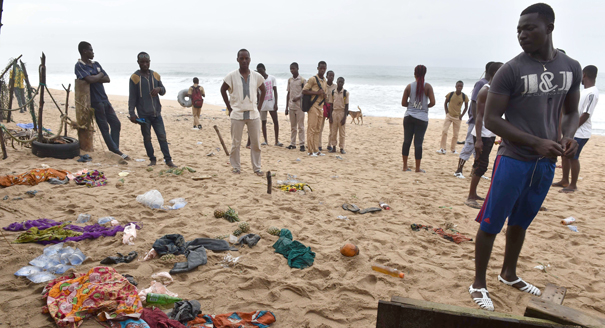
Source: Getty
AQIM is taking advantage of the social and economic fabric of Sahelian communities while exploiting the region's vast plains and porous borders that complicate counterterrorism operations.
Source: Georgetown Journal of International Affairs
Al Qaeda in the Islamic Maghreb (AQIM) formed from the ashes of the Algerian Salafist Group for Preaching and Combat (GSPC), who fought to depose the Algerian regime and establish an Islamic State in Algeria. In 2006, the GSPC merged with Al Qaeda, and in 2007 rebranded itself as Al Qaeda in the Islamic Maghreb. Two years later, AQIM formed its “Sahelization” plan, which was as pragmatic as it was opportunistic. According to the plan, AQIM leader, Abdel Malek Droudkel, decided to open the Sahelian front with several kataib (battalions). In response, the Algerian forces’ counterterrorism measures forced the group into neighboring countries. However, the large spaces left ungoverned, the loosely patrolled borders, and the understaffed military allowed AQIM to extend its influence. Since then, its battalions have built tactical alliances and strengthened ties with local tribes and communities, as they quickly understood that success depended on locals’ assistance. These ties allow the jihadists to travel safely, change camps, and find shelter and caches in the desert.
Armed jihadists have been active in the Sahel since the 1990s, but this region gained notoriety in March 2012 when AQIM, the Movement of Oneness and Jihad in West Africa (MUJAO), and Ansar Dine overtook northern Mali. Counterterrorism operations inflicted serious damage on the most prominent jihadist group, AQIM, who lost many soldiers, senior figures, territory, training camps, and weapons. Yet, resilient and adaptive, AQIM took advantage of the chaos in Libya to move its safe-haven to the southern parts of the country. It also capitalized on the unfavorable socio-economic conditions in the Sahel region to attract and secure the loyalty of new recruits from the local pool. It continues to show the same degree of resilience and adaptation, as well as growing operational capacities, demonstrated by its latest attacks in Mali, Burkina Faso, and Ivory Coast.
Today AQIM is rooted in the social and economic fabric of many Sahelian communities and tribes. The group uses marriages and kinship to strengthen its ties with communities. For instance, Mokhtar Bel Mokhtar—an Algerian jihadist veteran and one of AQIM’s most prominent figures—spent a decade forging relationships, gaining influence with the Azawad desert communities, proselytizing especially among the Arabs, and intermarrying. In fact, he married three times with local women. Marriage helps build and expand alliances, and further serves to protect those jihadists wed to tribe members, thus making it a powerful antidote to defections. For the spouse of an AQIM jihadist, the challenges of abandoning the organization are even more costly on both an emotional and a physical level, for fear of death or retaliation against her family.Beyond manipulating familial ties, AQIM takes advantage of the Sahel’s vast plains and porous borders that complicate counterterrorism operations. It also exploits the poverty, lack of education, and incapacity of the central states to provide basic necessities and protection—challenges that the growing populations aggravate. According to the latest World Bank figures, national poverty and adult literacy rates in Mali, Niger, and Mauritania fell below the median. Poverty and education have contributed significantly to the communities’ exclusion and marginalization, especially in rural areas, thus indirectly affecting jihadists’ growth.
Because these poor socio-economic conditions foster resentment towards the central state, AQIM stepped in as a generous provider, an attractive employer, and a source of income for neglected communities. Yet, some Sahelian populations’ support for AQIM stems more from economic opportunism than from ideological motivations. The jihadist group finances its “generous” policies through smuggling, the black market, and drug, human, or arms trafficking across the Sahara-Sahelian band. Linked intrinsically to large-scale corruption, these activities are indicative of Transparency International’s 2016 Corruption Perception Index that reports high corruption levels in most of these nations. However, they allow the group to provide locals with protection and basic goods, like food, water, medicine, fuel, and electricity. In parts of northern Mali, some are “nostalgic” for AQIM’s governance capabilities, which proved more effective than those of the central state.
Additionally, AQIM has recruited locally in Mauritania, Morocco, Libya, Mali, and Niger. The group and its allies rely on their local recruits to subcontract regional kidnapping and to gather information for attacks. A young Malian recruit who provides intelligence targeting the United Nations Multidimensional Integrated Stabilization Mission in Mali—a group responsible for supporting and building political processes—can earn up to $800, which is an opulent sum there. In the same way, other jihadist groups provide locals with a chance to obtain a better job, secure a decent life, and even to marry, as they used to pay for recruits’ weddings. Conversely, these “employees” are useful to AQIM because they refer their friends and siblings, sometimes as young as pre-adolescents, to work within the organization, thereby facilitating the recruitment process.
Any proposed solution to the threats posed by AQIM and other armed jihadist groups must have a two-pronged strategy: military and development. On the military level, the Sahelian states and their western allies should bolster cooperation by sharing intelligence, information, and expertise. Most Sahelian countries need security sector reforms, as they lack both the logistical and the financial resources to build formidable security capabilities (military, police, border guards, and customs). For instance, Mali has only 6,900 troops in its army and 4,800 paramilitary members, including the gendarmerie, the national police, and the Republican Guard.
On the development level, there are several issues to address. A one-size-fits-all strategy is not practical, since plans should incorporate local differences and customs. The region should better integrate poor, rural communities by improving their access to educational and economic opportunities and by providing basic goods, infrastructure, and social services, among other development tools. These communities also should improve their local and national representation and strengthen ties to central governments in order to take part in decision-making. In turn, central governments should better protect citizens, not only through security provisions, but also by fighting against corruption and poor governance. Unfortunately, development takes decades to yield results. In the meantime, jihadist groups will continue to adapt to local situations and exploit the fragile political and socio-economic conditions that have prevailed thus far to strengthen their base in the Sahel region. As a result, AQIM and its allies will remain a serious regional threat for the foreseeable future.
This article was originally published on the Georgetown Journal of International Affairs website.
Former Senior Resident Scholar, Malcolm H. Kerr Carnegie Middle East Center
Dalia Ghanem was a senior resident scholar at the Malcolm H. Kerr Carnegie Middle East Center in Beirut, where her research focuses on Algeria’s political, economic, social, and security developments. Her research also examines political violence, radicalization, civil-military relationships, transborder dynamics, and gender.
Recent Work
Dalia Ghanem


Frances Z. Brown, Judy Dempsey, Dalia Ghanem, …
Carnegie does not take institutional positions on public policy issues; the views represented herein are those of the author(s) and do not necessarily reflect the views of Carnegie, its staff, or its trustees.

Before the next wave of EU enlargement takes place, the union needs to grapple with thorny questions of how power is distributed among its members.


Emil Sondaj Hansen, Ditte Brasso Sørensen

The new U.S.–Denmark–Greenland agreement will help Washington exert political, economic, and financial dominance under the guise of security. Yet, it acknowledged Copenhagen’s and Nuuk’s sovereignty on the island.

Marc Pierini

A summer of escalation in the Black Sea has hurt Ukraine economically and is exacerbating world food security. A truce is needed—as is a broader reframing of Europe’s Ukraine strategy.

Thomas de Waal

Are Germany’s economic, industrial, and political struggles becoming a liability for the EU’s ability to rise to the geopolitical moment?

Rym Momtaz, ed.

The aftermath of the Ceuta crisis shows Europe has drawn the wrong lessons. Rather than doubling down on failed migration policies, the EU needs to address the underlying roots of such episodes.

Richard Youngs