

Commentary
Perry Cammack, Cassia Bardos
{
  "authors": [
    "Perry Cammack"
  ],
  "type": "legacyinthemedia",
  "centerAffiliationAll": "dc",
  "centers": [
    "Carnegie Endowment for International Peace",
    "Malcolm H. Kerr Carnegie Middle East Center"
  ],
  "collections": [],
  "englishNewsletterAll": "menaTransitions",
  "nonEnglishNewsletterAll": "",
  "primaryCenter": "Carnegie Endowment for International Peace",
  "programAffiliation": "MEP",
  "programs": [
    "Middle East"
  ],
  "projects": [],
  "regions": [
    "Middle East",
    "Saudi Arabia",
    "Gulf"
  ],
  "topics": [
    "Political Reform",
    "Security"
  ]
}
Source: Getty
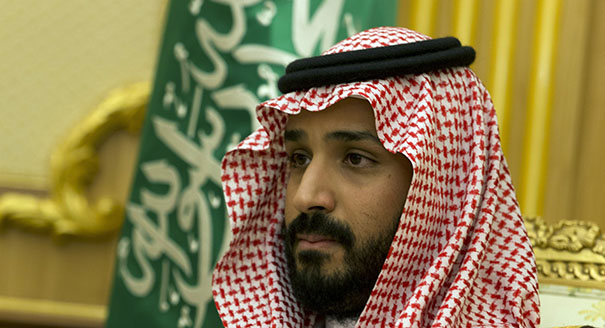
The recent dynastic shake-up in Saudi Arabia was not only about power, patronage, and personality, but about the future trajectory of the kingdom.
Source: Cipher Brief
Perry Cammack: The competition between the two cousins—Mohammed bin Salman and Mohammed bin Nayef, or MbS and MbN as they are known in diplomatic circles—was certainly about power, patronage, and personality. But it was also about Saudi Arabia’s future trajectory.
Since the passing of King Abdulaziz, the kingdom’s founder, in 1953, the crown has passed laterally through his worthiest surviving sons, the sixth of which is the current monarch, King Salman, father of MbS. The result of this lateral succession has been called a “dynastic monarchy” because power was distributed across multiple nodes of royal lineage. It was an unwieldy system since it required consensus (or near-consensus) on important issues, but one that entailed an astonishing degree of continuity, even as kings came and went. For example, Prince Abdullah and Prince Sultan and their nephew Prince Saud led the national guard and the defense and foreign ministries, respectively, for 47, 48, and 40 years, respectively (!). Former crown prince MbN was a product of this system and steady-hand groomed for a leadership role for decades: discreet and patient, but also cautious and bland.
By contrast, the younger Mohammed—the king’s favorite son and new crown prince—is none of these. His meteoric rise to power harkens not to the staid leaders of his father’s generation but to his grandfather a century ago, whose conquest of the ancestral family homelands set the stage for the founding of the third Saudi kingdom in 1932. Much of Mohammed’s success is surely the luck of coming-of-age precisely as his father Salman was ascending the throne and as the old Saudi succession model was coming to its end with the inevitable aging of Abdelaziz’s sons. But behind the veneer of comity and brotherly love, MbS has also demonstrated a ruthlessness and ambition familiar to any student of American presidential politics.
Mohammed bin Salman, though only 31, will likely soon be king and seems intent on consolidating executive authority under his direct control. For a country whose median age is about 25 and used to being ruled as a gerontocracy, many Saudis welcome MbS’s charisma, brashness, and drive. But within the royal family, many surely see things differently: the old order has been turned upside down, and the older generation of princes with the status to check Mohammed’s authority is almost entirely gone. For now, young Mohammed’s power play has been successful.
Cammack: It is true that Mohammed bin Nayef enjoyed unusually close relations with senior American national security officials. However, I do not expect his removal to result in dramatic changes in U.S.-Saudi counterterrorism cooperation, at least in the short-run. Both countries benefit from the partnership. Mohammed bin Salman clearly values it himself and has prioritized relations with the Trump administration.
In the longer-term, things are less clear. MbS clearly envisions a more assertive Saudi Arabia that is less dependent upon the United States. Furthermore, I believe we are beginning to see a long-term divergence in the strategic interests of the two countries. With the shale revolution in the United States, the two countries are now energy competitors, and the trend towards reduced U.S. military intervention in the Middle East seems likely to continue regardless of which party controls the White House. The U.S.-Saudi relationship will remain an important one, but it may not be so fundamental to the region.
Cammack: Under Mohammed bin Salman, Saudi Arabia has embarked in a far more bellicose foreign policy. Unfortunately, the early returns have not been encouraging, based on two signature initiatives: the war against the Houthis in Yemen, which started in 2015, and the more recent Saudi- and Emirati- led economic blockade of Qatar. The crisis with Qatar is at best a distraction that threatens to undermine regional counterterrorism efforts and divert attention away from more pressing issues, like Syria, the Islamic State, and Iran. Meanwhile, the war in Yemen has been an unmitigated disaster with horrific humanitarian consequences and which has inadvertently allowed both al Qaeda in the Arabian Peninsula and Iran to expand their influence in Yemen.
Cammack: The power disparity of Saudi Arabia and the United Arab Emirates in comparison with Qatar is such that any resolution will require significant concessions by Doha. But to this point, the Saudi-Emirati demands have remained quite draconian. So long as Saudi Arabia and the UAE insist on capitulation, I don’t think the Gulf crisis is likely to be resolved anytime soon.
In terms of the future of the GCC, it is important to remember that while the organization was formed in response to the perceived threat from Iran and Saddam-era Iraq, given Saudi Arabia’s geographic, demographic, and political preeminence, the other five Gulf monarchies have always sought to maintain their independence. This dynamic is ultimately what’s driving the crisis with Qatar, which has played the role of gadfly in recent years, much to Riyadh’s chagrin.
But if Saudi Arabia’s foreign policy is indeed fundamentally changing under Mohammed’s leadership to become more active and assertive, the other Gulf neighbors, too, could takes steps aimed to protecting their own sovereignty. That’s certainly true of Kuwait and Oman, which have sought to deescalate the crisis with Qatar. MbS apparently enjoys close relations with a third Mohammed—Mohammed bin Zayed, the crown prince of Abu Dhabi and prime mover in the UAE, who has served as a mentor to MbS. But one could imagine a scenario down the road, in which Saudi-Emirati relations, too, deteriorate amid MbS’s regional ambitions.
Cammack: The United States should obviously steer clear of direct involvement into Saudi domestic politics. Mohammed bin Salman has become the de facto Saudi leader, so it is prudent for Washington to continue to cultivate a relationship with him, especially since he may remain in power for decades to come. Washington should explore ways to expand its support of Vision 2030, Mohammed’s ambitious initiative aimed at economic modernization and diversification. The plan has some potential as a roadmap for economic and governance reform, but the Saudis haven’t yet figured out how to get there and could greatly benefit from American know-how and private sector experience.
The Trump administration might also consider restarting and expanding a strategic dialogue with Riyadh, led by the State Department, but also including participation from the Defense, Treasury, and Commerce Departments. The goal would not be to trade talking points, but explore in detail the biggest challenges facing the two countries and the region.
But American support for Saudi Arabia should certainly not be unconditional. MbS leapt before he looked in Yemen and with Qatar, and further ill-conceived foreign misadventures should not be welcomed. If Saudi Arabia would like to play a bigger role on the regional stage, it will also have to learn to play this role responsibly. This means contributing to regional stability, committing to long-term support for Yemen’s economic well-being and ultimately demonstrating a willingness to engage with Iran to seek a reduction in the sectarian tensions and proxy activity, which has wrought so much destruction in the Middle East since 2011.
This interview was originally published by the Cipher Brief.

Former Nonresident Fellow, Middle East Program
Perry Cammack was a nonresident fellow in the Middle East Program at the Carnegie Endowment for International Peace, where he focuses on long-term regional trends and their implications for American foreign policy.
Recent Work
Perry Cammack, Cassia Bardos
Perry Cammack
Carnegie does not take institutional positions on public policy issues; the views represented herein are those of the author(s) and do not necessarily reflect the views of Carnegie, its staff, or its trustees.

Europe is facing rising populism internally as well as external pressures from Russia, China, Turkey, and the United States.

Dimitar Bechev

A notable degree of participative democracy has firmly arrived in Europe. But to have more far-reaching impact, democratic deliberation needs to move into a radically new phase.

Richard Youngs

Before the next wave of EU enlargement takes place, the union needs to grapple with thorny questions of how power is distributed among its members.


Emil Sondaj Hansen, Ditte Brasso Sørensen

The new U.S.–Denmark–Greenland agreement will help Washington exert political, economic, and financial dominance under the guise of security. Yet, it acknowledged Copenhagen’s and Nuuk’s sovereignty on the island.

Marc Pierini

A summer of escalation in the Black Sea has hurt Ukraine economically and is exacerbating world food security. A truce is needed—as is a broader reframing of Europe’s Ukraine strategy.

Thomas de Waal