

Commentary
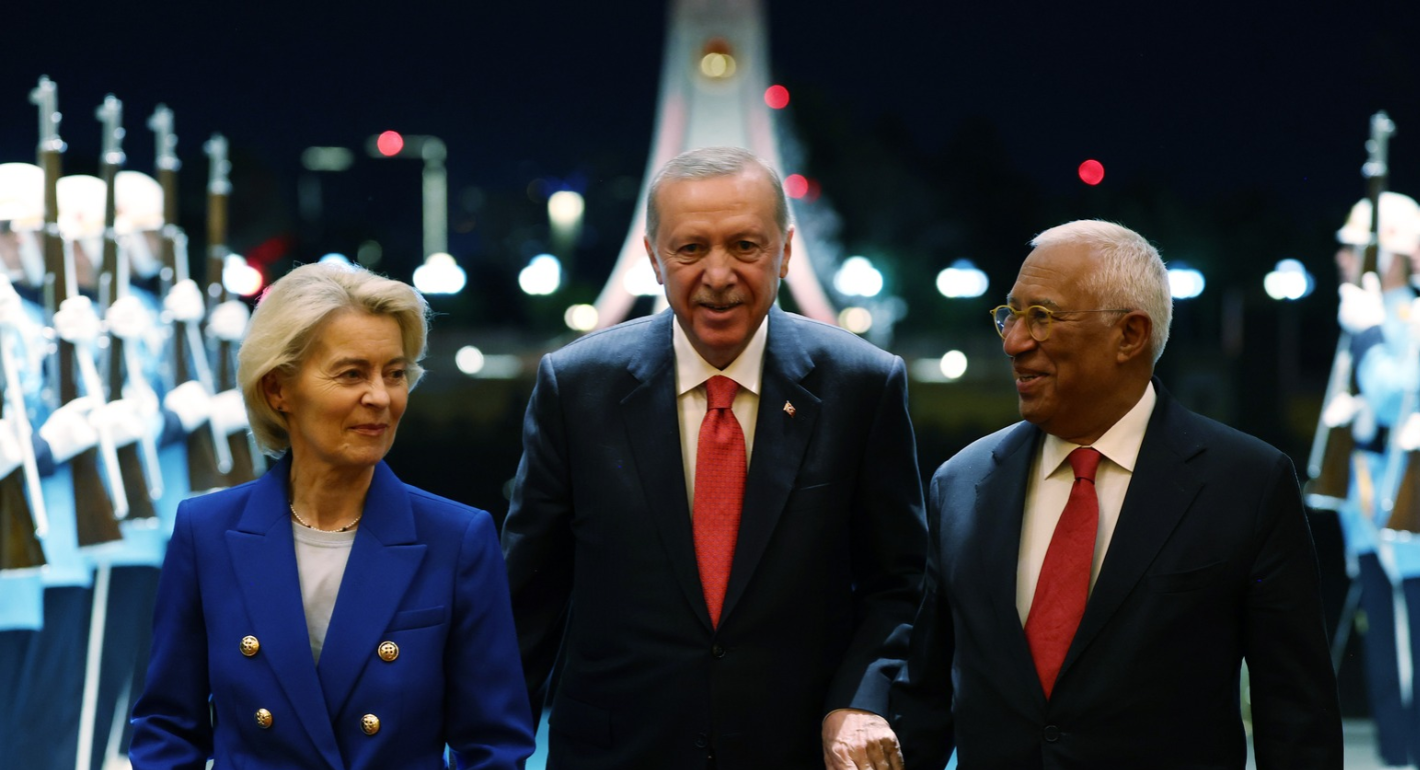
Debate is heating up on how Turkey could be integrated into a common European defense framework. Commercial and industrial deals offer a better chance at alignment than sweeping political efforts.
Source: Getty
Between stalled economic ties and a push for greater security cooperation, EU-Turkey relations remain uncertain. Ankara’s continued slide toward autocracy is the likeliest common denominator in these competing dynamics.
Turkey has been in the news recently because of an investment-fund scandal, the government’s seizure of a pro-opposition TV channel, the country’s exclusion from a French-German Made in Europe trade proposal, and a Turkish-Libyan agreement on maritime jurisdictions. These events have fueled heated debates in Turkey and, with other developments, have severe international consequences. There are four critical political domains in which Turkey and Europe face an uncertain future.
The dire state of Turkey’s economy has been a serious worry for years. One simple measure of the country’s woes over the past two decades is the considerable depreciation of the Turkish lira. At about the time Turkey started its EU accession negotiations in late 2005, it took 1.6 lira to buy €1 ($1.17); today it requires close to 56 lira to buy the same €1. This was already a painful situation, and it just got worse.
In the past few weeks, an embezzlement scandal erupted. More than 130 investment funds together worth around $20 billion had promised miraculously high returns to investors and had to be liquidated by Turkey’s financial regulators, affecting about half a million citizens. Pending inquiries and clarifications from the Turkish authorities, Morgan Stanley Capital International declared it was considering downgrading its rating of Turkey from “Emerging Market” to “Frontier or Standalone Market” status unless corrective measures are taken by June 2027.
On the trade front, Turkey’s protracted relationship with the EU under the 1995 Customs Union—the only such agreement between the EU and a third country—has come under renewed pressure in the context of the EU’s defensive posture against the surge of imports from China, especially in the automotive sector. In March 2026, the EU launched an internal debate on creating a scheme known as Made in Europe that would introduce local-content requirements and restrictions on public procurement. On October 16, France and Germany proposed that for the automotive sector, the scheme should be open to the countries in the European Economic Area (the EU plus Iceland, Liechtenstein, and Norway), with possible side agreements for Switzerland and the UK. But Japan, South Korea, and Turkey would be excluded.
In Ankara, industrialists and government officials strongly rejected Paris and Berlin’s proposal. They argued that the EU-Turkey Customs Union applies to industrial goods; brands like Bosch, Fiat, Renault, Siemens, and others run large production lines in Turkey. Intense consultations are ongoing at the time of writing. Was this a bureaucratic oversight by the EU or a lack of confidence in Turkey’s autocratic governance?
When Turkey started its EU accession process in 2005, this implied an obligation to align with the EU on technical norms and political principles. But Ankara never seriously pursued such alignment because it ran counter to the leadership’s fundamental choices—opaque public procurement procedures; the creation of a superpresidential system; and political control of the judiciary, the media, and civil society—as well as the culture of diplomatic trade-offs and the country’s national pride.
More fundamentally, the political constraints linked to EU accession could not be made compatible with the leadership’s authoritarian proclivities. Turkey’s nonrecognition of the Republic of Cyprus and its support for the so-called Turkish Republic of Northern Cyprus resulted in the EU restricting the accession talks, while in 2007, the public positions of the then French president and German chancellor coalesced to hinder Turkey’s potential membership. Litigation about Turkey’s maritime border with Greece further complicated matters.
This joint failure raises a question: Was accession the best vehicle the EU could have offered a country like Turkey? This debate was never had in the EU.
In the security and defense domain, the 2022 Russian invasion of Ukraine triggered an intense debate across Europe on the necessary surge in the continent’s production of armaments. In this context, Turkey repeatedly claimed at the highest level that its presence in any new security framework among Western European states was “indispensable.” Speaking at the September 2026 UN General Assembly, Turkish President Recep Tayyip Erdoğan said, “A Europe that excludes Turkey from its security architecture cannot possibly be stronger or safer.”
The rapid expansion of Turkey’s defense industry has resulted in multiple agreements—sales, joint ventures, and acquisitions—though not in Turkey’s formal inclusion in security discussions among Western European countries, with the exception of the coalition of the willing in support of Ukraine. In this respect, the 2026 NATO summit in Ankara served as a showcase for Turkey’s defense industry, but it did not provide its president with the political recognition he expected in the security domain.
In May 2026, I wrote that “the core question is whether European nations or the EU should entrust their security to a formal partnership with Turkey. . . . While this happens through individual sales and joint projects, it does not and cannot happen in a more structured way under current political circumstances.” Among the many reasons for this state of affairs, three stand out: first, Ankara’s close relationship with Moscow, even since the invasion of Ukraine, which did not lead to sanctions from Turkey; second, Turkey’s equally close relationship with the administration of U.S. President Donald Trump, even since Washington stated its aim to reshape Europe according to U.S. interests, as per the December 2025 U.S. National Security Strategy; and, third and more importantly, the massive degradation of Turkey’s rule-of-law architecture.
Debate is heating up on how Turkey could be integrated into a common European defense framework. Commercial and industrial deals offer a better chance at alignment than sweeping political efforts.
In the Eastern Mediterranean, several divergences over maritime borders have widened the gap between Turkey and EU governments. On October 20, Libya’s internationally unrecognized eastern administration ratified a new Libya-Turkey memorandum of understanding on the extent of maritime jurisdictions. The deal was firmly rejected by EU authorities and the Egyptian foreign ministry, both of which declared the memorandum “null and void.” Bahrain, Cyprus, Israel, and the United Arab Emirates also rejected the memorandum.
More reassuring to Turkey’s NATO partners is the country’s involvement in the security of the Black Sea area in the face of major drone attacks by Russia on ships exporting Ukrainian agricultural products. Ankara has an obvious part to play here given the strength of its navy, its role as guardian of the Turkish Straits under the Montreux Convention, and its contribution to the 2022 Black Sea Grain Initiative, which allowed exports of Ukrainian grain to third countries over a twelve-month period. Turkey’s operational involvement in Black Sea security arrangements would represent valuable proof of its commitment to NATO’s actions to contain regional spillover from the invasion of Ukraine. At the same time, such a role may run the risk of Moscow exerting strong pressure on Ankara to limit any defensive operations that might benefit Kyiv.
Outside Europe, the Mecca Pact was signed on August 7 by Pakistan, the only Muslim-majority nuclear power; Saudi Arabia, the guardian of the two major Islamic shrines; and Turkey, the only Muslim-majority member of NATO. This created a degree of surprise among other NATO allies, especially as the pact contains a mutual-defense clause largely similar to NATO’s Article 5. For Turkey, the agreement reflects its long-stated willingness to play a major political and security role outside the Atlantic alliance that is not contradictory but complementary. Whether activities under the Mecca Pact will intersect with NATO countries’ interests in the Middle East remains to be seen. Of particular importance will be Turkey’s possible direct military involvement in the event that Riyadh asks for Ankara’s operational support to counter Houthi strikes on Saudi territory.
In my fourteen years as a Turkey analyst with Carnegie Europe, I have documented countless times the steady degradation of the country’s rule of law. This trend has never reversed.
Over the past two years, it has become abundantly clear from domestic opinion polls that Turkey’s incumbent president would not win a third term in a presidential election—assuming he is legally allowed to run in the next ballot, which is scheduled for 2028. Even widening his support via a coalition with the Nationalist Movement Party (MHP) has not provided a guaranteed path to victory, as illustrated by recent polls covering different hypotheses.
Faced with this dire situation, Turkey’s leadership has used all available tools. It has detained and put on trial Istanbul Mayor Ekrem İmamoğlu, who was leading opinion polls as a potential presidential candidate for the Republican People’s Party (CHP); in his trial, prosecutors have requested prison sentences totaling more than two thousand years. Turkey’s leadership has also banned the publication of İmamoğlu’s book, which is now online for all to read. It has threatened other potential CHP candidates, including by forcefully replacing CHP Leader Özgür Özel and harassing his newly created party. And it has replaced some CHP-affiliated mayors with state appointees while convincing others to join the ruling Justice and Development Party (AKP).
When the investment-fund scandal erupted in early October, the leadership’s first reaction was to send police to raid the offices of the pro-opposition news channel Halk TV, whose reporting on the scandal the leadership disliked, and to cut off its broadcasting, with state administrators immediately appointed to manage the channel. This happened just as a Turkish government minister and a large business delegation were visiting the European Commission and the Belgian government to promote trade and investment.
The architecture and practice of the rule of law in Turkey are no longer worsening; rather, the situation has become a textbook case of autocratic governance. The ultimate symbol came on October 18, when philanthropist Osman Kavala marked nine years in jail on a so-called aggravated life sentence for attempting to overthrow the government—a harsh verdict based on an undocumented accusation and following an initial acquittal. Kavala’s final sentence was the subject of multiple decisions by the European Court of Human Rights (ECHR), which has declared his conviction to be “null and void” and asked Turkey’s authorities to free him immediately. There has been no follow-up from Ankara.
The fear of losing power in a fair election—or simply the prospect of political opponents, the media, civil society organizations, and ordinary citizens exerting their fundamental freedoms—has convinced Turkey’s leadership that the best way forward is to hammer the last nails into the country’s rule-of-law coffin. It is a strategy that is hard to understand unless the underlying bet is a total collapse of democratic Europe.
For the past twenty years, Turkey has found its best partners among Europe’s center-left parties. Now, as documented by Carnegie’s Stefan Lehne, the political map is changing. Between now and the end of 2027, national or regional elections will take place in Estonia, Finland, France, Germany, Greece, Italy, Poland, Slovenia, and Spain. Hard-right parties, many under Russian influence and/or with U.S. encouragement, will make strong progress and may come to power in some countries. Shared by many of these parties is a strong anti-immigration streak, which often hides anti-Muslim sentiments.
In the future, Europe’s political landscape will be more fractured, and European politicians may be less inclined to listen to Turkey’s admonitions about security policy or requests for particular trade arrangements. Despite affinities between some authoritarian leaders, major divergences will also grow on questions of migration, religion, and EU accession.
Meanwhile, alternatives to Ankara’s European ties—on trade, finance, education, research, and culture—will be few and far between.
From his give-and-take approach to relations with Europe to his adversarial statements on Greece and Israel, from his claims to be indispensable for Europe’s security to his creation of a security alliance with Pakistan and Saudi Arabia and his conclusion of an illegal maritime deal with Libya, Erdoğan has achieved two results during his nearly twenty-four years in power as prime minister and then as president. First, he has shown a tendency to disorient Turkey’s Western partners. Second, he has positioned himself as a leader equidistant from China, Europe, Russia, and the United States while pursuing a Turkey First policy.
Equidistance is Turkey’s sovereign choice. It is simply incompatible with both the EU accession process and the country’s membership in the Council of Europe, which includes the ECHR. The president’s February 2022 statement about the ECHR, in which he said Turkey would not respect the European court if it did not respect Turkish courts, is a case in point.
In a wider context, Turkey’s relationship with the Western European members of NATO underlines another contradiction in the concept of equidistance. Russia’s invasion of Ukraine led to a surge in Western European countries’ defense spending and the emergence of an incipient European pillar of NATO. Here, the question is whether Turkey can continue to contribute to the alliance’s reassurance operations on its Eastern flank while running a trade policy favorable to Russia and implementing domestic policies that are at odds with the pledge in NATO’s Washington Treaty to uphold “the principles of democracy, individual liberty and the rule of law.”
Two pillars will remain central to Turkey’s future policy mix. One is the durable link with Western European markets, industries, education, and research, for which there are no major substitutes. The other is the rule of law, a feature cherished by the country’s citizens and a central ingredient of Turkey’s place in the world—whether its current leadership is ready to admit it or not.
Ankara’s stance presents a quandary for EU leaders and the other members of the Council of Europe. Routinely defending the rule of law in statements at the highest level while taking no action when Turkey fails to align with the EU or implement ECHR judgments sends a signal that fundamental divergences on core issues are acceptable. Behind this attitude are reasons of trade, financial interests, and defense procurement, but is this really a sustainable policy for Western European countries in the current geopolitical context?
Ultimately, a difficult question remains: How will Europe and Turkey organize their future relations, taking into account the policies pursued by China, Russia, and the United States toward the European continent? The coming two years will tell.
A monthly newsletter from Carnegie Europe

Senior Fellow, Carnegie Europe
Marc Pierini is a senior fellow at Carnegie Europe, where his research focuses on developments in the Middle East and Turkey from a European perspective.
Recent Work
Marc Pierini
Marc Pierini
The European Commission is preparing the EU for its next enlargement. But member states need to make it a project that European citizens can understand, shape, and support.

Iliriana Gjoni
Geoengineering is becoming a geopolitical question as much as a climate one. The way states and the private sector pursue these technologies, assess risks, and drive research increasingly appears focused on gaining a strategic edge. In a field where governance in lagging behind, Europe should keep track of the geopolitical implications if it is to develop effective regulatory frameworks.

Olivia Lazard, ed.
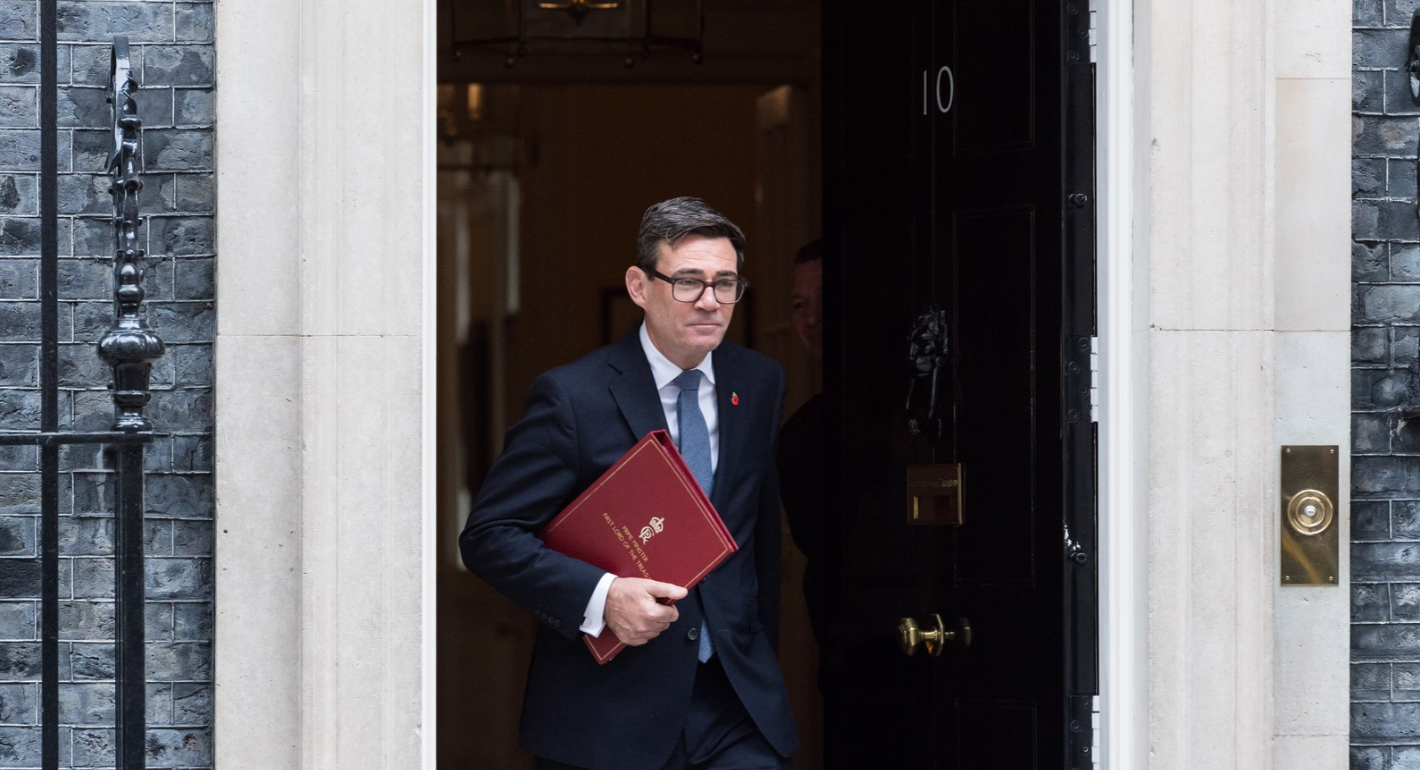
Resetting relations with the EU is a central plank of the UK’s current foreign policy. Is Andy Burnham being bold enough or is he falling into the same trap as his predecessors, misreading the power dynamic?

Rym Momtaz, ed.
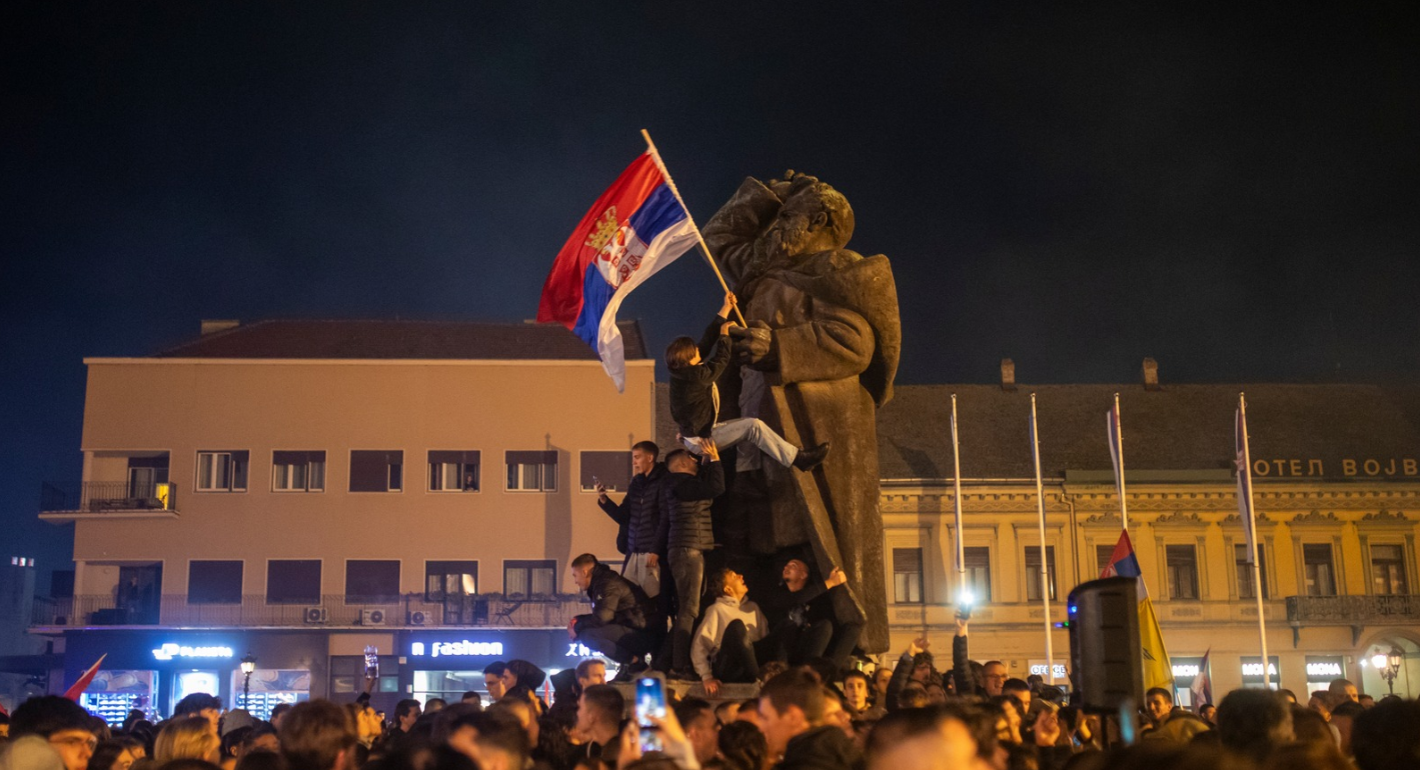
Excitement is in the air following Aleksandar Vučić’s defeat in Serbia. To build a truly democratic state, the movement that unseated the former president must learn from the mistakes of the past.

Ivan Vejvoda
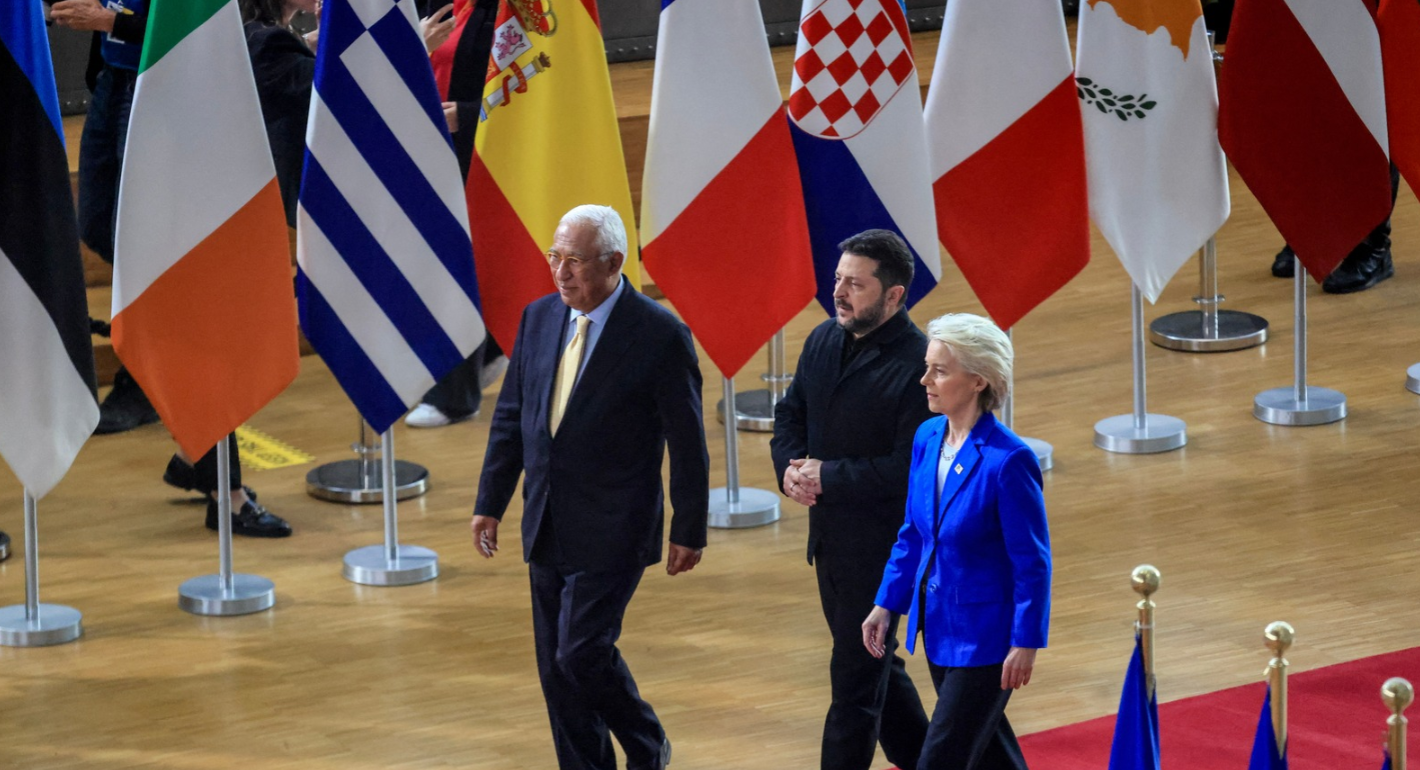
The EU can impose sanctions but struggles to enforce them without the United States. With Washington increasingly disinterested in backing European interests, the bloc must now fend for itself.
Nicu Popescu, Tiago Antunes