

Q&A
Paul Haenle, Philippe Le Corre
{
  "authors": [
    "Philippe Le Corre"
  ],
  "type": "other",
  "centerAffiliationAll": "dc",
  "centers": [
    "Carnegie Endowment for International Peace",
    "Carnegie China"
  ],
  "collections": [
    "Belt and Road Initiative"
  ],
  "englishNewsletterAll": "asia",
  "nonEnglishNewsletterAll": "",
  "primaryCenter": "Carnegie Endowment for International Peace",
  "programAffiliation": "AP",
  "programs": [
    "Asia"
  ],
  "projects": [],
  "regions": [
    "East Asia",
    "China",
    "Central Asia",
    "Eastern Europe",
    "Western Europe"
  ],
  "topics": [
    "Economy",
    "Foreign Policy"
  ]
}
Source: Getty
The internationalization of China, and of its companies in particular, is one of the most important phenomena of the beginning of the twenty-first century.
Source: Palgrave Macmillan
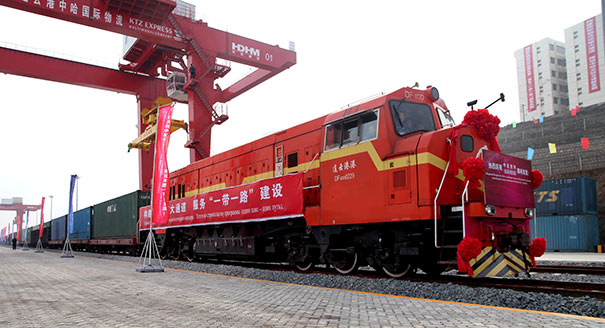
This chapter focuses on Chinese foreign direct investments (FDI) in Europe, and their potential impact on the landscape of the targeted countries. It examines the investment’s possible connections with the current Belt and Road Initiative (BR), which is primarily billed as an international network of infrastructure projects. With the BR in mind, this chapter asks whether Chinese state-owned enterprises (SOE) can build from their recent experiences in Western Europe, and looks at three main questions: (1) What is the political, economic, and social impact on targeted countries when it comes to public investments in the field of infrastructures? (2) How does it relate to the Belt and Road Initiative? (3) What are the stakes for the cooperation between Chinese investors on the one hand, and local public- and private-sector actors on the other?
This chapter was originally published in Rethinking the Silk Road, released by Palgrave Macmillan.
Former Nonresident Senior Fellow, Europe Program
Philippe Le Corre was a nonresident senior fellow in the Europe Program at the Carnegie Endowment for International Peace.
Recent Work

Paul Haenle, Philippe Le Corre


Erik Brattberg, Philippe Le Corre, Paul Stronski, …
Carnegie does not take institutional positions on public policy issues; the views represented herein are those of the author(s) and do not necessarily reflect the views of Carnegie, its staff, or its trustees.

Russia is testing the waters of NATO’s mutual defense clause. What do strikes in Romanian territorial waters mean for the alliance’s posture toward Moscow?

Dimitar Bechev

With its public finances in shambles, the far right polling at 35 percent ahead of the 2027 presidential election, and a growing protest movement, is France’s crisis a threat to the EU’s geopolitical awakening?

Rym Momtaz, ed.

Ahead of a tough winter for Ukraine, Donald Trump’s swing back toward Russia bodes ill. But instead of panicking, Kyiv’s European allies are focusing on action.
Rym Momtaz

Funding Ukraine remains a priority for European leaders. As Russia’s war of aggression heads into another winter, two feasible options to mobilize support for Kyiv should be fast-tracked.


Vladyslav Rashkovan, Gregory P. Wilson

While the EU and European governments are embracing the much-lauded middle-power moment, this entails three difficult conundrums.

Richard Youngs