

Research
- +4
Milan Vaishnav, Rahul Verma, Rukmini S., …
{
  "authors": [
    "Christophe Jaffrelot"
  ],
  "type": "other",
  "centerAffiliationAll": "dc",
  "centers": [
    "Carnegie Endowment for International Peace"
  ],
  "collections": [],
  "englishNewsletterAll": "ctw",
  "nonEnglishNewsletterAll": "",
  "primaryCenter": "Carnegie Endowment for International Peace",
  "programAffiliation": "SAP",
  "programs": [
    "South Asia"
  ],
  "projects": [],
  "regions": [
    "South Asia",
    "Pakistan"
  ],
  "topics": [
    "Political Reform",
    "Democracy",
    "Civil Society",
    "Religion"
  ]
}
Source: Getty
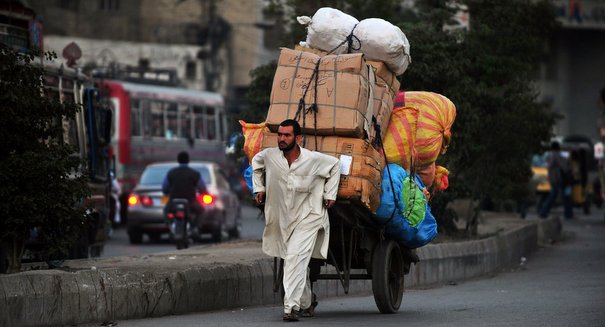
While there is a Pakistani identity vis-à-vis the other countries that surround it, it is an identity that has been superimposed from above rather than created from below.
Source: Dawn
Christophe Jaffrelot is a senior research scholar at the National Centre for Scientific Research in France and a visiting professor at King’s College London. His research focuses on theories of nationalism and democracy in Pakistan and India. Dawn caught up with Mr Jaffrelot on a recent visit to Islamabad and spoke to him about his recent book, The Pakistan Paradox, and his interest in South Asia.
A: It started when I was 18 and a student of philosophy. My teacher was well versed in South Asia philosophies, including Buddhism. When I went to India in 1984, it was the time when the philosophies were in the street in some ways because it was the beginning of the Ayodhya movement. I decided to do my PhD on the Hindu nationalist movement that went on till 1991. By then, I moved to another topic, low caste politics including Dalit politics in India. In the mid-90s, I decided to work on Pakistan and I came here and published my first book in 1999. I have worked on both countries since. On the Indian side, I am working on dargahs as part of a project with some colleagues and we are trying to find if dargahs are still visited by non-Muslims. On the Pakistani side, I am interested in the transformation of Islam by the influence of external actors from the Middle East.
A: The politics of the countries have many similarities because their societies are similar. When you are in a society that is not individual-based, where everyone has an ascribed identity in terms of religion, caste and ethnicity, the politics have to factor that in. It plays a role anytime you have an election.
The legacy of the British Raj also makes many things similar. The role of the judiciary is the similar in both countries, to some extent. You have the rise of religious ideologies on both sides, at the expense of secularism and minorities. These are the similarities.
The dissimilarity is that in Pakistan, the military played a role beforehand and did not let democracy flourish. There have been phases of democratisation but the process always remained incomplete. This has never happened in India because very early on, civilians told the military they could not interfere.
A: In that book, I identified a new trend that has carried out almost linearly. In the 20th century, either the military ruled or the civilians were in charge and were dismissed because of their attempts to emancipate themselves from the military, like in the 90s. In the 21st century, a new pattern emerged where the civilians resigned themselves not to be fully in control and the military weakened the civilians as much as they could but did not try to remove them anymore [and this has been at work since]. There is a new equilibrium of some sort that is not terribly stable.
A: There is definitely a Pakistani identity vis-à-vis the other countries that surround it. This is, however, an identity that has been superimposed from above but not created from below, for instance through an education system or media network, which would have helped. So, there is a tension between the national identity and the ethno-linguistic identities and since the country is not federal or decentralised enough, instead of defusing these tensions by devolving power, Pakistan has hardened the identity tensions. That said, Pakistan is more culturally integrated today than it was in 1971.
This is partly because of the media, partly because of cinema and partly because of popular culture that sometimes adopts different languages but plays within the same arena. The frame of reference for the people in Karachi, Lahore and Islamabad is becoming more and more common, it is national.
In Pakistan, identity tensions may not be more acute that the social divide, even if inequality is not talked about much now that the left has been marginalised. But that is affecting national identity and unity. There are horizontal social divisions apart from vertical ethno-linguistic divisions, which may also partly explain the popularity of some forms of religious extremism.
Former Nonresident Scholar, South Asia Program
Jaffrelot’s core research focuses on theories of nationalism and democracy, mobilization of the lower castes and Dalits (ex-untouchables) in India, the Hindu nationalist movement, and ethnic conflicts in Pakistan.
Recent Work

Milan Vaishnav, Rahul Verma, Rukmini S., …
Christophe Jaffrelot
Carnegie does not take institutional positions on public policy issues; the views represented herein are those of the author(s) and do not necessarily reflect the views of Carnegie, its staff, or its trustees.

A notable degree of participative democracy has firmly arrived in Europe. But to have more far-reaching impact, democratic deliberation needs to move into a radically new phase.

Richard Youngs

The domestic impacts of how long it is taking to end the war in Ukraine have pushed the French electorate to the political extremes and compromised the country’s diplomatic capacity.

Rym Momtaz

Before the next wave of EU enlargement takes place, the union needs to grapple with thorny questions of how power is distributed among its members.


Emil Sondaj Hansen, Ditte Brasso Sørensen

Radical-right parties are expected to do well in upcoming elections in four of the EU's biggest member states. If successful, they could prevent the union from addressing key challenges ahead.

Stefan Lehne

An overwhelming victory by a far-right-wing party in a small state in eastern Germany will have major repercussions for Chancellor Friedrich Merz’s coalition.

Judy Dempsey