

Commentary
Michael Pettis
{
  "authors": [
    "Michael Pettis"
  ],
  "type": "legacyinthemedia",
  "centerAffiliationAll": "dc",
  "centers": [
    "Carnegie Endowment for International Peace"
  ],
  "collections": [],
  "englishNewsletterAll": "asia",
  "nonEnglishNewsletterAll": "",
  "primaryCenter": "Carnegie Endowment for International Peace",
  "programAffiliation": "AP",
  "programs": [
    "Asia"
  ],
  "projects": [],
  "regions": [
    "East Asia",
    "China"
  ],
  "topics": [
    "Economy"
  ]
}
Source: Getty
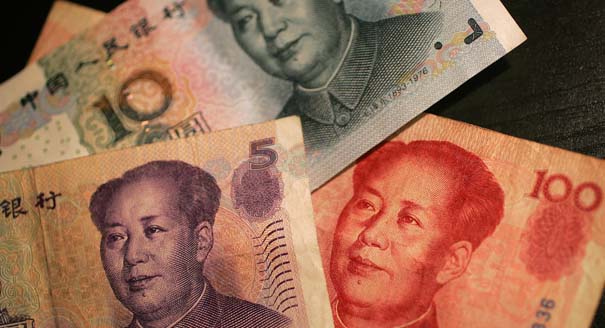
While a more liberal China may be more desirable, liberalization could hurt rather than help China’s battle against debt.
Source: Bloomberg
China needs reform. This has long been the consensus advice from economists and multilateral institutions such as the World Bank, whose recent "China 2030" report argues that Chinese leaders should strengthen the role of markets and liberalize legal, financial and other institutions governing the economy. Their to-do list is virtually gospel by now: free up trade and investment, unshackle the exchange rate and ease capital controls.
Such reforms are held not only to be worthy in themselves, but critical to solving China's biggest problem: its debt, which has skyrocketed to well over 260 percent of GDP from 162 percent in 2008. The speed and scale of credit expansion has raised fears of a financial crisis, even from such normally staid figures as central bank governor Zhou Xiaochuan. The hope is that reforms will boost productivity enough to allow China to outgrow its debt burden before that crisis hits.
This logic is flawed for two reasons. First, China is unlikely to suffer a financial crisis, and this is precisely because of the government's ability to restructure banking-sector liabilities at will.
The real threat is different. Once a country’s debt burden is high enough to create uncertainty about allocating future debt-servicing costs, the debt itself becomes an obstacle to growth. This process -- known as “financial distress” -- is well-understood in finance theory but is still unfamiliar to many economists.
So, unfortunately, is the corroborating history. In the past two centuries, there have been dozens of cases of overly-indebted countries whose policymakers have promised to implement liberalizing reforms meant to allow the country to outgrow its debt. None has succeeded. No excessively indebted country has ever outgrown its debt until a meaningful portion has been forcibly assigned to one economic sector or another.
There are many ways this can occur. Mexico restructured its debt at a discount in 1990, thereby forcing the cost onto creditors. Germany inflated the debt away after 1919, forcing the cost onto pensioners and others with fixed incomes. A decade ago, China forced the cost onto household savers through negative real interest rates.
If it is going to regain sustainable growth, China, too, must deleverage. The only healthy way to do so is first, to force local governments to liquidate assets and assign part of the proceeds to debt reduction, and second, to wean China off its dependence on excessive investment by transferring wealth from local governments to households, so they can consume more.
One way or another, deleveraging is a necessary condition for further growth. Even those countries that have avoided financial crises have nonetheless had to deleverage, but have done so in the form of “lost decades” of very low growth -- most notably the Soviet Union in the two decades after 1967 and Japan in the two decades after 1990. In each case, the country's share of global GDP collapsed by 60-70 percent. This is not a desirable alternative to crisis.
The second problem is that orthodox reforms implicitly assume that, as businesses and investors try to channel resources into higher-productivity investments, they're constrained mainly by low savings and institutional distortions. If that were true, liberalizing finance, enhancing capital flows and freeing up the market would indeed boost productivity.
But, in a deeply unbalanced economy with an insolvent financial system, incentives are warped in ways that undermine this assumption. China's financial sector is dominated by speculative investing and capital flight. Meanwhile, heavy state influence has distorted corporate governance and kept afloat insolvent companies.
Under such conditions, opening up the financial sector would only further accommodate distortions and worsen the misallocation of investment. The notorious behavior of U.S. savings-and-loans institutions in the 1980s is a classic example of how liberalizing a highly constrained and insolvent banking system increases abuses and multiplies the eventual cost of resolution. There are other terrifying examples.
Moreover, as noted earlier, China has avoided a financial crisis precisely because its banking system is closed and its regulators can restructure liabilities at will. Removing constraints on capital flows would strip the government of the weapons needed to defend against a crisis.
In the end, while standard macroeconomic reforms may work in theory -- albeit under an unrealistic set of assumptions -- they've never worked in practice. Rather than eliminating the controls that protect China from a financial crisis, leaders should confront their debt problem head-on and begin deleveraging.
For that to happen, it would help if the decision-making process were more, not less centralized. Only forceful action from the top can overcome the tremendously powerful vested interests that are blocking the redistribution of local-government wealth. A more liberal China may be desirable in the abstract -- but not until a more controlled China gets a handle on its debt problems.

Nonresident Senior Fellow, Carnegie China
Michael Pettis is a nonresident senior fellow at the Carnegie Endowment for International Peace. An expert on China’s economy, Pettis is professor of finance at Peking University’s Guanghua School of Management, where he specializes in Chinese financial markets.
Recent Work
Michael Pettis
Michael Pettis

While the EU and European governments are embracing the much-lauded middle-power moment, this entails three difficult conundrums.

Richard Youngs

Europe is facing rising populism internally as well as external pressures from Russia, China, Turkey, and the United States.

Dimitar Bechev

The European Commissioner for Trade is headed to China. But after President Xi’s bridge-building visit to Washington, can a more isolated EU overcome Beijing’s stranglehold on critical raw materials? Who will blink first?

Rym Momtaz, ed.

The domestic impacts of how long it is taking to end the war in Ukraine have pushed the French electorate to the political extremes and compromised the country’s diplomatic capacity.
Rym Momtaz

A summer of escalation in the Black Sea has hurt Ukraine economically and is exacerbating world food security. A truce is needed—as is a broader reframing of Europe’s Ukraine strategy.

Thomas de Waal