• Research
  • Strategic Europe
  • About
  • Experts
Carnegie Europe logoCarnegie lettermark logo
EUUkraine
  • Donate
{
  "authors": [
    "Sinan Ülgen",
    "Can Kasapoğlu"
  ],
  "type": "other",
  "centerAffiliationAll": "dc",
  "centers": [
    "Carnegie Endowment for International Peace",
    "Carnegie Europe",
    "Malcolm H. Kerr Carnegie Middle East Center"
  ],
  "collections": [
    "Turkey’s Transformation"
  ],
  "englishNewsletterAll": "",
  "nonEnglishNewsletterAll": "",
  "primaryCenter": "Carnegie Europe",
  "programAffiliation": "EP",
  "programs": [
    "Europe"
  ],
  "projects": [],
  "regions": [
    "Europe",
    "Türkiye",
    "Middle East",
    "Iran"
  ],
  "topics": [
    "Security",
    "Political Reform"
  ]
}
Source: Getty

Other
Carnegie Europe

Operation Olive Branch: A Political Military Assessment

Turkey’s offensive in Afrin helps to dispel doubts, after the failed coup attempt of July 2016, about Ankara’s ability to project force across the border.

Link Copied
By Sinan Ülgen and Can Kasapoğlu
Published on Jan 30, 2018

Source: Centre for Economics and Foreign Policy Studies

EXECUTIVE SUMMARY

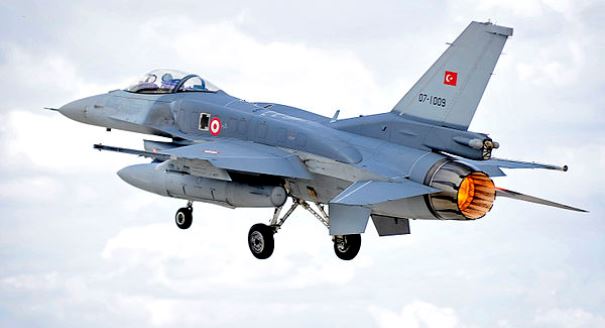
  • Operation Olive Branch’s air campaign, especially at its outset, marked the highest sortie– rates and the most intensive operational tempo in Turkey’s cross–border military record in the last decade. As reported by the Turkish General Staff, on the very first day of the intervention, the air force assigned 72 combat aircraft which is tantamount to roughly 25% of the total F–16 variants and the F–4 2020s in the inventory. At the time of writing, about 10% of the fighter arsenal have been flying combat missions over Afrin. Despite the pilot–to–cockpit ratio problems, so far, the Turkish Air Force is performing decisively.

  • The underlying reason of the abovementioned heavy bombardment strategy is to gain rapid dominance for the follow–on land operations. The use of high–precision standoff munitions against the adversary’s subterranean warfare / tunnel capabilities reflects the effective internalization of the lessons–learned obtained from Operation Euphrates Shield. In addition, Ankara may also opt for using non–kinetic, psychological effects of its airpower to encourage desertions at the YPG ranks.

  • From a military standpoint, Operation Olive Branch’s ground offensive will probably consist of two main phases with radically different characteristics. A shift in the determining parameters of the conflict would inevitably bring about changes in the force generation.

  • The ongoing initial phase could be best depicted as a mountain warfare effort –at around 1,000m elevation harsh terrain– under hybrid conditions. Successfully capturing the key high–ground of Mount Bursaya marks an important achievement in this respect. Should Ankara firmly pursue the already declared objective of clearing the entire Afrin province from PKK terrorist organization’s offshoots, then the second ground phase has to take place in the form of urban warfare. Considering the al–Bab offensive during the Euphrates Shield, Turkish military planners should attach utmost importance to tunnel and trench complexes, improvised explosive devices, and anti–tank guided missiles (ATGMs).

  • An alternative option to fighting a risky urban warfare is to lay siege on Afrin’s town center, and force the YPG militants to the leave. Although siege warfare is legal in terms of the law of armed conflict, such a risk–aversive concept could only succeed when coupled with very effective information warfare, strategic communications and diplomacy efforts. Besides, YPG will probably attempt to use human–shield and forcibly paramilitarize the local population, coupled with a global propaganda campaign. Thus, evacuation of civilians from the area of operations should be the utmost priority.

  • As the Olive Branch operation further unfolds, safeguarding the rear area against the adversary’s infiltrations will matter as the most important aspect of force protection. Ankara has already hinted at the possibilities of advancing some 30km. Establishing and protecting supply lines through such depth, and more importantly in hostile territory, could be challenging.

  • YPG, an armed group with irrevocable organic ties with PKK terrorist organization, has gained unprecedented military and paramilitary capabilities in the course of the Syrian Civil War. If unchecked, YPG could well gain advanced hybrid warfare capabilities –for example, a formidable rocket arsenal coupled with low-to-medium altitude air defenses– within a decade. Such a boost in conventional and unconventional warfighting capacity would be comparable to the Lebanese Hezbollah in the Middle East. In this respect, the Olive Branch was considered by Turkish policymakers to be a necessary effort for Turkey’s national security.

  • US policy circles did not fully assess that YPG issue goes well beyond Turkey’s involvement in the Syrian Civil War, and remains an existential aspect of national security. In fact, Ankara’s terrorism problem stemming from the PKK threat has always had a Syria dimension, even decades before the civil war erupted. The Hafez Assad regime openly harbored and used the terrorist organization as a proxy war tool against Turkey. Syrian Kurdish militants have traditionally assumed critical positions in the so called armed–wing of PKK. And the Ba’ath regime’s notorious Muhabarat had played a catalyst role in the violent terror campaign of the 1980s and the 1990s that claimed thousands of lives. The Hafez Assad regime was forced to put an end to sponsoring terrorism against Ankara only after a robust gunboat diplomacy championed by Turkey’s late president, Suleyman Demirel, in 1998.

  • Politically, Ankara aims to achieve a number of different policy objectives with the Olive Branch operation. The first aim is domestic. The US support to the PYD, which culminated with the ultimately retracted statement of building up a 30.000 strong border guard YPG unit, has led to a public pressure at home for a more severe Turkish response to address the increasingly palpable security challenges linked to the expansion of the PYD influence in northern Syria.

  • The second aim is to position Turkey as a strong and inevitable actor of the Syrian conundrum. The hard power–backed approach aims to enhance Turkey’s role in the slated negotiations on Syria’s future order where Turkey, having dropped the regime change agenda, now primarily aims to constrain the territorial ambitions of the Syrian Kurds.

  • A third component relates to deterrence. With this show of force, Turkey aims to deter the US, its NATO Ally, and to make it desist from backing the PYD.

  • The third phase of the operation is slated to target Manbij, the US controlled region west of the Euphrates. Obviously, this expanded scope would raise the possibility of direct confrontation with the US forces positioned in and around the Manbij region for the training of and support to the YPG. Ankara’s hope will be to convince the US to remove its troops from Manbij, which would also signal the weakening commitment to the YPG.

  • The risk is for US policy makers deciding to test Ankara’s resolve. Because, indeed, such as scenario would open the way to the undesired and unique case of two NATO Allies involved in military conflict against each other. Such an outcome would not only have long term consequences for the bilateral relationship but would also severely weaken NATO cohesion and therefore impact overall transatlantic security.

  • Against this backdrop, it becomes increasingly urgent to re-establish a reliable path to US-Turkey convergence.

  • Future efforts will be handicapped by the dysfunctionality that have come to characterize this important relationship. The military–to–military ties have become fraught with a lack of trust. The diplomatic bureaucracy have lost their traditional weight, both in Ankara and in Washington, under a governance marked by personal initiative. But given the acuity of the crisis and their implications, a common US – Turkey agenda needs to be fostered.

  • The humanitarian angle could provide for such an opportunity. The imminent operation targeting Afrin town raises the prospect of either a military siege or urban warfare with enormous risks for the civilian population, including the risk of being used as human–shield by the YPG militants or being forced to paramilitary roles. Turkey and the US should give priority to a humanitarian corridor that would allow the civilians to safely leave the theater of conflict towards US controlled Manbij, and even, to further east. The success of this collaborative approach could then be used as stepping stone towards a sounder framework of dialogue that could then tackle the deeper issues affecting this key bilateral relationship.
Read Full Text

This article was originally published by Centre for Economics and Foreign Policy Studies.

About the Authors

Sinan Ülgen

Senior Fellow, Carnegie Europe

Sinan Ülgen is a senior fellow at Carnegie Europe in Brussels, where his research focuses on Turkish foreign policy, transatlantic relations, international trade, economic security, and digital policy.

Can Kasapoğlu

Authors

Sinan Ülgen
Senior Fellow, Carnegie Europe
Sinan Ülgen
Can Kasapoğlu
SecurityPolitical ReformEuropeTürkiyeMiddle EastIran

Carnegie does not take institutional positions on public policy issues; the views represented herein are those of the author(s) and do not necessarily reflect the views of Carnegie, its staff, or its trustees.

More Work from Carnegie Europe

  • Commentary
    Strategic Europe
    Europe on Iran: Gone with the Wind

    Europe’s reaction to the war in Iran has been disunited and meek, a far cry from its previously leading role in diplomacy with Tehran. To avoid being condemned to the sidelines while escalation continues, Brussels needs to stand up for international law.

      Pierre Vimont

  • Commentary
    Strategic Europe
    Taking the Pulse: Can European Defense Survive the Death of FCAS?

    France and Germany’s failure to agree on the Future Combat Air System (FCAS) raises questions about European defense. Amid industrial rivalries and competing strategic cultures, what does the future of European military industrial projects look like?

      • Rym Momtaz

      Rym Momtaz, ed.

  • Commentary
    Strategic Europe
    Macron Makes France a Great Middle Power

    France has stopped clinging to notions of being a great power and is embracing the middle power moment. But Emmanuel Macron has his work cut out if he is to secure his country’s global standing before his term in office ends.

      • Rym Momtaz

      Rym Momtaz

  • Commentary
    How Can Europe Renew a Stalled Enlargement Process?

    Despite offering security benefits to candidates and the EU alike, the enlargement agenda appears stalled. Why is progress not being made, and is it time for Europe to rethink its approach?

      Sylvie Goulard, Gerald Knaus

  • Turkey Erdogan Caucasus Central Asia
    Article
    How Turkey Can Help the Economies of the South Caucasus to Diversify

    Over the past two decades, regional collaboration in the South Caucasus has intensified. Turkey and the EU should establish a cooperation framework to accelerate economic development and diversification.

      • Feride Inan
      • Güven Sak
      • Berat Yücel

      Feride İnan, Güven Sak, Berat Yücel

Get more news and analysis from
Carnegie Europe
Carnegie Europe logo, white
Rue du Congrès, 151000 Brussels, Belgium
  • Research
  • Strategic Europe
  • About
  • Experts
  • Projects
  • Events
  • Contact
  • Careers
  • Privacy
  • For Media
  • Gender Equality Plan
Get more news and analysis from
Carnegie Europe
© 2026 Carnegie Endowment for International Peace. All rights reserved.









